Detailed Explanation of Orange Tree Planting Techniques and Management Methods
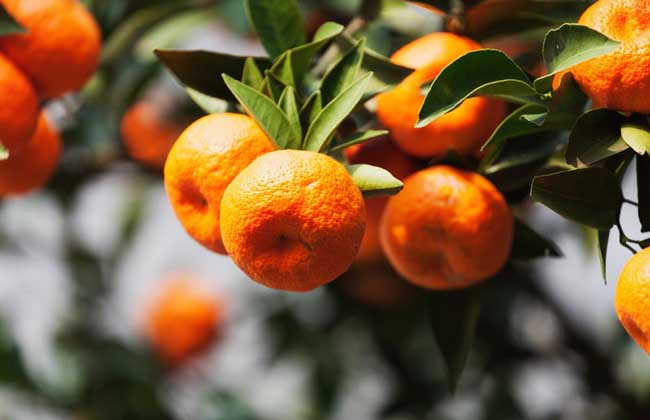
The orange is a fruit of the genus Citrus in the family Rutaceae, native to China. Its cultivation history of several thousand years makes it impossible to pinpoint a specific location. It was spread across the Eurasian continent by Arabs, and to this day it is still called the "Chinese apple" in the Netherlands and Germany. China is one of the important places of origin for oranges, with abundant resources and numerous excellent varieties. Let us take a look at the planting techniques for orange trees!
Orange Tree Planting Conditions
1. Temperature: The growth and development of oranges requires a temperature of 12.5-37°C. Autumn flower bud differentiation requires day and night temperatures of around 20°C and around 10°C respectively. The soil temperature for root growth is roughly the same as that of the above-ground part. High temperatures are also unfavorable for citrus growth and development; when the air temperature and soil temperature exceed 37°C, the fruit and root system stop growing.
2. Light: Oranges are a tree species with strong shade tolerance, but good sunlight is still needed for high quality and high yield. Generally, areas with an annual sunshine duration of 1200-2200 hours can grow normally. For example, compared with the citrus production areas in Chongqing which have less sunshine, South China with good sunshine and abundant heat produces fruit with higher sugar content, lower acid content, and a higher sugar-acid ratio.
3. Humidity: Oranges are suitable for planting in tropical and subtropical regions with an annual rainfall of around 1000 mm. The suitable relative soil moisture content is 60-80%. When it is below 60%, irrigation is needed. Excessive rain causing soil waterlogging or a high groundwater table in citrus orchards with poor drainage can cause root death.
4. Soil: Oranges have a wide range of soil adaptability. They can grow in purple soil, red-yellow soil, sandy beach and seashore soil with a pH value of 4.5-8, with pH 5.5-6.5 being the most suitable. Root growth requires a relatively high oxygen content. The most suitable soil is loose in texture, well-structured, with an organic matter content of 2-3%, and well-drained.
Orange Tree Planting Techniques
1. Seedling planting: When planting orange seedlings, moderately prune the root system, then place the seedling in the center of the planting hole, spread out the roots, hold it upright, and while filling with soil, gently lift the seedling upward and firm the soil. Water thoroughly to settle the roots. Make a 1-meter tree disc around the seedling and cover it with rice husks. After planting orange seedlings, deep plowing and hole expansion should be done to mature the soil. Planting tall-stalked plants such as corn and wheat in the orchard is prohibited. Reasonable intercropping in the orchard and cultivation and weeding should be carried out properly.
2. Fertilizer and water management: Orange trees should fully meet the needs of blood oranges for various nutrient elements. It is advocated to apply more organic fertilizer, reasonably apply inorganic fertilizer and formula fertilizer, and guide fertilization based on leaf analysis results, orchard soil analysis results, and blood orange phenological periods. Soil fertilization is the main method, supplemented by foliar fertilization. Methods such as ring trench application, strip trench application, hole application, and surface broadcasting are used. Irrigate when the soil is dry and drain when there is water accumulation.
3. Reasonable fertilization: Orange trees should be fertilized frequently and lightly, mainly with nitrogen fertilizer, supplemented with phosphorus and potassium fertilizers. Fertilize 5-6 times during the spring, summer, and autumn shoot emergence periods. For mature trees, apply four good rounds of fertilizer, namely sprouting fertilizer, fruit-preserving fertilizer, fruit-strengthening fertilizer, and post-harvest fertilizer. Sprouting fertilizer: 2-3 jin of chemical fertilizer and one load of manure water. Fruit-preserving fertilizer: 1-2 jin of phosphorus-potassium fertilizer and 1 jin of chemical fertilizer. Fruit-strengthening fertilizer: 1-2 jin of chemical fertilizer and 2 jin of phosphorus-potassium fertilizer. Post-harvest fertilizer: apply 50-100 jin of organic fertilizer and 2 jin of chemical fertilizer per tree.
4. Pruning techniques: During the young tree stage, after selecting the central leader extension shoot and the extension shoots of each main branch and sub-main branch, carry out moderate or even heavy heading back, and regulate the growth balance among the main branches through the degree of heading back and the direction of the pruning cut buds. During the fruiting stage, continue to select and heading back the extension shoots at all levels of the framework, remove summer shoots, and promote the emergence of robust autumn shoots. In autumn, for vigorously growing trees, measures such as girdling, root pruning, and water control are used to promote flowering.
Orange Tree Pest and Disease Control
1. Foot rot: Drain water in time, improve light penetration and ventilation conditions in the orchard, strengthen the control of longhorn beetles and other trunk pests, and select disease-resistant rootstocks such as trifoliate orange, citrange, and sweet orange. For infected plants, disease-resistant rootstocks can be used for rootstock replacement.
2. Mites: The main periods for rust mite control are the spring shoot emergence period, young fruit period, and fruit enlargement period. Commonly used pesticides include hexythiazox, pyridaben, propargite, bromopropylate, and amitraz. Attention should be paid to protecting natural enemies such as long-legged mites, blunt mites, and green lacewings.
3. Scale insects: Commonly used pesticides include buprofezin, methidathion, matrine + nicotine, chlorpyrifos, and machine oil emulsion. Attention should be paid to improving ventilation and light penetration conditions in the orchard, and protecting and utilizing natural enemies such as Japanese square-headed beetles, red-spotted lady beetles, and green lacewings.
4. Aphids: When the damage rate of new shoots reaches 25%, pesticide spraying should be carried out immediately for control. Commonly used pesticides include acetamiprid, dimethoate, and benfuracarb. Attention should be paid to protecting seven-spotted lady beetles, large green lacewings, and aphid parasitoid wasps, and cutting off overwintering eggs to reduce the pest population base.
5. Leaf miners: Promptly remove sporadic summer and autumn shoots. Spray pesticide when new shoots grow to 1-2 cm, once every 7-10 days, for 2-3 consecutive times. Commonly used pesticides include abamectin, cartap, and cyhalothrin.
6. Longhorn beetles: Manually capture adult star longhorn beetles and green orange longhorn beetles at noon on sunny days, and capture adult brown longhorn beetles in the evening. Promptly remove eggs and newly hatched larvae and cut off damaged branches. Cotton or cotton yarn soaked in insecticides such as dimethoate can also be used to poison the larvae.
7. Flower bud midges: At the bud emergence stage, use trichlorfon powder, diazinon granules, etc., mixed evenly with fine soil and broadcast on the soil surface of the tree disc, once every 7 days, for 2-3 consecutive times. When the flower buds are 2-3 mm in diameter, use parathion, trichlorfon, etc. to spray the tree canopy.