The passion fruit market is tight, growers are gradually increasing, but a bumper harvest still requires solid cultivation techniques
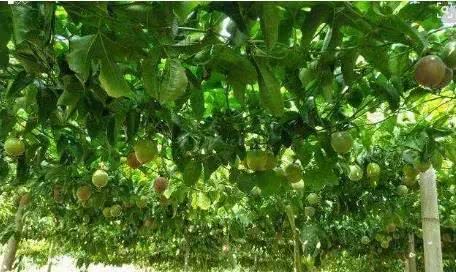
Usually, fertilizing crops is basically done at planting and before flowering, because the former is to supplement enough base fertilizer to strengthen the seedlings, while the latter is to promote flowering and fruit set. Passion fruit is different, and this difference is reflected in its growth pattern. For example, corn basically stops vegetative growth once it enters reproductive growth, that is, after flowering, but passion fruit is a vine crop. Although it is a fruit tree, it still grows and climbs like melons, and at the same period there may be a coexistence of vegetative growth and reproductive growth (flowering, fruiting).
Therefore, fertilizing passion fruit is also different from other fruit trees. Below is an introduction to fertilization strategies for passion fruit, hoping it will be helpful to everyone.
Apply nitrogen fertilizer lightly
Passion fruit is relatively sensitive to nitrogen fertilizer. Usually nitrogen fertilizer promotes vegetative growth, but due to the growth characteristics of passion fruit, too much nitrogen fertilizer will cause flower drop, and in that case it is naturally impossible to get fruit. However, nitrogen fertilizer is also an element necessary for plant growth. "Small leaves, slow growth, and yellowing leaf color" are typical signs of nitrogen deficiency in passion fruit. Once these signs are seen, nitrogen fertilizer should be supplemented in time, so attention must be paid to nutritional balance. And when fertilizing, pay attention to controlling the amount of nitrogen fertilizer, trying to apply small amounts multiple times.
Supplement phosphorus and potassium fertilizer in time
Phosphorus and potassium are indispensable for plant growth and development. If a plant lacks phosphorus, it will cause small fruit, incomplete seed development, and little juice. Potassium deficiency can also cause leaves to turn yellow and disease resistance to weaken. Therefore, phosphorus and potassium fertilizer need to be supplemented in time. The best way to supplement phosphorus and potassium fertilizer is to use drip irrigation, which saves fertilizer while also allowing quantitative control of phosphorus and potassium, achieving scientific fertilization.
Especially before the plant's first large-scale flowering period, topdressing should be done in time at this point, allowing the plant to accumulate enough nutrients and provide sufficient nutrition for the plant's large-scale flowering and fruiting later.
For passion fruit, do not set the topdressing time so rigidly. In agricultural production, copying others or the introductions in books will always not produce very good results. Knowledge is dead, but application is alive. Using knowledge to guide production is far more important than guiding knowledge. Therefore, the fertilization time for passion fruit should be flexibly controlled. What matters is whether the field lacks fertilizer. When the plant shows signs of fertilizer deficiency, fertilizer should be applied in time and the problem solved in time, so that high yield can be achieved.
This is Science and Agriculture, welcome to add a follow, and let us grow knowledge together.