How many soybeans does it take to press the soybean oil eaten at home? Trivia revealed
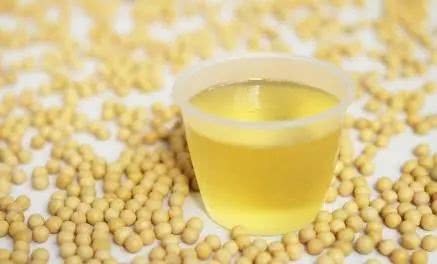
The soybean oil yield rate has a great deal to do with the soybean variety, place of origin, and extraction process. Judging from current soybean varieties, the oil yield rate of soybeans generally falls in the range of 15-22%, which is to say that one jin of soybeans can yield one liang five to two liang two of soybean oil. This ratio is much lower than the oil yield rates of rapeseed, sesame, and peanuts.
Variety
For example, the high-oil soybean "Dongsheng 79" cultivated this year by the Mudanjiang Academy of Agricultural Sciences reached an average oil content of 24.16%, truly much higher than the 17% of ordinary soybeans, and this oil content is even 2 percentage points higher than that of imported genetically modified soybeans. Since 1966, no variety among those approved in Heilongjiang has been able to break through the 24% ratio. This can be considered a breakthrough in the history of soybean breeding in our country.
Place of origin
As far as our country is concerned, the territory is vast and the climate difference between north and south is also extremely great. Even if northern soybean varieties can set seed in the south, their quality will decline a great deal. As for the United States, the climate there is more suitable for soybean growth, and under the same conditions, the oil content of American soybeans can also be 1 percentage point higher than that of our country's soybeans.
Oil pressing process
At present, oil refining mainly adopts two methods: physical pressing and solvent extraction. The physical pressing method is a way of pressing the oil out of soybeans by applying pressure to the soybeans, and this is also the most traditional oil refining method. However, this oil refining method has a low oil extraction rate; compared with solvent extraction, it can be 1 to 2 percentage points lower.
Today some oil refineries generally adopt the solvent extraction method, a method of extracting oil from raw materials using food-grade solvents, and this is also currently internationally recognized as the most advanced extraction process, with a very high oil extraction rate.
However, while the soybean oil refining process has reached a top level, at present basically the main difference in soybean oil refining is still reflected in the quality of the soybeans. It should be said that at present there is still no small gap between the oil content of our country's soybeans and that of imported genetically modified soybeans.
This is Science Agriculture, welcome to add a follow, and let us grow knowledge together.