Weak corn seedlings need timely remedial action to avoid affecting yield
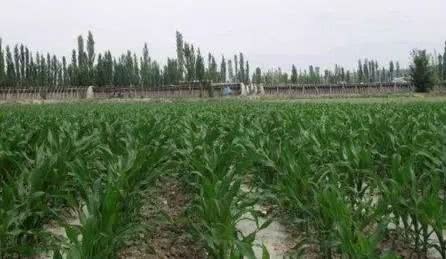
The corn is growing weakly, how should it be remedied? On this issue, we still first need to figure out the reasons for the weak corn growth, otherwise it will be difficult to solve this problem. Right now the corn is still at the seedling stage, and weak growth at the seedling stage is also not conducive to the formation of corn yield.
Like this year's seedling-stage drought in Northeast China, weak growth is understandable, since local corn emergence has been affected quite a bit. However, in the Huang-Huai region, rainfall at the seedling stage is relatively abundant, so it may not be a lack of soil moisture, but whether it is a lack of fertilizer or a lack of soil moisture, or improper field management, all of these must be handled properly.
Hoe and till early to promote development.
For corn, hoe and till between the rows as soon as possible, cultivate and weed, and pay special attention to replanted spots or spots where seedlings were filled in; after emergence it is best to subsoil deep in the furrows, so as to capture accumulated temperature, loosen the soil, resist drought and preserve soil moisture, enhance corn root vitality, and speed up the growth and development process. This is also one of the major measures for improving weak seedlings at the seedling stage.
Strengthen field management and apply topdressing at the right time.
For waterlogged spots in the field, drain the water in time, and after the water is drained, loosen the waterlogged soil to speed up the drying out of moisture. If weak seedlings at the seedling stage are caused by excessive drought, watering and irrigation should also be done in time to replenish soil moisture. At the same time, weeds in the field should also be removed and cleared in time to avoid competing with corn for fertilizer and soil moisture.
And if weak growth is caused by insufficient nutrition at the seedling stage, such as yellowing, leaf spots and other nutrient deficiencies or diseases, then spray pesticides or apply fertilizer in time. And in order to supplement nutrition and promote development, fertilizer should also be applied in time to improve the plant's growth and stress resistance.
It is worth noting that topdressing should not be too early or too late; if topdressing is too early, the fertilizer efficiency cannot be maximized, while if topdressing is too late, it will cause excessive vegetative growth and delayed maturity.
Weed in time and control weed damage.
Generally, after corn is planted, herbicide is applied, and weed damage at the seedling stage is still relatively mild, but if weeds appear at the 5-leaf stage of corn, then the corresponding herbicide can be chosen to weed again, especially for some stubborn weeds.
Finally, a reminder to all farmers: be sure to pay attention to the prevention and control of field pests and diseases; proper field management can greatly reduce field damage and can also cultivate strong seedlings.
This is Science for Agriculture; you are welcome to follow, and we will grow knowledge together.