When do tangerines ripen and hit the market? An introduction to their ripening times
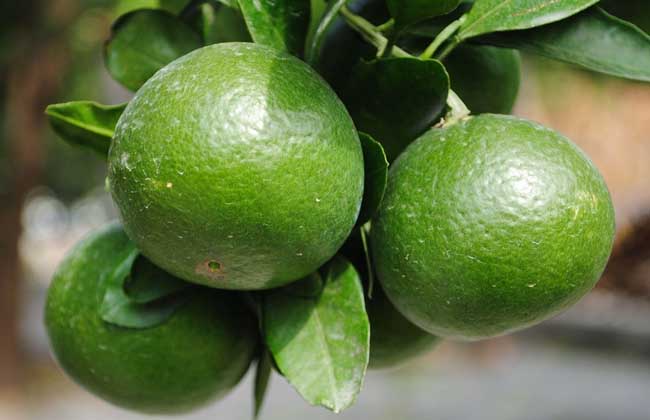
The tangerine is a fruit of the genus Citrus in the family Rutaceae. In China it is distributed from Sanya City in Hainan Province in the south to Shaanxi, Gansu and Henan in the north, from Taiwan, China in the east to the Yarlung Zangbo Grand Canyon in Tibet in the west. It can be said to be a treasure from head to toe, with effects of moistening the lungs, relieving cough, reducing phlegm and quenching thirst. Let us take a look below at when tangerines ripen and hit the market!
When do tangerines ripen?
Tangerines generally begin to ripen after October. In fact, when it comes to the ripening season of citrus, because the varieties differ, the ripening time of each kind of citrus is different. Generally the ripening season of tangerines is in late autumn, that is, October to November; the ripening period differs among varieties: early-maturing varieties ripen around National Day, ordinary ones generally from November to January of the following year, and late-maturing ones generally from November to March or April of the following year.
Tips for choosing tangerines
1. Look at the variety: common tangerine varieties include Shatang tangerine, Nanfeng tangerine, rock sugar tangerine, Huangyan honey tangerine and ponkan, among which Shatang tangerine is the sweetest.
2. Consider the size: medium-sized ones are best, because a large one has a thick peel and the flesh is not plump, while a small one is poorly developed and its taste is not good enough.
3. Judge the color: choose orange-red or orange-yellow ones with smooth peel. Overripe pale yellow ones, green unripe ones and tangerines with holes in the peel are all unacceptable.
4. Compare the springiness: press lightly with two fingers; those with good springiness are better. Thin peel, a fresh fragrance that can be smelled through the peel, and some oil that emerges when the peel is pinched lightly also indicate a good tangerine.
5. Look at the bottom hollow: viewed from the side, those with a long stalk and a sunken bottom are better, while those with a flat or protruding bottom are not as good.
6. Pinch the bottom: those that feel soft when pinched are mostly sweeter, while those that feel hard generally have a thicker peel and mostly taste rather sour.
What varieties of tangerines are there?
1. Shatang tangerine: the peel of the Shatang tangerine is orange-yellow and glossy, thin and easy to peel, covered with small sandy dots and rather rough to the touch; the fruit is oblate with a knobby protrusion at the top and a sunken stem end; the flesh is reddish and moist, without white membrane, crisp and juicy, tasting fresh and sweet with few seeds. The authentic ones are produced in Huangtian Town of Sihui City and Guantian Village of Heyun Town in Qingxin County of Qingyuan City.
2. Honey tangerine: the fruit of the honey tangerine contains many nutrients, such as sugar, citric acid, vitamin C, protein, as well as carotene, vitamin P and other vitamins, among which the vitamin C content is 6 to 20 times that of apples. It is not only rich in nutrients but also vivid in color, with a strong aroma and a moderate sweet-sour taste, making people think of it at the mere mention, mouth-watering at the sight and delighted at the taste.
3. Tribute tangerine: the tribute tangerine is an excellent variety among Chinese citrus, namely the Nanfeng honey tangerine, and is also a precious specialty of Jiangxi Province. Historically it has been famous at home and abroad for its golden fruit color, thin peel, tender flesh, residue-free eating, rich sweetness and pungent fragrance. According to the "Yu Gong", as early as more than two thousand years ago, Nanfeng honey tangerine had already been listed as a tribute.
4. Huangyan tangerine: Huangyan tangerine is a specialty of Huangyan District, Taizhou City, Zhejiang Province. As the “hometown of Chinese honey tangerines” and a district and county serving as a high-quality citrus production base of the Ministry of Agriculture, Huangyan District has a long planting history and numerous varieties. Its citrus is moderately sweet and sour with a rich flavor, especially fresh and sweet, of excellent quality, and has repeatedly won famous-brand product and quality product awards. It was among the first batch nationwide to receive pollution-free agricultural product certification.
5. Ponkan: ponkan is one of the most common fruits in daily life. It is bright in color and sweet-sour and tasty; the fruit is generally large, but smaller than a pomelo, round and slightly flat, with a rather thick, bumpy and rough peel that is relatively easy to remove, and most of its seeds are white. The ponkan fruit is large, bright in color, with a loose and easy-to-peel skin, crisp and tender flesh, and plenty of juice that melts in the mouth.
6. Fu tangerine: the Fuzhou Basin is rich in citrus, especially tangerines, which have a thin peel, red color, plenty of juice and sweet taste with a unique flavor, and are called “Fu tangerine”. The producing areas are mostly distributed along both banks of the lower reaches of the Min River. In late autumn and early winter, layer upon layer of green trees line both banks of the Min River, their branches covered with red fruits in a brilliantly colorful scene, which people praise as “the Min River red with tangerines”.