Where are the main production areas of tangerines distributed?
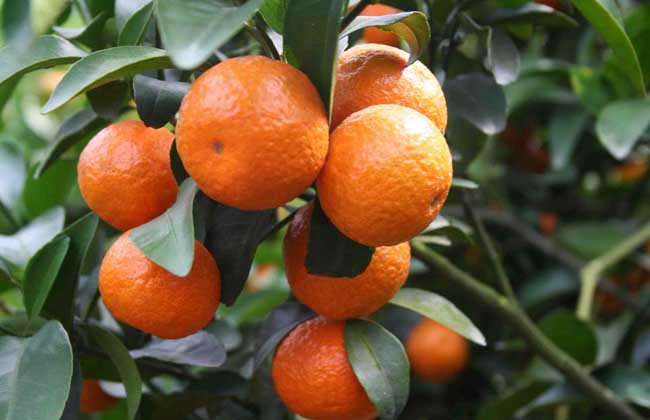
The tangerine originated in China. China has a history of cultivating tangerines for more than 4000 years, mainly in the middle and lower reaches of the Yangtze River and the areas south of the Yangtze River. After thousands of years of cultivation, it is certainly impossible to pinpoint the exact locations. The tangerine spread across the Eurasian continent through the Arabs, and to this day it is still called the "Chinese apple" in the Netherlands and Germany. Let us take a look below at where tangerines are produced!
Where are tangerines produced?
In China, tangerines are distributed between 16 and 37° north latitude, with the highest altitude reaching 2600 m (Batang, Sichuan), from Sanya in Hainan Province in the south, to Shaanxi, Gansu and Henan in the north, from Taiwan, China in the east, to the Yarlung Zangbo River valley in Tibet in the west. However, China's commercial citrus cultivation areas are mainly concentrated between 20 and 33° north latitude, at altitudes below 700 to 1000 m. A total of 19 provinces (municipalities and autonomous regions) across the country produce citrus, including Taiwan, China. Among them, the 10 provinces (municipalities and regions) that are major citrus producers are Zhejiang, Fujian, Hunan, Sichuan, Guangxi, Hubei, Guangdong, Jiangxi, Chongqing and Taiwan, followed by Shanghai, Guizhou, Yunnan, Jiangsu and other provinces (municipalities). Citrus is also grown in Shaanxi, Henan, Hainan, Anhui and Gansu. There are 985 counties (cities and districts) growing citrus nationwide.
Global distribution of tangerines
Tangerines worldwide are mainly distributed in regions south of 35° north latitude. They prefer warmth and humidity, and in areas with large water bodies that raise temperatures, they can extend northward to 45° north latitude. 135 countries in the world produce citrus, with an annual output of 102.822 million tonnes and an area of 10.73 million mu, both ranking first among all fruits. Brazil ranks first in output with 24.2526 million tonnes, the United States ranks second with 16.3352 million tonnes, China ranks third with 10.78 million tonnes, followed by Mexico, Spain, Iran, India, Italy and other countries.
The production environment of tangerines
1. Temperature: The growth and development of tangerine fruit requires a temperature of 12.5 to 37°C. Autumn flower bud differentiation requires day and night temperatures of around 20°C and around 10°C respectively. The soil temperature for root growth is roughly the same as that of the aboveground part. High temperatures are also unfavorable to the growth and development of citrus. When the air temperature and soil temperature are above 37°C, the fruit and roots stop growing.
2. Light: The tangerine is a tree species with strong shade tolerance, but good sunlight is still needed for high quality and high yield. Generally, areas with an annual sunshine duration of 1200 to 2200 hours can grow normally. For example, compared with the Chongqing citrus production area, which has less sunshine, South China, which has good sunshine and abundant heat, produces fruit with higher sugar content, lower acid content and a higher sugar-acid ratio.
3. Humidity: Tangerines are suitable for planting in tropical and subtropical regions with an annual rainfall of around 1000 mm. The suitable relative soil moisture content is 60 to 80%; below 60%, irrigation is needed. Excessive rain causes soil waterlogging or a high groundwater table, which can cause root death in citrus orchards with poor drainage.
4. Soil: Tangerines have a relatively wide range of adaptability to soil. They can grow in purple soil, red-yellow soil, sandy beach and coastal silt, with a pH of 4.5 to 8, and a pH of 5.5 to 6.5 is most suitable. Root growth requires a relatively high oxygen content, and the most suitable soil is loose in texture, well structured, with an organic matter content of 2 to 3%, and well drained.