A Detailed Explanation of Peach Growing Techniques and Management Methods
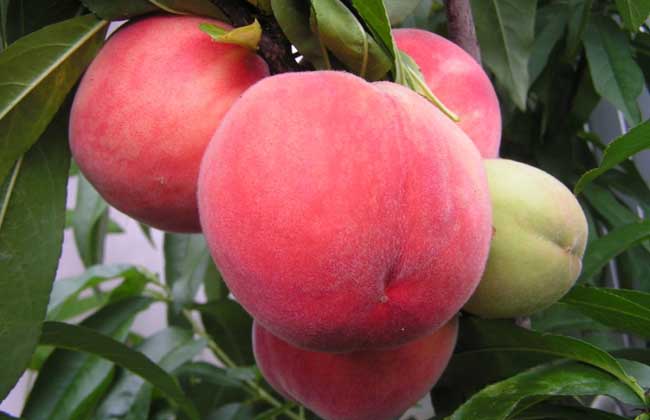
The peach is a deciduous small tree of the genus Prunus in the rose family, with very high cultivation value. It generally reaches 3 to 4 m in height, bears fruit early, beginning to fruit 2 to 3 years after planting, reaches full bearing at 6 to 7 years, and gradually declines after 15 to 20 years. Its lifespan is relatively short; good trees still maintain high yields at 25 to 30 years. Let us take a look at peach growing techniques below!
Selection of Nursery Stock
When choosing peach varieties to grow, you must base your choice on the local soil, climate, management level and local market conditions, select superior varieties with good yield performance and ready market demand, and make a good mix of early-, mid- and late-maturing varieties. At present the more widely grown varieties are Fenghuang and Lianhuang, which have good yield performance and are easy to cultivate and manage.
Planting and Fertilization
For peaches, choose well-drained, deep soil with a pH of 5.5 to 6.5, slightly acidic sandy loam or gravelly loam, and dig large holes for planting. On low hilly slopes, terraces should be built. Plant 40 to 50 trees per mu on flat land and 50 to 60 trees per mu on hillsides. For base fertilizer, peaches favor applying winter fertilizer in autumn, mainly organic fertilizer, accounting for 60 to 70% of the annual fertilizer application. Generally apply 2000 kg of barnyard manure per mu or 150 kg of special fruit-tree fertilizer per mu. The number of topdressings, timing and amount vary according to variety, tree age, cultivation management method, growth and development stage and external conditions, and generally consist mainly of pre-bud fertilizer, fruit-swelling fertilizer and post-harvest fertilizer.
Training the Tree Shape
The tree shape for peaches is the three-main-branch natural open-center form. As for tree structure, the height of a mature tree is maintained at about 2.5 to 3 m, the trunk height is 30 to 40 cm, and there are 3 main branches, each occupying a 120-degree azimuth, with each main branch paired with 1 to 2 sub-main branches, at an opening angle of about 75 degrees. In the year of planting, head the tree at 50 to 60 cm, and within the training zone below the cut there must be more than 3 vigorous buds. In the first year of growth after planting, select and retain new shoots with stronger growth and a better azimuth as main branches, while the remaining new shoots can be thinned out or twisted to serve as auxiliary nurturing branches. In the second year after planting, select vigorous side shoots 50 to 60 cm from the trunk with a good opening angle to train as sub-main branches, and at the same time train large and small fruiting branch groups on the main and sub-main branches.
Tree Pruning
Dormant-season pruning of peaches can be carried out from leaf fall to before bud break. Pruning combines heading back with thinning out, as well as long cane training, renewal pruning and branch bending. Long fruiting branches are cut back by about one third of their length; medium fruiting branches are generally not headed back except for thinning out crowded branches; short fruiting branches should be retained at about 1 branch every 10 cm. Growing-season pruning mainly includes post-bloom re-pruning, removal of sprouts and buds, branch thinning, branch twisting, pinching, branch pulling, shoot tipping and branch repositioning.
Pest and Disease Control
For pest and disease control in peaches, the first step is to do a good job of winter orchard cleanup. In conjunction with winter pruning, promptly remove diseased branches and leaves. Around the Start of Winter, whitewash the trunks. Before bud break in early spring, spray 5 degrees Baumé lime-sulfur mixture. During the growing season, control diseases such as brown rot, anthracnose, scab and leaf curl. Insect pests harming peach trees include aphids, oriental fruit moth, small green leafhopper, peach fruit borer, stinging caterpillars, lace bugs and white peach scale. Spray pesticides in a timely manner according to the occurrence of the pests.
Fruit Management
Peaches have a high fruit set rate, so fruit thinning is essential to control the number of fruits retained. Fruit thinning should be done in 2 rounds, in late April to early May and in mid-to-late May respectively. Generally, short fruiting branches retain 1 fruit, medium fruiting branches retain 2 fruits, and long fruiting branches retain 3 to 5 fruits. After the final fruit set, spray and bag the fruit in a timely manner. The harvest period depends on the characteristics of the variety, and it is best to harvest fruit at 80% maturity.