A Detailed Guide to Papaya Tree Planting Techniques and Management Methods
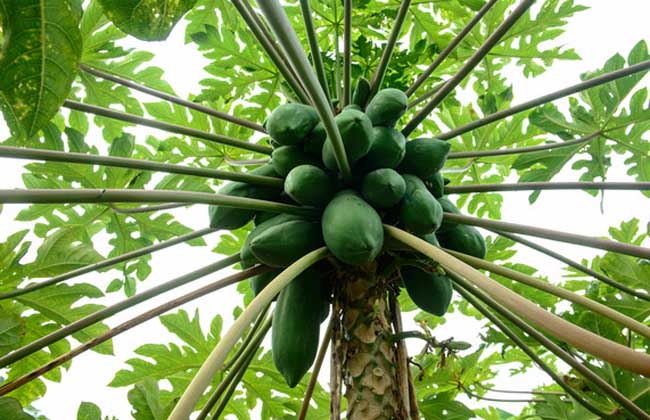
Papaya is a shrub or small tree of the genus Chaenomeles in the rose family (Rosaceae). It has very high nutritional value and notable health benefits. Products already successfully developed and marketed using papaya as a raw material include papaya juice beverages, papaya preserves, papaya fruit wine, papaya fruit vinegar, and more. In China, cultivation is distributed across Guangdong, Guangxi, Fujian, Yunnan, Taiwan, China, and other places. Let us take a look at papaya tree planting techniques below!
Growing Conditions for Papaya Trees
1. Soil: Papaya trees are not demanding about soil quality. They grow better in deep, loose, fertile, well-drained sandy soil, and should not be planted in low-lying waterlogged spots.
2. Water: Papaya trees prefer semi-dry, semi-moist conditions. If the soil is too wet before and after the flowering period, the flowering period will be short; if the soil is dry after fruit set, the fruit will appear shriveled; if the soil is too wet during the fruit ripening period, fruit drop will occur.
3. Light: Papaya trees are not shade-tolerant. A wind-sheltered, sunny location can be chosen for planting.
4. Temperature: Papaya trees prefer a warm environment and can overwinter outdoors in the Jianghuai River basin.
Propagation Methods for Papaya Trees
1. Cuttings: When taking papaya cuttings, select 1- to 2-year-old branches from the mother tree that are well developed, free of pests and diseases, and fully lignified as cuttings. Each cutting should have more than 3 nodes. Cut the lower end near a node into a slanted surface, quickly dip the cut surface in 0.05% rooting powder or 0.05-0.1% naphthaleneacetic acid for 10-15 seconds, remove and let it dry slightly, and then it can be inserted.
2. Suckers: Papaya has strong sprouting ability, and many sucker shoots grow around the root crown. From September to November each year, dig out vigorous seedlings with roots that are 60-80 cm or more in height and plant them as planting stock. Seedlings obtained by this propagation method have a high survival rate after planting, but the propagation coefficient is low and a large number of seedlings cannot be obtained.
3. Layering: Each spring or autumn, select vigorous, pest- and disease-free branches near the ground on the plant, bend them down and press them into the soil. Girdle the part pressed into the soil, fix it with a wooden fork, then pile fertile soil on top. After roots grow at the girdled area, separate it from the mother plant as an individual seedling and plant it as planting stock.
Papaya Tree Planting Techniques
1. Planting density: Papaya can be planted in spring or autumn. After planting, the trunk can be headed at 70-80 cm above ground. When sprouting occurs, promptly remove root suckers and sprouts within 50 cm of the base of the main trunk, and appropriately thin out overly dense new shoots. It is suitable for close planting. In mountainous and hilly poor land, the row spacing is generally 2×3 m; in flat land with good fertilizer and water conditions, the row spacing is preferably 3×4 m; when intercropped with grain and vegetables, the row spacing is preferably 5×5 m.
2. Water and fertilizer management: In papaya orchards, base fertilizer is mostly applied in autumn, and the base fertilizer application amount accounts for about 70% of the total annual fertilizer application. Topdressing should be carried out according to the growth and fruiting status of the papaya tree, during the period of maximum fertilizer efficiency. Trees in full fruiting stage should be topdressed in time with pre-flowering fertilizer, post-flowering fertilizer, and fruit swelling fertilizer, while the fertilizer amount for young trees should be reduced as appropriate. After fertilizing, irrigate once thoroughly and pay attention to controlling water during the flowering period. In arid areas, after planting, the tree disk should be covered with plastic film or grass to preserve soil moisture.
3. Flower and fruit management: From the first to the second year of the papaya tree, pick off the flowers at any time. In the third spring, strengthen management and apply pre-flowering fertilizer, fruit swelling fertilizer, and autumn fertilizer well. Self-pollination has a high fruit-setting rate and fruit set is easy. Releasing bees or artificial pollination during the flowering period can increase the fruit-setting rate. Papaya fruit has a self-thinning phenomenon, and poorly pollinated fruit will fall off automatically. Therefore, after fruit set in early May each year, it is only necessary to thin out small fruit and deformed fruit.
4. Training and pruning: After grafting, the papaya's central trunk is relatively upright, and after slight pruning it can be trained into a cup shape, cylindrical shape, or slender spindle shape, generally mainly the slender spindle shape. Pruning is mainly thinning. During the growing season, pay attention to cutting off competing branches of the central trunk, upright water sprouts within the canopy, overly dense branches, thin and weak branches, pest- and disease-damaged branches, and so on. In areas lacking branches, 1-2 buds can be retained for heavy short pruning to promote branch growth, and aging fruiting branch groups should be promptly retracted and renewed.
5. Pest and disease control: The main diseases of papaya include leaf spot, ring rot, anthracnose, and dry rot. Insect pests include aphids, red spiders, papaya borers, peach fruit borers, pear psyllids, stinging caterpillars, and so on. While controlling these pests and diseases, attention should also be paid to controlling various caterpillars, pear psyllids, and other pests. After winter begins, clean up the orchard, sweep up fallen leaves, mummified fruit, and pest- and disease-damaged branches, and burn them in a centralized manner.