Guava Cultivation Techniques and Management Methods Explained in Detail
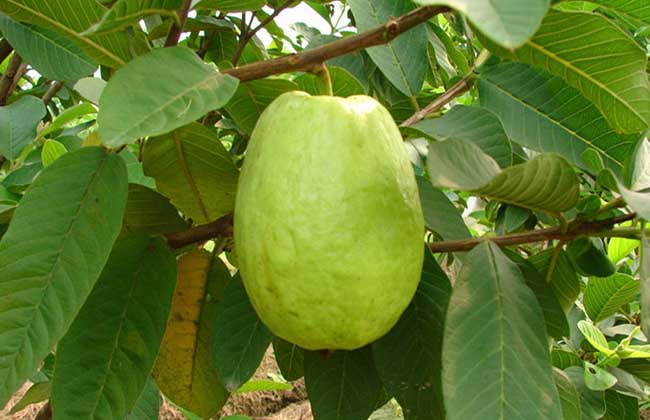
Guava is a tropical fruit tree with very strong adaptability, native to tropical America. It spread to tropical and subtropical regions of the world in the 16th to 17th centuries and was introduced to China around the late 17th century. It is now cultivated in Taiwan, China, Hainan, Guangdong, Guangxi, Fujian, Jiangxi, Yunnan and other provinces in China, and in some places it has escaped cultivation and become a wild fruit tree. It has extremely high cultivation value. Let us take a look at guava cultivation techniques together below!
Guava Growth Habits
Guava grows on wasteland or low hills. It is suited to tropical climates and is afraid of frost. Generally, when the temperature is -1 to 2°C, young trees will freeze to death. For suitable growth, the average summer temperature must be above 15°C. It has no strict requirements for soil; it grows better when cultivated in well-drained sandy loam or clay loam, and it can be planted in soil with a pH value of 4.5 to 8.0.
Guava Propagation Techniques
1. Grafting: Generally, own-rootstock is used. When the diameter of the nursery stock reaches 0.7 cm, grafting can be carried out. Bud grafting or branch grafting can be used, and the time is preferably winter and spring. The scion should not be too old or too tender; branches that have just shed their bark are suitable. Remove the leaves 10 to 15 days before collecting the scion, and the best effect is obtained by cutting when the buds are about to sprout. Thick and strong rootstock accumulates more nutrients, which is conducive to graft survival. Generally, the binding is removed 1 month after bud grafting. After the grafted bud heals and survives, cut the rootstock to promote sprouting and growth of the scion, and after 1 year it can be released from the nursery for field planting.
2. Air layering: For air layering, select 2- to 3-year-old branches with a diameter of 1.2 to 1.5 cm, girdle them at 40 to 60 cm from the tip of the branch, with a girdling width of 2 to 3 cm, and wrap them with rooting medium. Before wrapping with rooting medium, apply indolebutyric acid aqueous solution or lanolin to the girdled wound, which can promote early rooting, increase the number of roots, and also raise the survival rate. After 2 months, when the new roots grow densely, saw them off from the mother plant for temporary planting. Plant them after the second new shoots emerge and turn green.
3. Cuttings: For cuttings, cut 2- to 3-year-old branches with a stem diameter of 1.2 to 1.5 cm and a length of 15 cm, and take cuttings from February to April. Treating the base of the cuttings with 0.2% indolebutyric acid can promote rooting, and adding 2% sucrose makes it even better. It is also possible to treat with 0.2% naphthaleneacetic acid and take leafy cuttings, which works even better under mist conditions. After treatment, cultivate them in a cutting bed at 28 to 32°C; rooting is fast and good.
Guava Cultivation Techniques
1. Planting: For early-maturing guava varieties and poor soil, a row spacing of 4×4 m can be used for planting; for mid- to late-maturing varieties and fertile soil, a row spacing of 6×4 m or 5×5 m can be used for planting. In combination with soil improvement, dig planting holes 80 cm deep and 80 cm wide, and bury weeds, green manure, organic fertilizer and lime in layers.
2. Backfilling: After planting and backfilling guava, the soil should be more than 20 cm above the ground. It is best to apply base fertilizer and backfill the planting hole 1 month in advance, which helps the soil in the planting hole settle and avoids deep planting caused by sinking after planting. After planting, cover the tree basin with grass and water thoroughly to settle the roots. If there are too many shoots and leaves, some leaves can be cut off to reduce water consumption. After planting, set up supports to prevent the wind from shaking and breaking tender branches.
3. Pruning: After guava nursery stock is planted, cut off the trunk when the seedling height is 50 to 60 cm to promote new shoots. Select and retain 3 to 4 slanted branches with even distribution and suitable branching angles as main branches, shorten the main branches by leaving 30 to 40 cm to promote branching, and select and retain 2 to 3 as secondary main branches. Then cultivate fruiting branches on the main branches and secondary main branches. In this way, a round-headed crown with a short trunk, multiple main branches, dwarfed tree shape and many effective branches can be formed.
4. Fertilizer and water: The quality of guava fruit is closely related to fertilization. There is an obvious difference in taste between fruit mainly fertilized with organic fertilizer and fruit mainly fertilized with chemical fertilizer. In fertilization, organic fertilizer and chemical fertilizer should be reasonably combined. In the first year after planting, apply 2 kg of ternary compound fertilizer, 1 kg of soybean bran, 0.2 kg of potassium sulfate and 0.5 kg of shell lime per plant. In the second year after planting, double the fertilization amount of the previous year. In the third year after planting, do not increase the fertilization amount, or increase it according to tree vigor and yield.
① Young trees: Generally, fertilize 2 times for each new shoot cultivated, once when the new shoot sprouts and once when the new shoot reaches 40 cm. Apply 2.5 to 5.0 kg per plant of decomposed manure water or bran water plus 0.3% urea liquid fertilizer, or apply 25 g of urea plus 50 g of potassium fertilizer.
② Flower-strengthening fertilizer: After each pruning of shoots to promote flowering, apply ternary compound fertilizer for guava, accounting for 30% of the annual fertilization amount, plus 1 kg of lime powder.
③ Fruit-setting fertilizer: During the guava fruit growth period, apply ternary compound fertilizer plus potassium sulfate, accounting for 30% of the annual fertilization amount.
④ Post-harvest fertilizer: Before harvesting guava, apply decomposed poultry and livestock manure, farmyard manure or peanut bran, accounting for 40% of the annual fertilization amount; at this time, stop applying chemical fertilizer.
⑤ Foliar fertilizer: During the new shoot greening stage, flower bud stage and young fruit development stage of guava, spray 1 to 2 times each of 0.5% magnesium sulfate, 0.1% boric acid or 0.2% borax solution, at an interval of 7 to 10 days, or apply foliar topdressing according to element deficiency.
5. Pests and diseases: The main pests and diseases of guava include canker, damping-off, nematode disease, anthracnose, sooty mold, fruit rot, mealybug, cotton aphid, peach fruit borer, whitefly, aphid and yellow stinging caterpillar, etc.
① Canker and damping-off can be prevented and controlled by applying Bordeaux paste (1 part copper sulfate, 2 parts slaked lime, 3 parts cow dung mixed into a paste) to the wounds.
② Anthracnose, fruit rot and sooty mold can be controlled with 50% zineb, 50% thiophanate-methyl 1000-fold solution, or 75% chlorothalonil 800-fold solution.
③ Once nematode disease infects the plant, it is quite difficult to treat. Once diseased plants are found, they should be pulled out or cut off and burned in time to prevent spread.