What kind of fruit is guava? Get to know this tropical fruit
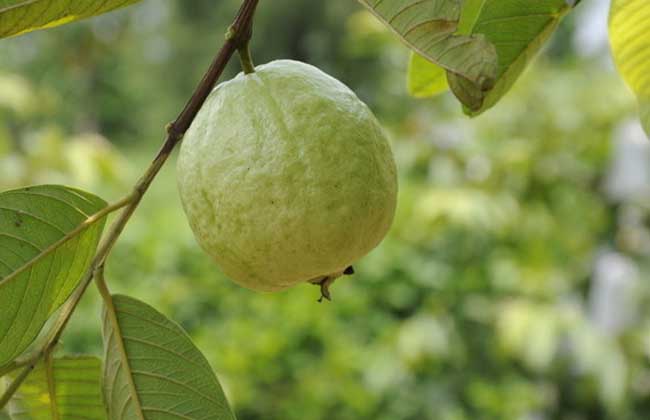
Guava, also known as guava, chicken dung fruit, pull fruit and so on, is a tree plant of the genus Psidium in the Myrtaceae family. It originated in South America and is cultivated throughout South China, where it is commonly found as an escaped wild species. Its fruit is eaten, and its leaves contain volatile oil and tannins, among other things, and are used medicinally to stop diarrhea, stop bleeding and strengthen the stomach. After being boiled to remove the tannins and dried in the sun, the leaves are used as tea and have a heat-clearing effect. The fruit is rich in nutrients, with especially high levels of protein and vitamin C; it also contains vitamins A and B as well as the trace elements calcium, phosphorus, iron and potassium.
The guava tree has smooth, gray bark, and its young branches are angular and hairy. The leaves are leathery, oblong to elliptical, with an acute or blunt tip and a nearly rounded base; the upper surface is slightly rough, the lower surface is hairy, and the netted veins are distinct. The flowers are solitary or arranged 2 to 3 together in a cyme, with a bell-shaped calyx tube, a nearly round calyx cap, white petals, an inferior ovary fused with the calyx, and a style as long as the stamens. The berry is spherical, ovoid or pear-shaped, with persistent sepals at the tip; the flesh is white or yellow, the placenta is enlarged, and there are many seeds.
Guava is a tropical fruit tree with very strong adaptability. It spread to tropical and subtropical regions around the world in the 16th to 17th centuries, such as North America, Oceania, New Zealand, the Pacific islands, Indonesia, India, Malaysia, North Africa and Vietnam. It was introduced to China around the end of the 17th century. It is cultivated in Taiwan, China, Hainan, Guangdong, Guangxi, Fujian, Jiangxi, Yunnan and other provinces, and in some places it has escaped to become a wild fruit tree.
Guava trees often grow on wasteland or low hills. They are suited to a tropical climate and are afraid of frost; generally, young trees freeze to death at temperatures of -1 to 2°C, and the suitable growing temperature requires an average summer temperature above 15°C. It is not strict about soil requirements, growing better in well-drained sandy loam and clay loam, and can be planted in soil with a pH of 4.5 to 8.0.
Guava tastes sweet and juicy, with smooth flesh and a small core with few seeds. Eating it regularly can supplement nutrients that the human body lacks, strengthen the body and improve physical fitness. Compared with apples, guava contains 38% less fat and 42% fewer calories. It is also widely used in the food processing industry, mainly to increase the vitamin C content of foods and to fortify and improve their nutritional value.