How to grow Angelica sinensis seeds? A detailed guide to the planting method
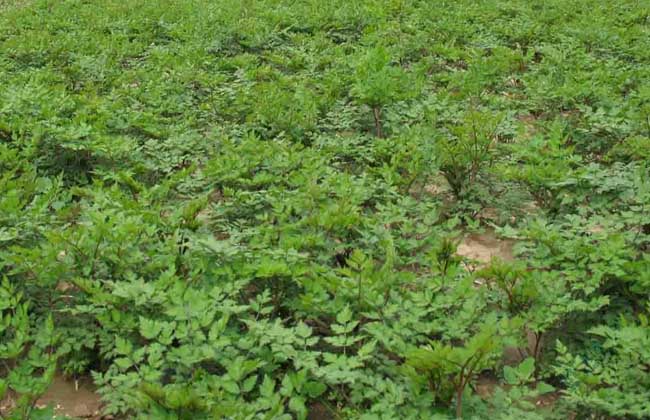
Angelica sinensis is a perennial herbaceous plant of the genus Angelica in the Apiaceae family. It prefers a cold, cool climate and can be cultivated at altitudes of around 1500-3000 m. In low-altitude areas, the bolting rate is high and it is difficult for the plants to survive the summer. It is best cultivated in deep, loose, well-drained, fertile sandy loam rich in humus, and should not be planted in low-lying waterlogged areas or in clay that tends to compact and poor sandy soil. Let us take a look below at how to grow Angelica sinensis seeds!
Seed selection and land preparation
For seed collection of Angelica sinensis, the fresh seeds set in the second year after transplanting are usually chosen. They can be harvested when the seed coat turns azure blue or pink. After air-drying, the seeds are threshed and stored for later use. The seedling-raising plot for Angelica sinensis should be chosen on a sheltered, sunny, shaded hillside or wasteland. Plow the land in late May, use the ash of burned weeds as base fertilizer, turn it into the soil, then rake it level and make raised beds 1.2 m wide. Before sowing, apply base fertilizer again at 2500-3000 kg per mu, turn it into the soil, and break up and level the soil thoroughly.
Sowing and seedling raising
Angelica sinensis seeds are suitable for sowing from early to late June. Open transverse furrows with a row spacing of 17-20 cm, sow the seeds evenly, cover with a layer of fine soil to cover the seeds completely, and then cover with a layer of weeds. Sow 4-5 kg of seeds per mu. The optimum germination temperature is about 20 degrees C. Seedlings emerge about half a month after sowing. At this time, loosen the covering grass to prevent injuring the seedlings when removing the grass. Remove the covering grass in early August. Remove any weeds as they appear and keep the field free of weeds. Combine weeding with thinning, removing the weak and keeping the strong, with a plant spacing of about 1 cm being appropriate.
Seedling storage
For digging up and storing Angelica sinensis seedlings, early October is appropriate. Dig up the seedlings with their roots, tie them into small bundles, and store them in piles or in pits. For pile storage, choose a cool room without a fire, and in the room pile up one layer of seedlings and one layer of loess. For outdoor pit storage, choose a cool, dry place. Dig a pit 1 m deep and 1 m wide, with the length depending on the number of seedlings, pile up one layer of seedlings and one layer of loess, and cover the top of the pit with about 30 cm of soil, mounded above ground level.
Seedling transplanting
Transplanting Angelica sinensis seedlings is generally best in early to mid-April. On the prepared bed surface, plant in a triangular arrangement with a row spacing of 35×25 cm and a hole depth of 16 cm. For the seedlings raised, it is best to choose those with a root diameter of about 3.5 mm. Roots that are too large tend to bolt early, while those that are too small have poor adaptability and a low survival rate. After planting, cover with soil while pressing firmly, then cover with soil until it just covers the root crown of the seedlings by 2-3 cm.