Where are the main production areas of Angelica sinensis?
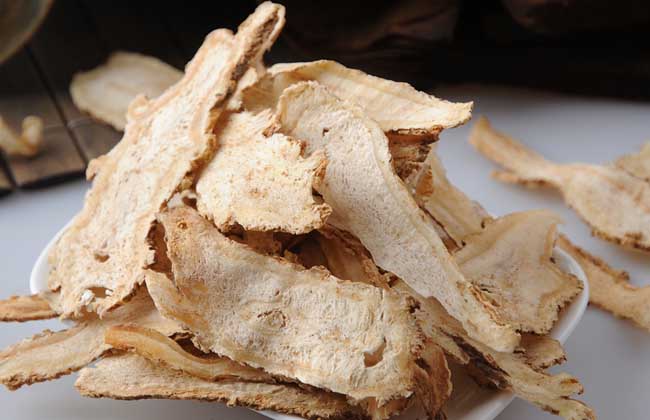
Angelica sinensis is one of the most commonly used traditional Chinese medicines, also known as West Angelica, Min Angelica, Golden Angelica, etc. It is a perennial herbaceous plant of the genus Angelica in the Apiaceae family. Its root can be used as medicine and has the effects of nourishing and harmonizing blood, regulating menstruation and relieving pain, moistening dryness and lubricating the intestines, fighting cancer, anti-aging, and enhancing immunity. Let's take a look below at where Angelica sinensis is produced!
Where is Angelica sinensis produced?
Angelica sinensis is native to western Asia, and is widely cultivated in various countries in Europe and North America. It is also widely cultivated in Gansu, Yunnan, Sichuan, Ningxia and other places in China, growing in cold and rainy mountainous areas. In fact, Angelica sinensis is always a cultivated product, mainly produced in Minxian, Tanchang, Wudu, Zhangxian, Weiyuan, Wenxian and other places in Gansu, as well as Weixi, Deqin, Zhongdian, Lanping and other counties in Yunnan, and also produced in Sichuan, Shaanxi, Hubei and other provinces. Among them, Minxian and Tanchang in Gansu have high yield and the best quality, and are known as the "Hometown of Chinese Angelica".
How to choose Angelica sinensis
1. Appearance: Angelica sinensis with a large head, thick and long main root, and few branches is considered high quality. This kind of Angelica sinensis absorbs more sunlight, water, and nutrients during growth, and is more valuable.
2. Cut surface: For Angelica sinensis, a yellow-white cross-section is considered high quality, while a reddish-brown cross-section is inferior. Choose Angelica sinensis with a compact cut surface density, because Angelica sinensis with a spongy, loose density is mostly grown in shady areas.
3. Color: For selecting Angelica sinensis, earthy brown or dark brown is preferred, while golden yellow Angelica sinensis indicates that it has been more severely sulfur-fumigated.
4. Smell: Good Angelica sinensis has a rich aroma, with a sweet, pungent, and slightly bitter taste. Overall, Angelica sinensis with a thick and long main root, few branch roots, a yellow-white cross-section, and a rich aroma is considered high quality.
What types of Angelica sinensis are there?
1. Dong Danggui: Dong Danggui is also known as Dahe Gui, Japanese Angelica, Yanbian Angelica, etc. It is used as a medicinal Angelica in some areas of Northeast China, and the local Korean ethnic group in Jilin believes its effects are similar to Angelica sinensis. Its root is shorter than that of Angelica sinensis, with a yellow-brown or brownish-brown surface, and the whole root has fine longitudinal wrinkles and horizontally protruding lenticel-like scars. The texture is hard and brittle, the cortex of the cross-section is off-white, and the xylem is yellow-white or yellow-brown. It is aromatic, sweet at first and then slightly bitter.
2. European Angelica: European Angelica is the root of the Apiaceae plant European Angelica. It differs from Angelica sinensis in properties and pharmacological effects, and has adverse reactions that Angelica sinensis does not have, so it cannot be used as a substitute for Angelica sinensis. The root of European Angelica is conical, with an enlarged root head, two or more root heads, and transverse ring lines. The surface is gray-brown or gray-yellow, and scars from removed lateral roots can be seen. It is fragrant but turbid, slightly sweet at first and then pungent and numbing to the tongue.
3. Yunnan Wild Angelica: Yunnan Wild Angelica is the root of the Apiaceae plant Yunnan Wild Angelica. Its effects are similar to Angelica sinensis, and it is used as a medicinal Angelica in some areas of Yunnan. Its root is conical, with fewer branches, and the surface is brown, reddish-brown, or black-brown. The top has stem scars or stem remnants, and the root head has transverse ring lines. The surface has longitudinal wrinkles and lenticel-like scars. The texture is hard, and the cross-section is yellow-white. It has an aroma similar to Angelica sinensis, is slightly sweet at first and then bitter.
4. Purple-flowered Peucedanum: Purple-flowered Peucedanum is the root of the Apiaceae plant Purple-flowered Peucedanum, also known as Yajiao Qi, Wild Angelica, etc. It is actually the genuine medicinal Peucedanum. Its main root is irregularly conical, with a brownish-brown surface, longitudinal wrinkles, leaf base scars at the top, and several branch roots growing below. The surface has longitudinal wrinkles and transverse lenticel-like scars. The texture is relatively hard and easy to break; the cortex of the broken surface is brownish-brown, the xylem is yellow-brown, and some have a lighter cross-section color.
5. Pubescent Angelica: Pubescent Angelica is the root of the Apiaceae plant Pubescent Angelica, that is, the root of the genuine medicinal Pubescent Angelica. Its root is slightly cylindrical, with an enlarged root head, conical, and mostly transverse wrinkles. The surface is gray-brown or brownish-brown, with longitudinal wrinkles, transversely raised lenticels, and fine root scars. The texture is relatively hard but softens when damp; the cortex of the cross-section is gray-white with scattered brown punctate oil chambers, the xylem is gray-yellow to yellow-brown, and the cambium ring is brown.
6. Large Pubescent Angelica: Large Pubescent Angelica is the root of the Apiaceae plant Large Pubescent Angelica. In some areas of Jilin, it is also called Tu Danggui, Wild Angelica, Fresh Angelica, and was once used as a substitute for Angelica sinensis. The root head is short and thick, with ring lines on the surface, leaf base scars at the top, and several branch roots below. The surface shows longitudinal wrinkles and transverse lenticel-like scars, and some show exuded brownish-brown viscous resin-like substances. The texture is brittle and easy to break; the cortex of the cross-section is gray-white, and the xylem is yellow-white.