A Detailed Guide to Achyranthes bidentata Planting Techniques and Management Methods
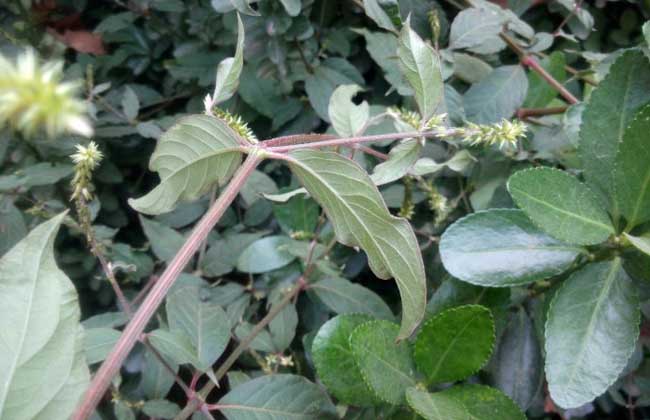
Achyranthes bidentata, also known as Huai Achyranthes, Niukeqi, and mountain amaranth, is a perennial herbaceous plant of the genus Achyranthes in the Amaranthaceae family. It is widely distributed throughout the country except in the Northeast, and often grows under forest slopes. Its dried root is used as medicine and has the effects of removing blood stasis and promoting menstruation, nourishing the liver and tonifying the kidney, strengthening tendons and bones, promoting diuresis and treating strangury, and guiding blood downward. Its cultivation value is very high. Let us take a look at the planting techniques for Achyranthes bidentata below!
Land Selection and Soil Preparation
Achyranthes bidentata is a deep-rooted plant. It grows wild beside houses, in woodlands, and among hillside grasses, while cultivated plants are mostly grown in plain areas. Choose warm and humid climates and loose, fertile sandy loam and yellow soil. Except for clay and saline-alkali soil, it can generally be planted in most soils. It is best to choose deep, dry sandy loam with good drainage. Apply more than 5000 kg of barnyard manure or farmyard manure per mu, plus 25-40 kg of superphosphate, and plow deeply 50-60 cm. After slight leveling, open a ditch 20-30 cm deep every 60 cm, water thoroughly along the ditch so that the soil is fully moistened, wait until the ground surface is slightly dry, then fill and harrow it fine, and make flat beds 1 m wide.
Sowing and Seedling Raising
Achyranthes bidentata is usually sown in mid-June of the lunar calendar on bed surfaces already supplied with sufficient base fertilizer. If the weather is rainy, simply scatter the seeds evenly on the bed surface and cover with 0.5 cm of soil. If the weather is dry with no rain, first soak the seeds in clean water for 1 day, drain the water, place them in a basin, cover with a cloth, keep indoors, stir and turn them from time to time, and they will sprout in about 2 days. In the afternoon, scatter the germinated seeds evenly on the bed, cover with 0.5 cm, and then water. The soil must not be dry. If there is no rain for a long time, water once every 1-2 days. After the seedlings emerge completely, the soil should also be kept moist regularly. The sowing rate is 0.5 kg per mu.
Field Management
1. Thinning seedlings and intertillage: During the seedling stage, Achyranthes bidentata fears high temperatures and waterlogging, so watering can be stopped after the seedlings emerge completely. When the seedlings are 3-4 cm tall, keep plants at a spacing of 3 cm; when they are 6 cm tall, thin to a final spacing of 9 cm. One month after sowing, axillary buds appear on the plants and should be removed when necessary, generally 3-4 times. When the seedlings are 12-15 cm tall, apply cake fertilizer in combination with intertillage at 750 kg per hectare. When the plants are 40-50 cm tall and terminal inflorescences appear, cut them off promptly; pinching the tops improves both yield and quality.
2. Watering and fertilizing: From the seedling stage to mid-August, water as little as possible or not at all for Achyranthes bidentata, so as to encourage the roots to grow downward. After late August, the amount of watering should be increased to promote thickening of the main root. Experienced farmers say that too much water early causes seedling collapse, too much water late causes root rot, and too much water in the middle stage gives deep roots and high yield. In addition to the fertilizer applied at final thinning, apply topdressing once at the end of September. In early October, if conditions permit, carry out one foliar application of superphosphate. Never allow water to accumulate in the field.
3. Harvesting and processing: Achyranthes bidentata is generally harvested around Frost's Descent when the aboveground leaves wither. If harvested too early, the roots are not plump and the yield is low. If harvested too late, the roots tend to become lignified or damaged by freezing, affecting quality. Dig carefully to prevent breaking, shake off the soil, and air-dry until 80% dry, then sort into grades by length. Fumigate once with sulfur at a ratio of 100:1 to prevent insect damage. This also gives a bright yellow color and makes drying easier, then dry further and use as medicine. Generally, the yield is 3000-3750 kg of dried product per hectare.
Pest and Disease Control
1. Leaf spot disease
[Damage] Leaf spot disease damages the leaves and mostly occurs in rainy summer seasons. Affected leaves develop yellow-brown lesions, and in severe cases the entire leaf turns gray-brown and dies.
[Control] Clean the field before harvest and centrally dispose of diseased residues. In the early stage of the disease, spray 1:1:120 Bordeaux mixture or 65% amobam 500 times liquid once every 10-15 days for 2-3 consecutive times.
2. Root rot
[Damage] Root rot mostly occurs in hot and rainy seasons and in low-lying waterlogged places. After onset, the underground roots become brown, water-soaked, and rotten, and the aboveground parts die.
[Control] Choose plots with good drainage and plant on raised beds. Pay attention to drainage during the rainy season. When preparing the soil, treat the soil with 1 kg of 50% carbendazim per mu. Pull out diseased plants or disinfect diseased holes with lime. A 500 times liquid of 50% carbendazim can also be used to drench the affected area.
3. Silver Y moth
[Damage] The larvae of the Silver Y moth harm the plants, chewing the leaves into holes or notches.
[Control] Handpick and kill the larvae, or spray with 90% trichlorfon 1000-1500 times liquid, or add 40% dimethoate 2000 times liquid for spraying.
4. Red spider mite
[Damage] Red spider mites generally occur and cause damage from June to July, with severe damage during drought. Adults suck sap on the undersides of leaves, and affected leaves dry up and fall off.
[Control] Remove weeds and eliminate overwintering pests. When they occur, spray with 25% chlordimeform aqueous solution 500 times liquid, or spray with 40% dimethoate 1000-1500 times liquid.