Detailed Explanation of Euryale Ferox Planting Techniques and Management Points
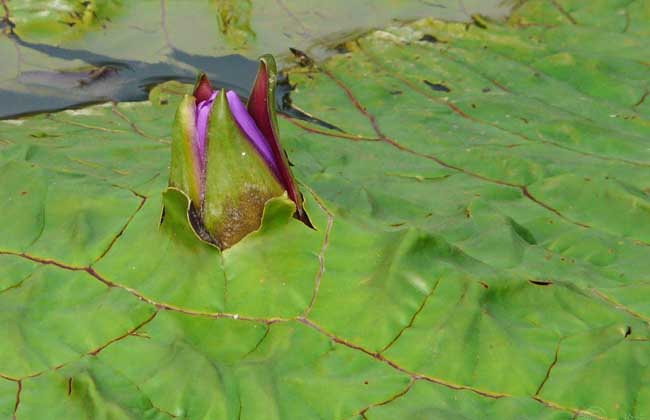
Euryale ferox is the seed kernel of Euryale ferox, an annual aquatic herbaceous plant of the genus Euryale in the family Nymphaeaceae. It has high nutritional and medicinal value and is widely distributed in China, with relatively large areas in the provinces of East China. It prefers warm and humid environments and has strong adaptability. It likes warmth and water moisture, and is not tolerant of frost or drought. It is best cultivated in lake-bottom soil that is deep, soft, and rich in organic matter. Now let us take a look at the planting techniques for Euryale ferox!
Sowing and Seedling Raising
In the Yangtze River Basin, seeds are soaked in early April. The water temperature is kept at 20-25°C during the day and above 15°C at night. Sowing takes place after more than 10 days. 5-7 days before sowing, dig seedling pools in the field measuring 2.0-2.5 m square and 15-20 cm deep. After cleaning and leveling, fill with about 10 cm of water. After the mud has settled and cleared, gently place the germinated seeds near the water surface. Each pool can hold about 5 kg of seeds. Water must not be cut off during seedling raising, and the water depth can gradually be increased to about 15 cm as the seedlings grow. The young leaves of the Euryale seedlings must not be buried by mud.
Transplanting and Temporary Planting
1. About 1 month after sowing the Euryale ferox seeds, when the seedlings already have 2-3 arrow-shaped primary leaves, they can be transplanted for temporary planting. 5 kg of seeds requires about 0.2-0.4 mu of seedling field. Prepare the seedling field according to this standard before transplanting, and fill the seedling field with about 15 cm of water. When transplanting from the seedling pool, lift the seedlings together with the seeds and wash off the mud attached to the roots on the spot. Transplant the seedlings into the seedling field at a spacing of 35-50 cm between plants and rows.
2. When planting the seedlings, simply plant the seed and the "germinating stem" into the soil, and be sure not to bury the young leaves. Water must not be cut off in the seedling field. Just after temporary planting, keep it at about 15 cm, and after the seedlings revive, gradually deepen it to 30-40 cm. Before final planting, gradually deepen the water level of the seedling field according to the water level of the main field or lake to allow the Euryale seedlings to adapt to a deep-water environment after planting.
Timely Final Planting
1. In mid-to-late June, when the round shield-shaped later leaves of the Euryale seedlings reach 25-30 cm in diameter, they can be finally planted (the seedlings from every 5 kg of seeds can be planted in about 8-10 mu of main field). Before final planting, dig holes at a spacing of 2 m (purple-flowered Su Euryale) or 2.3 m (white-flowered Su Euryale) between plants and rows (125-166 plants per mu). The holes are dug square on top (side length about 1.4 m) and pot-bottom shaped below, with a depth of 15-20 cm.
2. When digging the holes, remove weeds and apply an appropriate amount of base fertilizer. After 1-2 days, once the muddy water in the holes has cleared, the seedlings can be transplanted and finally planted. Plant the Euryale seedlings in the center of the holes, with a depth just enough to bury the roots and underground stems (the tips of the young leaves must be exposed above the soil). Generally, they revive in 7-10 days. For planting Euryale in lakes, before final planting, first plant wild rice grass at the plant and row spacing to mark the spots. At final planting, dig ponds and plant Euryale according to the positions of the pond grass. When the Euryale leaves reach about 70 cm in diameter, all the pond grass can be pulled out.
Field Management
1. After the Euryale seedlings take root, check for and fill gaps at least 1-2 times to ensure a full stand. At final planting, the water depth should not be shallower than 30-40 cm. After survival, it can gradually be increased to 70-100 cm, and the deepest should not exceed 1.2-1.5 m. When planting Euryale in shallow paddy fields, the water depth should be kept at 30-40 cm.
2. When planting Euryale seedlings, before the Euryale leaves close the rows, weed and cultivate 3-5 times according to weed growth. Weeding and cultivation can be combined with hilling the roots, that is, during weeding, gradually push the soil at the edges of the holes toward the center to hill the roots. Do not damage the plants during operation. Topdressing can be combined with weeding and root hilling.
3. The fertilization method for Euryale seedlings generally adopts deep application of fertilizer balls (before rows close) or foliar spraying (after rows close). Fertilizer balls are made by composting soil and fertilizer. For every 100 kg of fine soil, add 50 kg of decomposed manure, 20 kg of urea, 20 kg of superphosphate, and 10 kg of potassium chloride. When fertilizing, shape the mixture into goose-egg-sized fertilizer balls and evenly insert them into the plow layer around the root system.
4. During the flowering and fruiting period of Euryale seedlings, spray phosphorus fertilizer (0.2% potassium dihydrogen phosphate) and boron fertilizer (0.1% boric acid) on the leaf surface several times on clear evenings, which can significantly increase yield and quality. In July-August, when the water temperature is above 35°C, frequently splash cool water on the leaf surface in the early morning to lower the leaf surface temperature and promote flowering and fruiting.
Pest and Disease Control
1. Leaf Spot Disease
[Symptoms] In the early stage of the disease, there are many round spots on the leaf margins. They are initially dark green, then turn dark brown, sometimes with concentric rings, and are very prone to rot and perforation. In humid conditions, a mouse-gray mold layer grows on the spots. In severe cases, the spots can merge into patches, causing the entire Euryale leaf to rot.
[Control] In addition to crop rotation and avoiding excessive nitrogen fertilizer, Euryale leaf spot disease can also be controlled by foliar spraying with thiophanate-methyl (70% wettable powder) at 800-1000 times dilution, or carbendazim (50% wettable powder) at 400-500 times dilution.
2. Leaf Gall Disease
[Symptoms] The pathogen is a fungus, and it occurs more frequently in July-August. At the initial stage, pale green yellow spots appear on the leaf surface, which then bulge and enlarge into tumor-like shapes, with a diameter of 4-40 cm and a height of 2-8 cm.
[Control] In addition to crop rotation, during the disease season, Euryale leaf gall disease can also be controlled by foliar spraying with thiophanate-methyl at 800-1000 times dilution and 0.2% potassium dihydrogen phosphate.
3. Anthracnose