Where Does the Best Gorgon Nut Come From? An Analysis of Major Producing Regions Nationwide
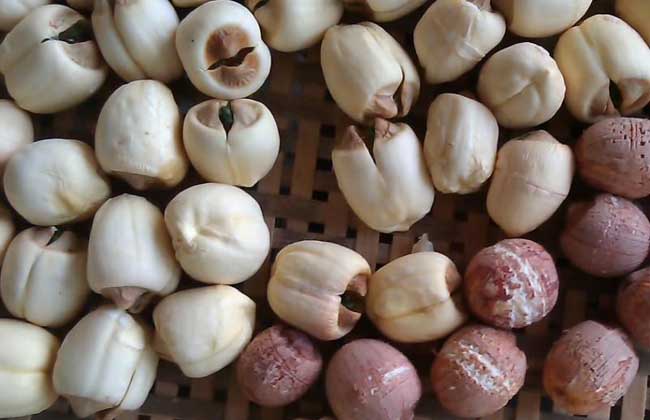
Gorgon nut (Euryale ferox) is the dried, mature seed kernel of the plant Euryale ferox in the water lily family. It can be eaten and also used as medicine, with the effects of tonifying the kidney and securing essence, strengthening the spleen and stopping diarrhea, and removing dampness and stopping abnormal vaginal discharge. It is widely distributed throughout Southeast Asia. In China, it grows wild in lakes, ponds and marshes across the northern and southern provinces and regions, and is cultivated in the Jiangsu-Zhejiang area. In classification, it is generally divided by producing area into southern gorgon nut and northern gorgon nut. Let us take a look below at where the best gorgon nut comes from!
Where is the best gorgon nut from?
Yugan County, Shangrao City, Jiangxi Province is truly the “Hometown of Chinese Gorgon Nut”, and is the county with the largest gorgon nut planting area and the highest technological content in processing in China. The county's gorgon nut planting area has remained stable at around 100,000 mu, and its cultivation history has been recorded in writing for more than 1,200 years. The actual history of gorgon nut cultivation can be traced back to an even earlier era, but unfortunately there is no written record to verify it. Yugan gorgon nut is renowned at home and abroad for its white color, large grains, delicious flavor, delicate fragrance and rich nutrition, and is exported overseas. Its medicinal value is widely known, making it a distinctive product for strengthening the spleen and tonifying the kidney as a green health care item.
Where are gorgon nut producing areas? ⟧7⟧1. Southern gorgon nut: Southern gorgon nut is produced in the Taihu Lake area of Jiangsu. Apart from the prickles on the underside of the leaves, mature plants have no prickles on the leaf stalks, fruit stalks or the outside of the fruit. The gorgon nut kernels are round and neat, not smooth, jade white, glutinous in texture and of good quality, with adaptability inferior to that of northern gorgon nut.
1. South Qian: South Qian is produced in the Taihu Lake area of Jiangsu. On mature plants, apart from the spines on the underside of the leaves, the leaf stalks, fruit stalks, and the outside of the fruit are all spineless. The qian seeds are round and neat, not smooth, jade white, glutinous in texture, and of excellent quality; its adaptability is inferior to that of North Qian.
2. Northern gorgon nut: Northern gorgon nut is produced in the Hongze Lake area of China and is in a wild or semi-wild state. The whole plant is densely covered with stiff prickles. The fruit is small, the gorgon nut kernels are round, irregular, white in color and smooth, of poor quality, with strong adaptability.
How to Select Gorgon Nut
1. Color: Gorgon nut with a white and bright color is generally relatively glutinous in texture; those that are white in appearance but lack luster have a firm texture; those with a yellowish tint may be old stock.
2. Shape: The shape of gorgon nut should have round and neat grains of uniform size.
3. Bite test: Choose dry gorgon nut, otherwise it is prone to mold. Use a bite test to judge: if it breaks crisp and easily under the teeth, it is dry; if it is slightly tough, it is damp.
4. Smell test: Smell the gorgon nut for any off odor. If there is a sulfur smell, it may have been processed after insect damage.