How to grow Eucommia ulmoides from seed? A detailed guide to planting methods
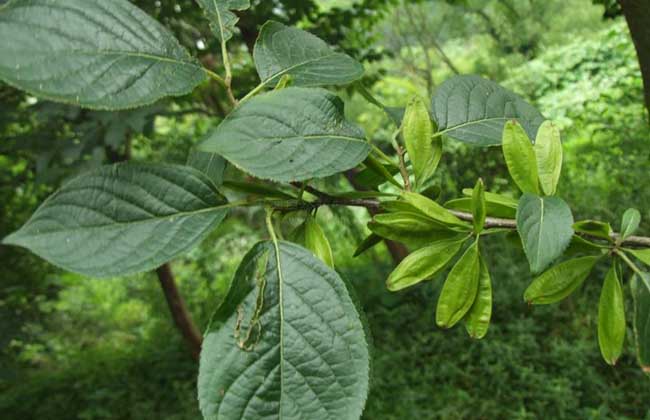
Eucommia ulmoides is a species endemic to China with very high cultivation value. It prefers a warm, humid climate and a sunny environment, and can withstand severe cold; mature plants can survive normally at -30°C. It can be cultivated in most regions of China and is highly adaptable, with no strict requirements for soil, but deep, loose, fertile, moist and well-drained loam is most suitable. Let's take a look below at how to grow Eucommia ulmoides from seed!
Seed treatment
Eucommia ulmoides seeds have a lifespan of 1 year. The germination rate is closely related to maturity and freshness; fully mature seeds have a low germination rate, and the germination rate is even lower when sown in spring. Usually the seeds are collected at the end of October and stored hanging. In late December, soak them in clean water for 1-2 days, changing the clean water once a day. At the last water change, add a small amount of copper sulfate or amobam (zinc) or carbendazim to kill pathogens, then remove and drain until the seeds can be scattered by hand without sticking when sowing, and sow directly into the bed.
Sowing in beds
1. Land preparation and fertilization: For raising Eucommia ulmoides seedlings, choose sandy fields or sandy loam fields, and plow and harrow repeatedly 2-3 times before sowing. Before the last plowing and harrowing, apply compound fertilizer as a "stubble breaker." Make beds 1 m wide, dig furrows 20-25 cm deep, apply barnyard manure in the furrows or broadcast compound fertilizer and rapeseed cake, or use human and livestock urine and manure as a base. Cover with soil to 1.5-2 cm below the bed surface.
2. Sowing into the beds: In the furrows with base fertilizer, place 1 Eucommia ulmoides seed every 5 cm, or scatter them evenly and sparsely in the furrows; if too dense, pick them up and place them sparsely elsewhere. Cover with a mixture of plant ash and soil or fine soil to 1.5-2 cm. Lay rice straw or thatch flat along the furrow direction on the bed for insulation. Do not cover the grass too thickly, so that when the grass is removed after the seedlings emerge evenly, it does not pull out the young seedlings along with it.
Seedling stage management
1. Timely thinning: Thin out Eucommia ulmoides seedlings that emerge too densely and transplant them elsewhere, keeping a plant spacing of about 8-10 cm. It is best to transplant after the seedlings have basically all emerged but before true leaves open, because before true leaves open the roots have almost no fibrous roots. On cloudy days or in the evening, gently lift them out with a hard bamboo strip (keeping as much mud as possible), transplanting them as they are lifted (one handful at a time), water after planting, and 7-10 days later apply 1 application of very dilute human urine and manure or urea as a spot fertilizer.
2. Spraying to protect seedlings: Throughout the seedling stage, Eucommia ulmoides should be sprayed to control pests such as locusts, jewel beetles and longhorn beetles. Bordeaux mixture can prevent damping-off, but once seedlings have damping-off, spraying Bordeaux mixture is useless; instead use kangkuling or carbendazim as a drench. At the same time, shallow hoe the soil surface to increase soil temperature, and apply more dilute fertilizer to enhance soil fertility. For downy mildew, amobam (zinc), mancozeb or carbendazim can be sprayed or used as a drench.
3. Weeding and loosening soil: After Eucommia ulmoides seeds emerge, pay attention to intertillage and weeding, watering and fertilizing, and loosening the soil. Young seedlings dislike strong sunlight and need appropriate shading; in the dry season, irrigate promptly by sprinkling to prevent drought, and in the rainy season, watch out for waterlogging. If the trunk of a seedling is crooked, in early spring remove all the aboveground part along the ground surface to promote new branches, then select and keep 1 strong, vigorous, straight new branch as the new trunk and remove all the rest.
4. Rational fertilization: Fertilization at the Eucommia ulmoides seedling stage should be "small meals, many times," preferably with farmyard manure and compound fertilizer. Fertilization should be light, preferably by dilute drenching after each soil loosening. Ammonium bicarbonate should not be used, to prevent fertilizer burn. After the seedlings are 30 cm tall, urea can be broadcast on rainy days, using 4-5 kg per mu each time. After the seedlings are 40 cm tall, lightly broadcast urea once every 15-20 days. Eucommia ulmoides seedlings grow rapidly in autumn; if fertilizer keeps up, the largest can reach 100-110 cm tall in the same year, producing high-quality seedlings.