Where are the main production areas of Eucommia ulmoides distributed?
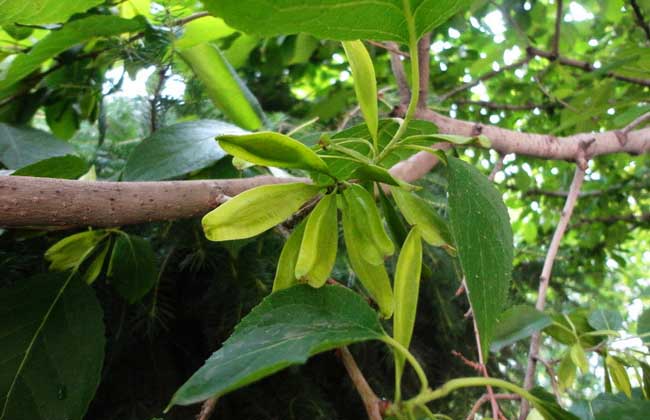
Eucommia ulmoides is also known as Simian bark, silk cotton bark, cotton tree bark, etc. It is a deciduous tree plant of the genus Eucommia in the family Eucommiaceae. Its dried bark is used as medicine and has the effects of tonifying the liver and kidneys, strengthening sinews and bones, regulating the Chong and Ren meridians, and securing the meridians and preventing miscarriage. It can treat waist and leg pain or soreness and weakness caused by kidney yang deficiency, insecurity of the fetus caused by liver qi deficiency, and damp itching of the scrotum. It was listed as a top-grade herb in the Shennong Bencao Jing. Now let us take a look at where the production areas of Eucommia ulmoides are.
Where are the production areas of Eucommia ulmoides?
Eucommia ulmoides is endemic to China and is now widely planted in various places, distributed in Shaanxi, Gansu, Henan, Hubei, Sichuan, Yunnan, Guizhou, Hunan, Anhui, Shaanxi, Jiangxi, Guangxi, Zhejiang and other places. Zhangjiajie is the world's largest production area of wild Eucommia ulmoides. There are large numbers of artificially cultivated Eucommia ulmoides in the national-level forestry base in Jiangsu, and it has also been introduced to botanical gardens in Europe and America, where it is called the “Chinese rubber tree”, although it has no kinship relationship with the rubber tree at all.
The growing environment of Eucommia ulmoides
Eucommia ulmoides prefers a warm and humid climate and a sunny environment. It can withstand severe cold, and mature plants can survive normally at -30°C. It can be cultivated in most areas of China and has strong adaptability. It has no strict requirements for soil, but loam with deep, loose, fertile, moist and well-drained soil is most suitable. The growth rate of Eucommia ulmoides trees is relatively slow in the juvenile stage. The fast-growing period appears from 7 to 20 years. After 20 years, the growth rate decreases year by year. After 50 years, height growth basically stops and the plant naturally withers.
China's “Hometown of Eucommia ulmoides”
1. Zhangjiajie: Because of the special geographical environment of Zhangjiajie, Hunan, Eucommia ulmoides survived in the Wuling Mountains area, thus making it the world's largest production area of wild Eucommia ulmoides to date. Cili County in Zhangjiajie, as China's largest wild Eucommia ulmoides forest base, has long enjoyed the reputation of “the mysterious 30 degrees north latitude, China's hometown of Eucommia ulmoides”.
2. Wangcang County: Wangcang County in Sichuan is located in the Qinba Mountain area and has long been known as a “forest-shaded medicine hometown”. Its resources of Chinese medicinal materials are very rich. In 1984 it was listed as a “Sichuan Province Chinese medicinal materials production base county”. It was awarded the title of “China's Hometown of Eucommia ulmoides for Famous, Special and Excellent Economic Forests” by the State Forestry Administration. Its main wild medicinal materials include more than 300 kinds such as Gastrodia elata, Eucommia ulmoides, and Phellodendron amurense.
3. Xiangshui County: As early as the 1980s, Qitao Township in Xiangshui County, Jiangsu, was famous both inside and outside the province for planting the Chinese medicinal material Eucommia ulmoides. In the mid-1990s, Qitao Township established the Xiangshui Eucommia Tea Factory. Its “Tingquan Brand” bagged health tea won the 1999 Yancheng Famous Brand Product and Consumer Trusted Product. The Eucommia tea it produces sells well domestically and is exported to Japan, South Korea and other countries. Planting the Chinese medicinal material Eucommia ulmoides has become one of the important ways for farmers in the township to increase income.
4. Lueyang County: Lueyang County in southern Shaanxi is an original production area and suitable growing area of Eucommia ulmoides. It is generally believed that Eucommia ulmoides originated in the Qinling Mountains at the junction of Shaanxi, Gansu and Sichuan provinces. Because it is located in the Qinba Mountain area and its geographical transportation is underdeveloped, the germplasm resources of many species have been relatively well protected, and it is also one of China's famous “hometowns of Eucommia ulmoides”.