How to grow Fritillaria cirrhosa seeds? Teaching you the correct planting method
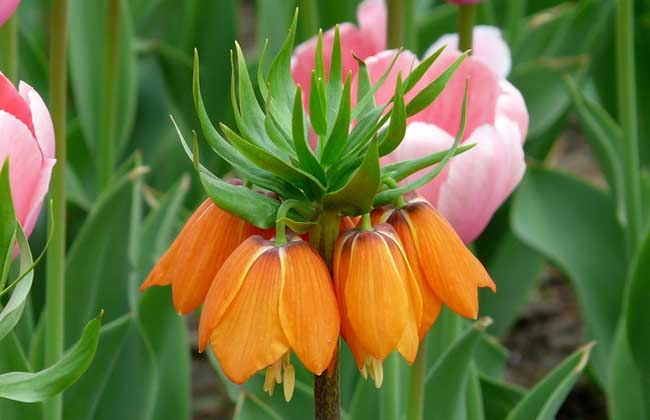
Fritillaria cirrhosa is a precious Chinese medicinal herb for moistening the lungs and relieving cough. It often grows in temperate high mountains and plateau areas in mixed coniferous-broadleaf forests, coniferous forests and alpine scrub, and prefers cool climate conditions. It is cold-resistant, moisture-loving, afraid of high humidity and shade-loving. When the temperature reaches 30°C or the ground temperature exceeds 25°C, the plant will wither, and it cannot survive in areas with low altitude and high temperature. Now let's take a look at how to grow Fritillaria cirrhosa seeds!
Seed cultivation
When harvesting Fritillaria cirrhosa from June to July, select bulbs with a diameter of more than 1 cm, disease-free and undamaged, as seeds. Plant the bulbs separately according to large, medium and small sizes, and plant them while digging. Use 100 kg of bulbs per mu. From the second year after planting, spray Zhencaoning before emergence in March each year. After emergence in early April, promptly pull out weeds and apply dilute human and livestock manure water. Apply topdressing once more from late April to early May. From July to August, when the fruit is plump and swollen, the fruit shell is yellow-brown or brown, and the seeds have dried and set, cut off the fruits, and either thresh them while fresh or carry out after-ripening treatment with the fruit shell still on.
After-ripening treatment
For Fritillaria cirrhosa seeds with shells, use sieved fine humus soil with a moisture content of less than 10%, place one layer of fruit and one layer of soil in a ventilated wooden box, and keep it in a cool, damp place. For threshed seeds, mix and store them at a ratio of 1:4 (seeds:humus soil) indoors or in a ventilated wooden box. During storage, keep the soil moist. When the fruit skin (seed coat) swells, after about 40 days, the embryo length exceeds 2/3 of the longitudinal axis of the seed, and the embryo tip is curved, the embryo morphological after-ripening is complete and sowing can be done.
Site selection and land preparation
1. Site selection: For Fritillaria cirrhosa planting land, choose a wind-sheltered shady slope or semi-shady slope, and keep it away from wheat crops to prevent rust infection. Loam or oil sandy soil with deep soil layers, loose texture and rich humus is best. For virgin land, one season of hemp can be planted to purify weeds, mature the land, improve soil structure and increase organic matter.
2. Land preparation: The Fritillaria cirrhosa planting land needs to be prepared before freezing. Clear the weeds on the ground, plow deeply and harrow finely, and make beds 1.3 m wide. Use 1500 kg of compost (barnyard) manure, 50 kg of superphosphate and 100 kg of oil cake per mu. After composting and decomposing, spread them on the bed surface, then shallowly turn the soil, and make the bed surface arched.
Sowing methods
1. Drilling: Open horizontal furrows 1.5-2 cm deep on the bed surface, evenly scatter seeds mixed with fine soil or plant ash into the furrows, cover with 3 cm of sieved fine humus soil, and cover the bed surface with mountain grass or leafless branches. Use 2-2.5 kg of seeds per mu.
2. Broadcasting: Evenly scatter the seeds on the bed surface, preferably 3000-5000 seeds per square meter, and cover as in drilling.
3. Dibbling: Carry this out while the fruits are not yet dry. Divide the undried fruits into 3 valves, open holes on the bed surface at a spacing of 5-6 cm between plants and rows, place 1 valve in each hole, and cover with 3 cm of soil. This method is more labor-intensive, but the emergence rate is high.