What kind of plant does the sunflower belong to? Understanding its classification in one article
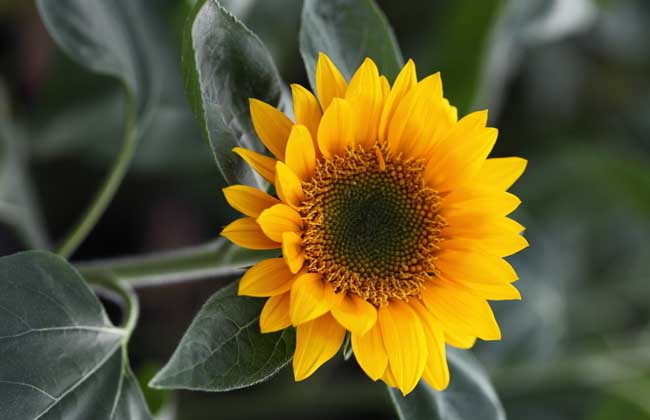
Sunflowers can be divided into general ornamental varieties and edible varieties. General ornamental varieties are characterized by relatively short plants, usually no more than half a meter, so they are suitable for growing in pots. Edible varieties are relatively tall plants and, when planted in ordinary open-field nursery soil, can grow to more than 2 m. Let's take a look below at what kind of plant the sunflower belongs to!
What kind of plant does the sunflower belong to?
The sunflower belongs to the angiosperms. In classification, the sunflower belongs to the angiosperms. Its fruit is an achene, commonly known as a sunflower seed, and is edible. The fruit consists of three parts: the pericarp, the seed coat and the embryo. Edible-type seeds are relatively long, with black-and-white stripes on the pericarp in most cases; the pericarp is thick, accounting for more than 40% of the seed weight, and the 1000-grain weight is 100-200 grams. Oil-type seeds are relatively short and small, with the pericarp mostly black and thin, about 20-30% of the seed weight, and the 1000-grain weight is 40-110 grams.
Why does the sunflower face the sun?
The stem of the sunflower contains a wonderful plant growth hormone. This growth hormone is very afraid of light, and as soon as it is exposed to light it moves to the shaded side, while also stimulating the cells on the shaded side to multiply rapidly, so the shaded side grows faster than the side facing the light, causing the sunflower to bend toward the light. At the same time, the sunflower facing the sun is also closely related to the effect of gravity.
The growing environment of the sunflower
1. Temperature: The sunflower is a crop that likes warmth and is also tolerant of cold, with strong adaptability to temperature. The seeds have a very strong tolerance to low temperatures. When the ground temperature is stable above 2°C, the seeds begin to sprout; at 4-5°C they can germinate and take root; when the ground temperature reaches 8-10°C, it can meet the needs of seed germination and seedling emergence. Throughout the entire growth process of the sunflower, as long as the temperature is not lower than 10°C, it can grow normally.
2. Water: The sunflower is a crop that consumes a relatively large amount of water. The plant is tall, with many dense leaves, and its water absorption is 1.74 times that of corn. However, because its growth and development mostly coincide with local rainfall and heat, the contradiction between water supply and demand is not prominent, and the water requirements differ greatly at different growth stages. From sowing to budding, the water requirement is not great; from budding to flowering is the peak water requirement period; and from flowering to maturity the water requirement is also relatively large.
3. Light: The sunflower is a short-day crop and is not very sensitive to daylength. It likes sufficient sunlight, and its seedlings, leaves and flower discs all have strong phototropism. With sufficient sunlight, the seedlings are robust and can be prevented from becoming leggy. With sufficient sunlight in the middle growth period, vigorous stem and leaf growth can be promoted, flowering and pollination can proceed normally, and the seed-setting rate can be increased. With sufficient sunlight in the late growth period, the seeds are plump and full.
4. Soil: The sunflower has low soil requirements and can grow in all kinds of soil, from fertile soil to dry land, barren land and saline-alkali land. It not only has a relatively strong tolerance to saline-alkali conditions, but also has salt-absorbing properties. At the same time, the sunflower has a well-developed root system and relatively strong drought resistance. Moreover, the roots and stems of the sunflower have well-developed aerenchyma, making it very tolerant of waterlogging.