How to plant sunflower seeds? A step-by-step guide to growing methods
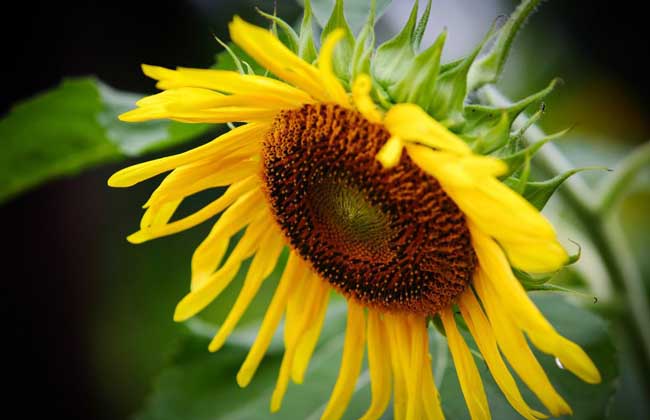
Sunflowers can be planted in all four seasons, though summer and winter are the main ones, and the flowering period can last more than two weeks. Besides looking like the sun, the flowers are bright and generous, making them suitable for ornamental display. Their seeds have even greater economic value: they can be made into the much-loved sunflower seeds, and can also be pressed into a low-cholesterol, premium edible sunflower oil. Let's take a look below at how to plant sunflower seeds!
Choosing and preparing the land
For sunflower cultivation, choose a plot with level ground, medium fertility, convenient irrigation and drainage, and relatively low soil clay content; it should not be planted in succession on the same land. Sunflowers reproduce by seed, and peat soil is suitable for sowing. Before sowing, mix the seed with new high-lipid film, which can repel underground pests, isolate viral infection, and raise the seed germination rate.
Sowing at the right time
Sunflowers are generally sown from March to April, and the suitable temperature for sowing is 18-25°C. Usually they sprout about 5-7 days after sowing. The basic principle for choosing the sowing date is to sow appropriately early or late according to the patterns of salinization, so that the seedlings avoid salt-alkali damage. Spring or summer sowing depends on the growth period of the variety.
Checking the field and replanting missing seedlings
Sunflowers are dicotyledonous crops, and pushing through the soil to emerge takes considerable effort. In addition, poor land preparation or sowing quality, surface soil crusting after rain, or damage from disease, insects, rodents, and birds can easily cause missing plants and gaps in the rows. To ensure a full stand from one sowing, you must check field by field and row by row during the emergence stage, and promptly replant where seedlings are missing in patches or whole rows.
Thinning and final singling of seedlings
In sunflower cultivation, thin the seedlings early to prevent them from crowding each other, which affects the cultivation of strong seedlings and even later yield. On saline-alkali land and plots with heavy pest damage, the time for final singling can be appropriately delayed. At the same time, sunflowers should also be singled early, which helps cultivate strong seedlings and also benefits flower head development; final singling should be carried out when there are 2 pairs of true leaves.
Cultivation and weeding
Sunflowers are generally cultivated 2-3 times to weed, loosen the soil, break up crusting, conserve water, reduce evaporation, and lessen salt-alkali damage. The first cultivation is done at the 1-2 pairs of true leaves stage together with thinning and final singling, the second cultivation is done 1 week after final singling, and the third cultivation is completed before the rows close, together with furrowing, earthing up, and fertilizing.
Furrowing and topdressing
Sunflowers prefer fertile soil. Furrowing and topdressing are usually carried out at the third cultivation, mainly with nitrogen and phosphorus fertilizer: 5 kg of diammonium phosphate and 10 kg of urea per mu, mixed evenly and applied to the soil. Furrowing and earthing up can effectively ensure the growth and development of secondary roots, prevent lodging, and reduce basal branching below the cotyledon node.
Irrigating at the right time
Sunflowers are irrigated by furrow irrigation. Generally, for varieties with a plant height of 1.5 m, the first watering should be done at the flower bud stage, the second at early flowering, and the third at the grain-filling stage. For varieties about 2 m tall, the first watering is done 4-5 days before flowering (if drought is severe, irrigate earlier), the second 6-7 days after the first watering, and the third at the grain-filling stage.
Branching protection
Sunflowers have a habit of growing branches from the leaf axils, mostly appearing from the bud stage to the flowering stage, which wastes nutrients in vain and greatly affects yield and quality. At this stage, branches must be removed at least 3 times. Branch removal should be "early and small"; tender small branches can be wiped off with one swipe, saving effort and not damaging the stems and leaves. Be very careful that the middle and upper leaves must absolutely not be removed. As for the lower old leaves in the late growth period, a small portion can be removed to facilitate ventilation and light penetration and reduce pests and diseases.