When Do Sunflowers Bloom? A Detailed Guide to the Flowering Period
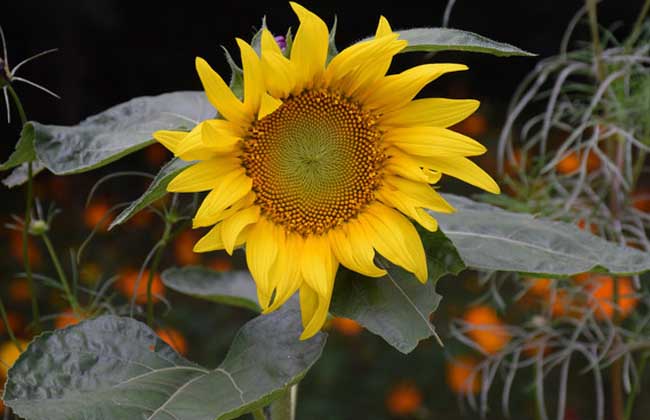
The sunflower is a large annual plant of the genus Helianthus in the aster family (Asteraceae) that can grow up to 3 m tall. It gets its name because its flower often faces the sun. Besides looking like the sun, its bright, cheerful blooms are ideal for ornamental display. Its seeds are called sunflower seeds; they are often roasted and eaten as a snack, and can also be pressed for sunflower seed oil. Let's take a look below at when sunflowers bloom!
When do sunflowers bloom?
Sunflowers are usually sown in March to April and bloom in July to August. Sunflowers can bloom in all four seasons, and the secret is “accumulated temperature” - that is, a plant can bloom as long as it has accumulated a certain amount of warmth during growth. For a single sunflower head, it generally takes 6 to 9 days from the opening of the ray florets to the completion of the disk floret opening. The second to fifth days are the peak flowering period, and the number of flowers opening during these 4 days accounts for about 75% of the total. The flowers mostly open at 4 to 6 a.m.; pollination and fertilization occur the next morning, and unpollinated stigmas can remain without wilting for 7 to 10 days.
The growing environment of sunflowers
1. Temperature: Sunflowers are a warmth-loving yet cold-tolerant crop with strong adaptability to temperature. The seeds are highly tolerant of low temperatures: when the soil temperature is stable above 2°C, the seeds begin to germinate; at 4 to 5°C they can sprout and take root; and when the soil temperature reaches 8 to 10°C, it can meet the needs of seed germination and emergence. Throughout their whole growth and development, sunflowers can grow normally as long as the temperature is not below 10°C.
2. Water: Sunflowers are a crop that consumes a lot of water. The plants are tall, with many dense leaves, and their water uptake is 1.74 times that of corn. However, because their growth and development mostly coincide with the local rainy and hot season, the contradiction between water supply and demand is not prominent. Different growth stages have very different water requirements. From sowing to budding, they need little water; from budding to flowering is the peak water-demand period; and from flowering to maturity, the water demand is also relatively high.
3. Light: Sunflowers are a short-day crop and are not very sensitive to day length. They like plenty of sunlight, and their seedlings, leaves and flower heads all have strong phototropism. With sufficient sunlight, the seedlings grow strong and can be prevented from becoming leggy. Sufficient sunlight in the mid-growth stage promotes vigorous stem and leaf growth, normal flowering and pollination, and a higher seed-setting rate. Sufficient sunlight in the late growth stage makes the seeds plump and full.
4. Soil: Sunflowers have low soil requirements and can grow in all kinds of soil, from fertile soil to dry land, poor soil and saline-alkali land. They not only have strong salt-alkali tolerance but also have salt-absorbing properties. At the same time, sunflowers have a well-developed root system and strong drought resistance. Moreover, the roots and stems of sunflowers have well-developed aerenchyma, making them very tolerant of waterlogging.
The growth cycle of sunflowers
1. Seedling stage: From emergence to budding is called the seedling stage for sunflowers, generally taking 35 to 50 days, or 28 to 35 days for summer sowing. This period is the stage of leaf and flower primordium formation and floret differentiation. The seedling stage is when sunflowers have the strongest drought resistance; the aboveground part grows slowly while the underground root system grows quickly, soon forming a strong root system.
2. Budding stage: From budding to flowering, sunflowers generally need about 20 days. This is a period when vegetative growth and reproductive growth proceed together, and it is also the most vigorous stage of their life. During this period they need the most fertilizer and water, accounting for about 40 to 50% of the total fertilizer and water requirement. If their water and fertilizer needs cannot be met in time, yield will be seriously affected.
3. Flowering stage: For a single sunflower head, it generally takes 6 to 9 days from the opening of the ray florets to the completion of the disk floret opening. The second to fifth days are the peak flowering period, with flowers mostly opening at 4 to 6 a.m. and pollination occurring the next morning. Unpollinated stigmas can remain for 7 to 10 days, but the seed-setting rate from self-pollination is only about 3%, while the seed-setting rate from cross-pollination is high.
4. Maturity stage: The maturity stage of sunflowers refers to the period from flowering to maturity, 25 to 55 days for spring sowing and 25 to 40 days for summer sowing, with differences among varieties. About 15 days after flowering and pollination is the seed formation stage. During the maturity stage, sunflowers need clear weather, a relatively large day-night temperature difference and suitable soil moisture.