When to Sow Sunflowers? Master the Best Planting Time
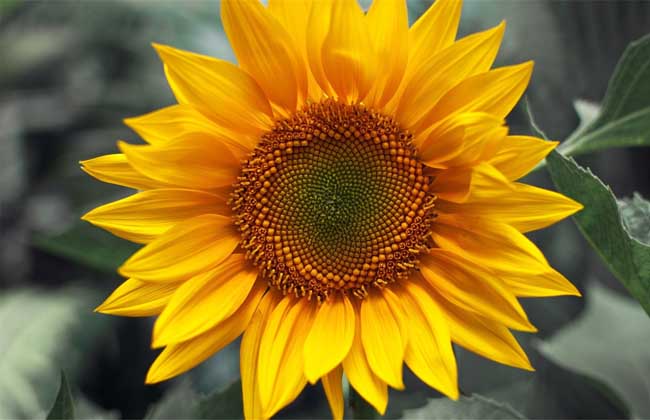
Sunflowers can be planted in all four seasons, though summer and winter are the main seasons, and the flowering period can last more than two weeks. Besides looking like the sun, their bright and generous blooms are perfect for ornamental display, and the seeds have even greater economic value: they can be made into the widely loved sunflower seeds, and can also be pressed to produce a low-cholesterol, premium edible sunflower oil. Let us take a look below at when to sow sunflowers!
Sowing Time for Sunflowers
The sowing time for sunflowers is March to April, the suitable temperature for sowing is 18-25°C, and sprouts emerge about 5-7 days after sowing. The basic principle for choosing the sowing period is to sow appropriately early or late according to the patterns of salinization, so that seedlings avoid salt-alkali damage. Spring or summer sowing is done according to the growth period of the variety. Adjust the sowing period according to disease occurrence patterns so that it avoids the season when diseases are frequent. Adjust the sowing period according to growth characteristics so that the flowering and grain-filling stage avoids high temperatures above 28°C. The sowing method is dibbling, with about 1 cm of soil covering the seeds, and flowering occurs about 50-80 days after sowing, with slight differences depending on the variety.
Growing Environment for Sunflowers
1. Temperature: Sunflowers are a warmth-loving yet cold-tolerant crop with strong adaptability to temperature. The seeds have very strong tolerance to low temperatures; when the soil temperature stabilizes above 2°C the seeds begin to germinate, at 4-5°C they can sprout and take root, and when the soil temperature reaches 8-10°C it can meet the needs of seed germination and seedling emergence. Throughout the entire growth process, sunflowers can grow normally as long as the temperature is not below 10°C.
2. Water: Sunflowers are a crop that consumes a relatively large amount of water. The plants are tall with many dense leaves, and their water uptake is 1.74 times that of corn, but because their growth and development are mostly in sync with local rain and heat, the conflict between water supply and demand is not prominent, and the water requirements differ greatly at different growth stages. From sowing to budding, the water requirement is not great; from budding to flowering is the peak water requirement period; and from flowering to maturity the water requirement is also relatively large.
3. Light: Sunflowers are a short-day crop and are not very sensitive to day length. They like abundant sunlight, and their seedlings, leaves and flower heads all have strong phototropism. With sufficient sunlight, the seedlings grow strong and can be prevented from becoming leggy. Sufficient sunlight in the mid-growth period can promote vigorous stem and leaf growth, normal flowering and pollination, and a higher seed-setting rate. Sufficient sunlight in the late growth period makes the seeds plump and full.
4. Soil: Sunflowers have low soil requirements and can grow in all types of soil, from fertile soil to dry land, barren land and saline-alkali land. They not only have strong salt-alkali tolerance but also have salt-absorbing properties. At the same time, sunflowers have well-developed root systems and strong drought resistance. Moreover, the roots and stems of sunflowers have well-developed aerenchyma, making them very tolerant of waterlogging.
Growth Cycle of Sunflowers
1. Seedling stage: The period from emergence to budding in sunflowers is called the seedling stage, generally requiring 35-50 days, or 28-35 days for summer sowing. This period is the stage of leaf and flower primordium formation and floret differentiation. The seedling stage is when sunflowers have the strongest drought resistance; above-ground growth is slow while the underground root system grows quickly, soon forming a powerful root system.
2. Budding stage: From budding to flowering, sunflowers generally need about 20 days. This is a period when vegetative growth and reproductive growth proceed together, and it is also the most vigorous stage of their life. This period has the greatest demand for fertilizer and water, accounting for about 40-50% of total fertilizer and water demand. If the need for water and fertilizer cannot be met in time, yield will be seriously affected.
3. Flowering stage: For a single sunflower head, from the opening of the ray florets to the completion of the opening of the disc florets generally takes 6-9 days. From the second to the fifth day is the full-bloom period, with flowers mostly opening at 4-6 a.m., and pollination occurring the next morning. Unpollinated stigmas can remain viable for 7-10 days, but the seed-setting rate from self-pollination is only about 3%, while cross-pollination gives a high seed-setting rate.
4. Maturity stage: The maturity stage of sunflowers refers to the period from flowering to maturity, 25-55 days for spring sowing and 25-40 days for summer sowing, with differences among varieties. About 15 days after flowering and pollination is the seed formation stage. The maturity stage of sunflowers requires clear weather, a relatively large day-night temperature difference and suitable soil moisture.