Sunflower Flower Language, Symbolism and Legendary Stories Explained
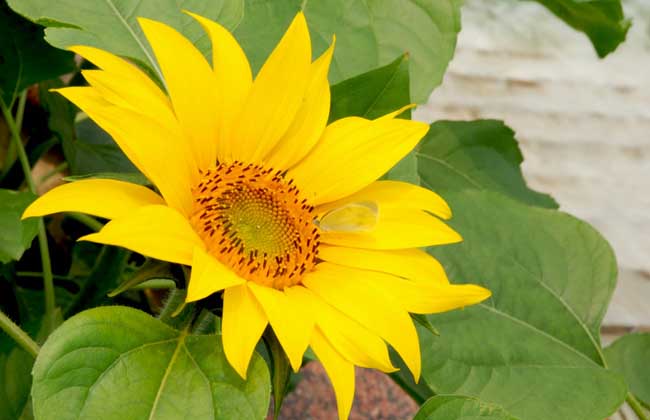
Sunflowers are native to South America. The domesticated variety was brought from North America to Europe by the Spanish in 1510, initially for ornamental purposes, and was later reintroduced from Russia back to North America at the end of the 19th century. They are cultivated throughout China. The seeds are called sunflower seeds, often roasted and eaten as a snack, and they can also be pressed into sunflower seed oil for cooking. Let us now take a look at the flower language and legends of the sunflower!
Sunflower Flower Language
Silent love, love that is never spoken aloud. The flower language of the sunflower is faith, radiance, pride, loyalty and adoration, and its symbolism is silent love, representing the courage to pursue the happiness one wants. Although the sunflower's bearing is not as romantic as the rose, nor as pure as the lily, it is sunny and bright, loving openly and honestly, loving without ever letting go, with a unique charm all its own. What it blooms is not only love, but also a passion for dreams and for life.
The Name of the Sunflower
The sunflower is also known as the "sun-facing flower" (chaoyang hua), named because its flower often faces the sun. In English it is called sunflower, though not because of this trait, but because its yellow blooms resemble the sun, although sunflower does carry some sense of "facing the sun." The word sunflower was borrowed in the 16th to 17th centuries as a loan translation from the Latin flos solis. The French, Italian and Spanish names for the sunflower, tournesol, girasol and girasol, like the Chinese name, are also based on this "facing the sun" trait. The U.S. state of Kansas, being a major producer of sunflowers, has the nickname Sunflower State. The national flower of Peru is the sunflower. The sunflower also has a very beautiful name - wangri lian ("sun-gazing lotus").
Legends of the Sunflower
1. Legend One: Clytie was an ocean goddess who had once been the lover of the sun god Helios, but later Helios fell in love with the Persian princess Leucothoe. Furious, Clytie reported the relationship between Leucothoe and Helios to the Persian king Orchamus. Orchamus ordered his unchaste daughter to be buried alive. When Helios learned of this, he cut off all contact with Clytie. The devoted Clytie went for many days without food or drink, gazing as Helios drove his sun chariot rising in the east and setting in the west, growing more haggard by the day, until at last she turned into a sun-facing flower (the sunflower).
2. Legend Two: Clytie was a water nymph. One day in the woods she met the sun god Apollo while he was hunting, and she was deeply captivated by this beautiful god, falling madly in love with him. But Apollo did not even glance at her and walked away. Clytie eagerly hoped that one day Apollo would speak to her, but she never met him again. So she could only watch the sky every day, watching Apollo drive his resplendent golden sun chariot across the heavens. She fixed her gaze on Apollo's course until he set. Day after day, she sat there blankly, her hair disheveled and her face haggard. At every sunrise, she would look toward the sun. Later, the gods took pity on her and turned her into a large golden-yellow sunflower. Her face became the flower head, forever facing the sun, following him every day - Apollo - telling him of her never-changing love and adoration. Therefore, the flower language of the sunflower is - silent love.
3. Legend Three: In ancient times there was a farmer's daughter named Ming Gu. She was simple and honest, and grew up pretty, yet her stepmother, the "shrew," saw her as a thorn in her eye and subjected her to every kind of humiliation and abuse. Once, over a trivial matter, she talked back to her stepmother, which enraged her. The stepmother whipped her with a leather strap, but missed and struck her own biological daughter, who had come to intervene. The stepmother was both furious and full of hatred, and at night, while Ming Gu was sound asleep, she gouged out her eyes. Ming Gu, in unbearable pain, broke down the door and fled, and died not long after. After her death, a bright yellow flower bloomed on her grave, facing the sunlight all day long - it was the sunflower. It expresses Ming Gu's yearning for light and her loathing of darkness. This legend inspires people to hate violence and darkness and to pursue the light. And so the sunflower has multiplied to this day.