How to transplant pothos? Master the right method for a high survival rate
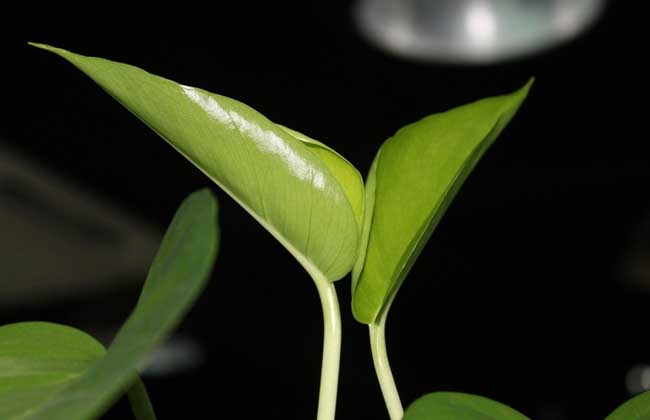
Pothos, also known as devil's ivy, golden pothos, and golden vine, is a large evergreen climbing plant of the genus Epipremnum. It grows in tropical regions, often climbing on rocks and tree trunks in rainforests. It has strong twining ability and well-developed aerial roots. Because of its tenacious vitality, it is called the “flower of life.” It can be grown both in soil and hydroponically. Let's take a look below at how pothos should be transplanted for the best results!
Potting soil cuttings
Pothos does not bloom easily, so cutting propagation is generally used. Because pothos has aerial roots at its stem nodes, the survival rate of cuttings is very high. The usual cutting method is to insert stem sections with aerial roots directly into plain sand or vermiculite, at a depth of 1/3 of the cutting, water thoroughly, place in a shaded spot, and mist the leaves daily or cover with plastic film to retain moisture, with the ambient temperature not lower than 20°C.
Transplanting temperature
Growing pothos as a household potted plant is relatively easy. First, a pot of pothos should contain at least 4 established seedlings. The potting soil should be loose, fertile, and rich in organic matter, which helps it take shape. Second, the temperature in winter must not be lower than 10°C, otherwise yellowing and leaf drop easily occur, and it should grow in an environment with fairly strong indirect light. If kept in too dark a place for a long time, the internodes will become thin and weak, and the leaves will also become thinner, paler, and lose their luster.
Transplanting season
In late spring and early summer, cut 15 cm to 30 cm pothos branches, remove the leaves from the basal 1 to 2 nodes, and plant directly in pots with growing medium, 3 to 5 stems per pot. Water thoroughly, place in a cool, ventilated spot, and roots and buds will form in about one month. Because potted pothos is limited by the potting soil, after being grown too long the plant tends to age, and the leaves become smaller and fall off. Therefore, after 2 to 3 years of cultivation, it must be repotted or pruned and renewed.
Water propagation transplanting
Water propagation transplanting is another fairly commonly used method for transplanting pothos. The environmental requirements are about the same as for potted transplanting. When transplanting, cut a tender, sturdy vine section 20 cm to 30 cm long, insert it directly into a bottle filled with clean water, change the water once every 2 to 3 days, and it can take root and survive in about 10 days.
Precautions
1. In spring, summer, and autumn, it can be placed near an east- or north-facing windowsill, and in winter it can be placed at a south-facing window. If it is kept in too dark an environment for a long time, it will not only cause the trailing stems to grow leggy, the internodes to lengthen, and the plant shape to become sparse, but the yellow-white streaks on the leaf surface will also become smaller and paler, or even disappear completely and fade to green.
2. Pothos likes moisture. During the growing season of pothos, be sure to water often to keep the potting soil moist and avoid dryness. Otherwise, the branches and leaves of the pothos will turn yellow and the plant shape will be poor. If too much water is given and water accumulates in the potting soil, it easily causes root rot and withered leaves. Especially when the indoor temperature is low in winter, pay even more attention to controlling watering.
3. When pothos is grown outdoors, pay attention to shading. Especially in summer, be sure to avoid direct strong light, otherwise the new leaves will become smaller, the leaf color will be dull, and the leaf edges will easily be scorched. The suitable growing temperature for pothos is 20-30°C, and in winter the indoor temperature should be below 15°C.