Can Pothos Take Direct Sunlight? Master the Right Lighting Method
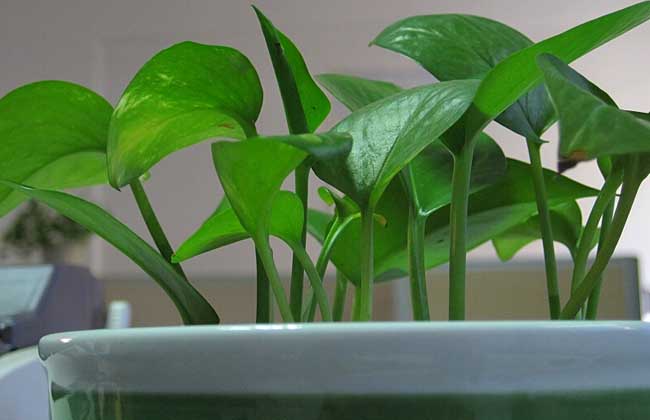
Pothos is an excellent foliage plant, with strong twining ability, well-developed aerial roots, variegated leaves, evergreen all year round, and drooping long branches. It can be allowed to climb on a cylinder made of palm fiber or on tree trunks for greening, placed in entrance halls and hotels, or trained into a hanging form and placed in studies, on windowsills, walls, and fences. It can also be used as ground cover under tree shade. Now let us take a look at whether pothos can take direct sunlight!
Can Pothos Take Direct Sunlight?
Pothos can take sunlight, but you need to choose the right time period for sun exposure. Pothos is extremely shade-tolerant and can be placed year-round in a sunny spot indoors. In a dimly lit room, it should be moved every half a month to a brighter environment for a period of recovery, otherwise the internodes tend to elongate and the leaves become smaller. In winter, to compensate for the lack of temperature and photosynthesis, its light exposure should be increased. The method is to place the pothos in the spot with the best indoor light, or move it to a sealed balcony at noon to take sunlight. At the same time, when the temperature is low, open the windows as little as possible, because in an extremely short time the leaves may be frostbitten.
How Should Pothos Be Watered Properly?
When watering pothos, be careful not to pour water directly into the pot. Instead, first pour the water in slowly, wait for it to seep down, then spray evenly and wait for the water to penetrate. In addition, water should also be sprayed at the places where aerial roots grow on the palm pole, to reduce insufficient root water uptake caused by overly fast evaporation. When watering, be sure to water thoroughly at one time and maintain soil moisture. In the north, with a room temperature above 10°C, pothos can safely overwinter, and with a room temperature above 20°C, pothos can grow normally. When watering in winter, first let the water stand indoors for a day, and water it once it is basically the same as room temperature, so that the water is not too cold and damages the pothos roots.
How Should Pothos Be Grown Properly?
1. Light: Pothos is not strongly phototropic. But in autumn and winter in the north, to compensate for the lack of temperature and photosynthesis, light intensity should be increased. At the same time, when the temperature is low, open the windows as little as possible, because in an extremely short time the leaves may be frostbitten.
2. Humidity: Pothos grows faster in an environment with higher air humidity. It is recommended to maintain indoor humidity. You can use a humidifier to increase air humidity, or cover the plant with a transparent plastic bag to create a mini-greenhouse effect, but it should not exceed two hours.
3. Temperature: Pothos is very sensitive to temperature. If the temperature is too low, it is easily frostbitten. A room temperature of around 20 degrees is sufficient. If heating equipment is turned on, the pothos leaves must not be too close to it. Keeping the indoor temperature above 10 degrees is enough for it to safely get through winter.
4. Fertilizing: Because pothos grown indoors absorbs nutrients less abundantly than outdoors, it is recommended to apply fertilizer once every half a month. You can buy fertilizer specially made for pothos on the market. Or ask the flower shop owner to help choose the fertilizer.
5. Watering: When watering pothos, do not pour water directly into the pot. Instead, first pour the water in slowly, wait for it to seep down, then spray evenly and wait for the water to penetrate. In addition, water should also be sprayed at the places where aerial roots grow, to reduce insufficient root water uptake caused by overly fast evaporation.
6. Shaping: Shaping and pruning of pothos is carried out in spring. When the stems and vines have covered the palm pole and the tip ends have extended about 20 cm beyond the palm pole, cut off 40 cm of the stem tips of 2 to 3 of the plants. After the cut ends sprout new buds and new leaves, cut off the stem tips of the remaining plants.
7. Pests and diseases: Pothos plants are very susceptible to problems from pests and pathogens. Typical pests affecting pothos include mealybugs, red spider mites, scale insects, and so on. Mealybugs are usually the most common, and can be controlled with alcohol, removed with cotton swabs, or picked off by hand.