How Should Pothos Be Pruned? A Detailed Guide to the Correct Pruning Method
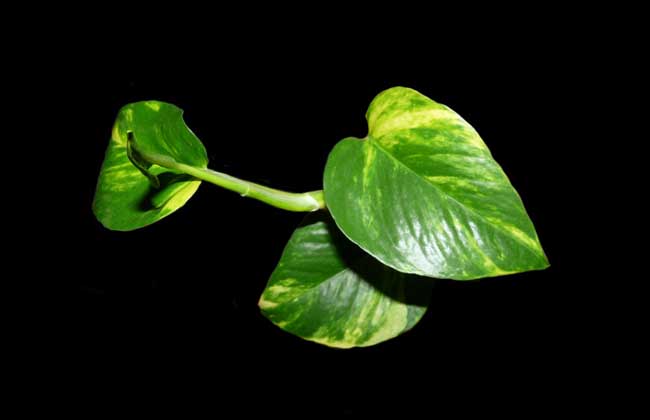
Pothos is very easy to grow and grows quickly. To be honest, there is no fixed standard for how to prune pothos, because unlike other plants, where pruning can promote flowering or branching, the main purpose of pruning pothos is shaping, and the original shapes of pothos vary as well, including potted pothos on a moss pole and hanging basket pothos. Let's take a look below at how pothos should be pruned!
How should pothos be pruned?
Pothos is generally pruned in spring. When the stems and vines have covered the moss pole and the tips extend about 20 cm beyond the moss pole, cut off 40 cm of the stem tips of 2 to 3 of the plants. After the cut-back stems sprout new buds and new leaves, then cut off the stem tips of the remaining plants. For potted plants that have lost leaves on the whole plant or the lower half due to winter cold damage or other reasons, you can cut back half of the vines by 1/2 and the other half by 2/3 or 3/4, so that the cut points are staggered at different heights. In this way, the new leaves that grow below the cut points can quickly cover the moss pole.
How should pothos be shaped?
1. Column style: Use a small dragon jar, large flower saucer, or oil basin filled with soil, and stand a wooden stick or moso bamboo pole about 1 m tall and 5 to 6 cm in diameter in the middle, with palm fiber or palm bark tied around the pole. Plant 4 to 5 pothos plants of similar size with sturdy stems and leaves around the pole, preferably plants that have already been propagated by cuttings, rooted, and are ready to be transplanted into pots, so that they take shape more quickly.
2. Trailing style: Use pots of various sizes filled with soil, plant 1 to 3 pothos plants in the pot, and hang them or place them in a high spot indoors. As they grow and develop, the stems and leaves trail down along the pot rim, swaying in the wind and bringing the whole room to life. If grown in a small pot, it can be placed in a decorative ceramic outer pot and hung indoors or in a doorway. If grown in a wall-mounted pot, it can be hung on a wall or window.
3. Waterfall style: Use a flower trough and plant one pothos every 15 cm, with the flower trough 80 to 100 cm long, then hang it on a wall or place it on top of a wall, a balcony, or similar locations. Depending on the conditions of the hanging or placement location, one or several flower troughs can be hung or placed. You can also place the flower trough at the base of a wall and let the pothos vines climb up along ropes stretched on the wall.
How should pothos be grown?
1. Light: Pothos does not have a strong tendency to grow toward light. However, in the north during autumn and winter, to compensate for the lack of temperature and photosynthesis, light intensity should be increased. At the same time, when temperatures are low, open windows as little as possible, because leaves can be frostbitten in a very short time.
2. Humidity: Pothos grows faster in environments with higher air humidity. It is recommended to maintain indoor humidity. You can use a humidifier to increase air humidity, or cover the plant with a transparent plastic bag to create a mini-greenhouse effect, but this should not exceed two hours.
3. Temperature: Pothos is very sensitive to temperature, and it is easily frostbitten when the temperature is too low. A room temperature of around 20 degrees is sufficient. If heating equipment is running, the leaves of the pothos should not be too close to it. Keeping the indoor temperature above 10 degrees is enough for it to pass the winter safely.
4. Fertilizing: Because pothos grown indoors absorbs nutrients less abundantly than it would outdoors, it is recommended to apply fertilizer once every half month. You can buy fertilizer specially made for pothos on the market. Or ask the florist and have them help choose the fertilizer.
5. Watering: When watering pothos, do not pour water directly into the pot. Instead, first pour the water in slowly, wait for it to seep down, then spray evenly and wait for the water to penetrate. In addition, you should also spray water on the areas where aerial roots grow, to reduce insufficient root water uptake caused by overly rapid evaporation.
6. Pests and diseases: Pothos plants are easily affected by pests and pathogens. Typical pests affecting pothos include mealybugs, red spider mites, and scale insects. Mealybugs are usually the most common, and alcohol can be used to kill them, remove them with a cotton swab, or take them out by hand.