Control Methods and Technical Key Points for Tea Sooty Mold
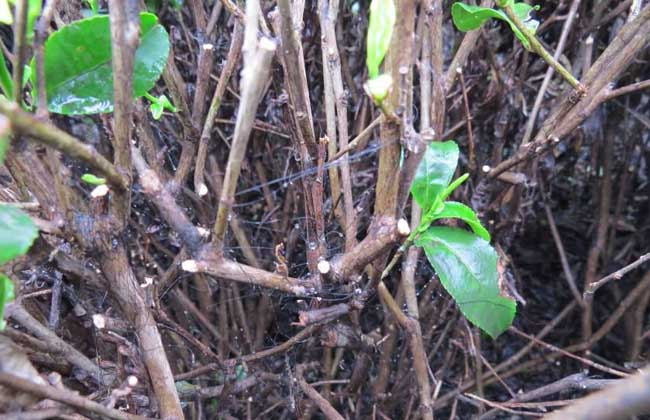
Tea sooty mold, also known as black oil or sooty mold, is distributed across all tea-growing regions nationwide. It mainly damages leaves. Initially, small black, nearly circular to irregular spots appear on the surface of branches and leaves, then spread to the entire leaf, causing the leaf surface to be covered with a layer of sooty black mold. There are nearly ten species, with slight differences in color, thickness and density. Let us take a look at the control methods for tea sooty mold below!
Damage Symptoms of Tea Sooty Mold
Tea sooty mold mainly damages leaves. Initially, small black, nearly circular to irregular spots appear on the surface of branches and leaves, then spread to the entire leaf, causing the leaf surface to be covered with a layer of sooty black mold. There are nearly ten species of tea sooty mold, with slight differences in color, thickness and density. Among them, the dark-colored tea sooty mold has a thick, relatively loose mold layer, and later develops black short bristle-like structures. On the underside of diseased leaves, black citrus spiny whiteflies, scale insects, aphids, etc. can sometimes be seen. It occurs severely during the first tea flush and the fourth tea flush. In severe cases, the tea garden becomes a filthy black expanse, with only the apical tea buds remaining green. Bud and leaf growth is inhibited, photosynthesis is blocked, affecting tea yield and quality.
Conditions for the Onset of Tea Sooty Mold
The pathogens of tea sooty mold mostly overwinter in diseased parts as mycelium and pycnidia or perithecia. The following spring, spores are produced on the mold layer and spread by wind and rain. After the spores land on the secretions of whiteflies, scale insects or aphids, they absorb nutrients to grow and reproduce, and can be spread through the activities of these pests. The above pests are often important prerequisites for the occurrence of this disease. In production, tea gardens with extensive management or shaded and humid conditions, where moisture lingers after rain and pests are severe, are prone to the disease.
Control Methods for Tea Sooty Mold
1. Start with strengthening tea garden management: prune promptly and appropriately to create good ventilation and light penetration conditions, drain promptly after rain, strictly prevent moisture from lingering, and make every effort to enhance tree vigor to prevent the occurrence of this disease.
2. Timely control of tea garden pests, with attention to controlling whiteflies, scale insects, aphids and other pests, is one of the active and effective measures for controlling this disease. For specific methods, see the tea tree pests section of this book.
3. In early spring and late autumn during non-tea-picking periods, spray 0.5% Baume lime sulfur mixture or 0.7% half-strength Bordeaux mixture, 30% Ludebao suspension concentrate at 500 times dilution, 47% Jiaruinong wettable powder at 700 times dilution, or 12% Lulutong emulsifiable concentrate at 600 times dilution.