How to prevent and control tea ring spot? All the practical methods are here
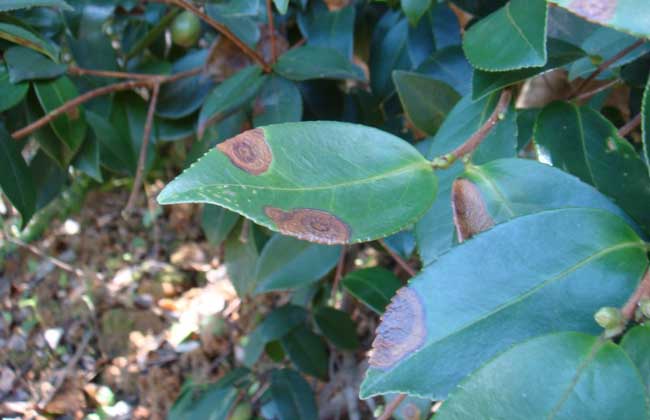
Tea ring spot is a common disease in tea gardens, also known as tea shoot blight. The pathogen is Pestalotiopsis theae, and it is a high-temperature, high-humidity disease. It occurs in all tea-producing provinces across the country. Affected leaves drop in large numbers and cause shoot blight, weakening the tree vigor and reducing yield. Let's take a look below at how to prevent and control tea ring spot!
Conditions for the outbreak of tea ring spot
Tea ring spot is a high-temperature, high-humidity disease. A temperature of 25-28°C and a relative humidity of 85-87% favor the disease. It is severe in summer and autumn. In production, tea gardens that use stripping harvest, mechanical tea picking, pruning, summer cutting seedlings, and those with many tea tree pests are prone to the disease. Tea gardens with poor drainage and cutting nurseries planted too densely have severe outbreaks. Disease resistance differs significantly among varieties. Fenghuang Shuixian, Xiangbolu, and Yunnan Daye Zhong are susceptible.
Symptoms of tea ring spot
1. Tea ring spot mainly damages leaves and new shoots. When leaves are infected, tender leaves, mature leaves, and old leaves all show symptoms. First, small yellow-green lesions appear on the leaf tip or leaf margin, then expand into round to oval or irregular brown large lesions. The lesions on mature and old leaves have obvious concentric rings. In the later stage, the center of the lesion turns gray-white, and under high humidity, black small granules arranged in concentric rings appear, which are the fruiting bodies of the pathogen.
2. When tender leaves are infected, they gradually turn dark brown from the leaf tip toward the leaf margin. The lesions are irregular and scorch-like. On the front of the lesions, sooty mold-like small spots are scattered. There are no concentric rings on the lesions. When there are many lesions, they often merge with each other, causing most of the leaf to be covered with brown dead spots. When tender shoots are infected, the tip is affected first, then turns black and dies, and continues to spread downward causing branch death. In severe cases, leaves drop in large numbers or cutting seedlings die in patches.
Prevention and control methods for tea ring spot
1. Select relatively resistant or tolerant varieties such as Longjing Changye, Tengcha, Yinxiangcha, and Maoxie.
2. Strengthen tea garden management, prevent stripping harvest or harsh picking, and do everything possible to reduce wounds. After mechanical picking, pruning, or discovering pests, promptly spray fungicides and insecticides to prevent pathogen invasion. Drain promptly after rain to prevent moisture retention, which can reduce the disease.
3. Once the disease period begins, promptly spray after tea picking or in the early stage of the disease with 50% benomyl wettable powder at 1500 times dilution, or 50% duomeiling (wanmeiling 2#) wettable powder at 1000 times dilution, 25% carbendazim wettable powder at 500 times dilution, 80% captafol wettable powder at 1500 times dilution, 75% chlorothalonil wettable powder at 600 times dilution, or 36% thiophanate-methyl suspension concentrate at 700 times dilution, applying once every 7-14 days for 2-3 consecutive applications.