What are the control methods for tea red leaf spot disease?
Tea red leaf spot disease is a high-temperature, high-humidity disease. It begins to occur from May to June, with the peak period from July to August. In summer, tea plants suffer from water deficiency, which reduces their disease resistance and favors the spread of the disease. Tea plants that have been pruned by frame pruning (heavy pruning) grow lush foliage and have high transpiration; when drought occurs, the roots cannot supply enough water, making them prone to infection by the pathogen. Let's take a look below at how to control tea red leaf spot disease!
Symptoms of tea red leaf spot disease
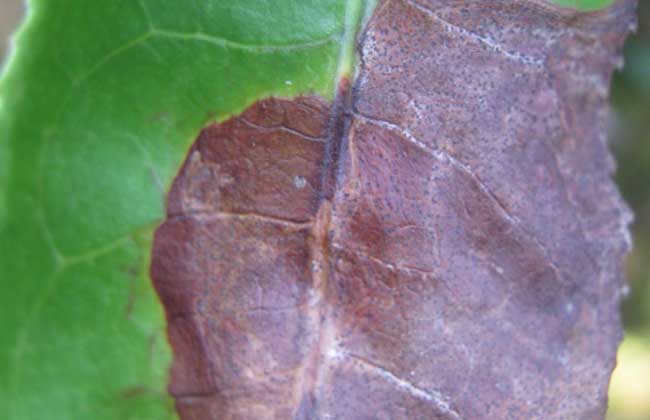
Tea red leaf spot disease occurs in all tea-growing regions nationwide, mainly damaging the leaves. Young leaves, mature leaves and old leaves can all be infected. Light brown lesions usually begin at the leaf tip or leaf margin, then expand to cover half or the entire leaf, forming large irregular lesions. The lesion color is fairly uniform, ranging from dark red-brown to reddish-brown, with a dark brown raised line at the edge and a very distinct boundary with the healthy tissue. In the later stage, slightly raised small black dots appear on the diseased area, which are the pycnidia of the pathogen.
Transmission of tea red leaf spot disease
The pathogen overwinters as mycelium and pycnidia in the diseased leaf tissue of tea plants. It begins to occur from May to June, with the peak period from July to August. Lesions mostly occur on relatively young leaves, initially appearing as pale brown circular water-soaked small spots. Later the lesions spread, and the color changes from pale brown to brown. Sometimes multiple lesions merge into larger patches or spread over the entire leaf, causing a large number of leaves to wither, scorch and drop off.
Control of tea red leaf spot disease
1. Advocating the application of enzyme bacteria or EM active biological organic fertilizer to improve the soil's physical and chemical properties and its water and fertilizer retention is the fundamental measure for controlling this disease.
2. In summer drought, irrigate promptly, plant shade trees reasonably, reduce direct sunlight, and prevent sunscald.
3. Before the summer drought arrives, spray 50% benomyl wettable powder at 1500 times dilution, or 70% carbendazim wettable powder at 900 times dilution, or 36% thiophanate-methyl suspension concentrate at 600 times dilution.