What are the control methods for tea white scab?
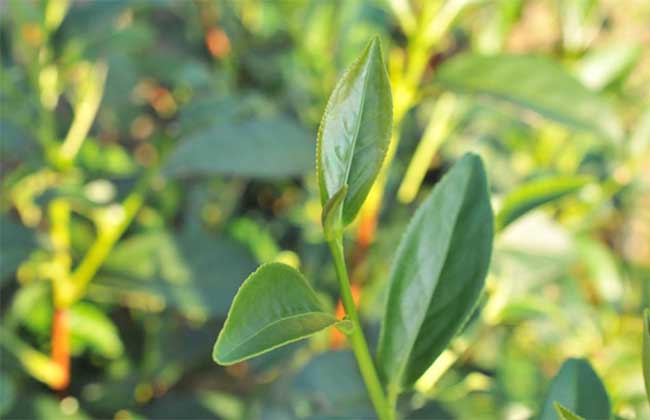
Tea white scab occurs in all tea-producing provinces in China, mainly causing severe damage in high mountain areas. It primarily harms tender leaves and new shoots, especially buds and new leaves. After the leaves are infected, small light brown water-soaked spots appear initially, then gradually expand into round grayish-white small spots. The lesions often merge into irregular large patches, causing particularly serious impact on yield and quality. Let's take a look below at how to control tea white scab!
Symptoms of tea white scab
When tender leaves are infected, pinhead-sized brown spots first appear, then gradually expand into grayish-white round spots 1-2 mm in diameter, with a sunken center and dark brown to purplish-brown raised lines along the edges. When humidity is high, small black dots are scattered on the diseased parts. The number of lesions on diseased leaves reaches dozens to hundreds, and some merge with each other into irregular large patches, causing leaf deformation or curling. When leaf veins are infected, the leaves become distorted or deformed. When tender stems are infected, the lesions are dark brown, later turning grayish-white, and small black dots also form on the diseased parts. The internode length of diseased shoots is noticeably shortened, the weight of one hundred buds decreases, and the number of opposite leaves increases. In severe cases, the disease spreads to the entire shoot, forming shoot blight.
Pathogen of tea white scab
The pathogen of tea white scab is Phyllosticta theae, a fungus belonging to the subdivision Deuteromycotina. The pycnidia are spherical to flattened spherical, measuring 32-80 × 32-80 (μm), dark brown, with a papillate ostiole at the top, initially embedded, later breaking through the epidermis and becoming exposed. The conidia are elliptical to ovate, unicellular and colorless, measuring 3-5 × 2-3 (μm). After the pathogen is cultured on PDA medium for 48 hours, white mycelium grows, which later turns black, with many small black dots forming on it, namely the fungal fruiting bodies. The temperature range for mycelial growth is 2-25°C, with the optimum temperature being 18-25°C. Growth stops above 28°C. Light favors the growth and reproduction of the pathogen.
Transmission of tea white scab
The pathogen overwinters as mycelium and pycnidia in diseased leaves or diseased stems. In early spring, when tea plants begin to flush, the pycnidia release large numbers of conidia, which spread through wind and rain. When humidity is suitable, they infect young stems and leaves. After an incubation period of 1-3 days, new lesions begin to form, and conidia are produced again on the lesions, causing multiple repeated reinfections that allow the disease to continuously expand and spread. This disease is a low-temperature and high-humidity type disease. It is prone to occur when the temperature is 16-24°C and the relative humidity is above 80%. Temperatures above 25°C are unfavorable for its occurrence. It mainly occurs in spring and autumn each year, with May being the peak period. High mountain tea gardens or nutrient-poor, infertile tea gardens, and those with excessive or one-sided application of nitrogen fertilizer are prone to the disease. Excessive picking and weakened tea plants result in severe disease.
Control of tea white scab
1. Picking tea in batches and picking in a timely manner can reduce infection by this disease and lessen its occurrence.
2. It is recommended to apply compost fermented with effective microorganisms, increase the application of compound fertilizers, strengthen tree vigor, and improve disease resistance.
3. From the end of March to early April, at the initial flushing stage of spring tea, begin spraying 75% chlorothalonil wettable powder at 750 times dilution, or 36% thiophanate-methyl suspension concentrate at 600 times dilution, 50% benomyl wettable powder at 1500 times dilution, 70% mancozeb wettable powder at 500 times dilution, or 25% carbendazim wettable powder at 500 times dilution.