Detailed Explanation of Control Techniques for Tea Blister Blight
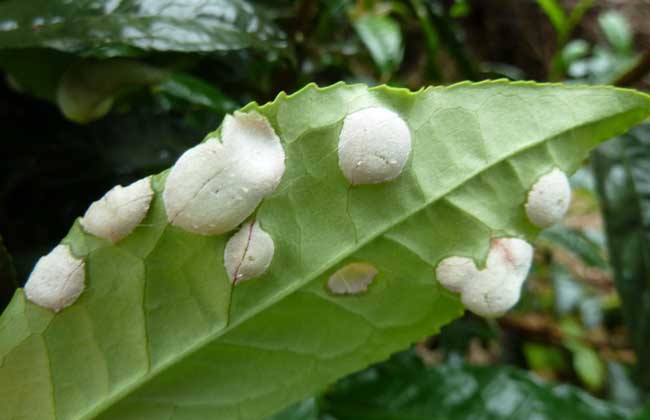
Tea blister blight is one of the important diseases of tea buds and leaves, also known as leaf gall disease. It is distributed in mountain tea gardens in Sichuan, Yunnan, Guizhou, Hunan, Jiangxi, Fujian, Guangdong, Zhejiang, Anhui, Hubei, Guangxi, Taiwan, China and other provinces and regions, with the most severe incidence in the mountain tea gardens of Yunnan, Guizhou and Sichuan provinces. Let's take a look at the control techniques for tea blister blight below!
Symptoms of Tea Blister Blight Damage
On young leaves, the initial symptoms are pale yellow or reddish-brown translucent small spots, which gradually expand and sink into pale yellow-brown or purplish-red circular lesions with a diameter of 2 to 10 mm. On the underside of the leaves, the lesions form blister-like protrusions covered with grayish-white powdery material. Eventually the lesions become dark brown and ulcerated. Occasionally, blister-like protruding lesions also appear on the upper surface of leaves, with sunken areas on the underside. After the petioles and young shoots are infected, they swell and distort, and in severe cases the new shoots above the diseased part die. Flower buds and young fruit are occasionally affected.
Occurrence Patterns of Tea Blister Blight
The pathogen overwinters or oversummers as mycelium in diseased leaves. It is a low-temperature and high-humidity type disease. When the temperature is 18 to 20°C and the relative humidity is above 85%, rainy and humid conditions favor the occurrence of the disease. It generally occurs severely during the spring tea period from March to May and the autumn tea period from September to October. In shaded tea gardens in hilly and flat areas, the disease is severe under rainy conditions. Tea gardens with extensive management, overgrown weeds, improper fertilization and shading have severe incidence. Tea gardens in foggy high mountains and humid depressions also have severe incidence.
Control Techniques for Tea Blister Blight
1. Strengthen seedling quarantine to prevent the spread of tea blister blight pathogen through the transport of tea seedlings.
2. Remove weeds and dead branches, prune appropriately, and promote ventilation and light penetration to reduce disease incidence.
3. Increase the application of phosphorus and potassium fertilizers to improve the disease resistance of tea plants.
4. At the early stage of disease onset, spray 70% thiophanate-methyl wettable powder at 1000 to 1500 times dilution or 75% chlorothalonil wettable powder at 800 to 1000 times dilution, with an interval of 7 to 10 days, for 2 to 3 consecutive sprays.
5. At the early stage of disease onset, spray 25% triadimefon at 3500 times dilution. It has a long residual effect, and a single spray during the disease period is sufficient.
6. In non-picking tea gardens, 0.6 to 0.7% lime half-strength Bordeaux mixture, 0.2 to 0.5% copper sulfate solution, or 12% copper abietate emulsifiable concentrate at 600 times dilution can also be sprayed to protect tea plants.
7. In tea gardens being picked, if Bordeaux mixture is sprayed, it can be applied once before spring tea or after each tea-picking season, and picking can only resume 20 days after spraying.