How to Tell Good Tieguanyin from Bad? A Few Practical Identification Methods
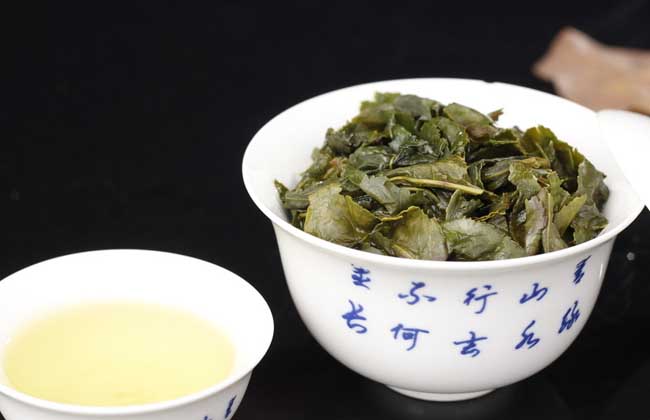
Tieguanyin is a traditional famous tea of the Han Chinese; it is both the name of a tea and the name of a tea tree variety. It belongs to the semi-fermented tea category, falling between green tea and black tea, and contains relatively high levels of amino acids, vitamins, minerals, tea polyphenols and alkaloids, along with various nutritional and medicinal components, giving it health-preserving benefits. Let us take a look below at how to tell good Tieguanyin from bad!
Where is Tieguanyin produced?
The birthplace of Tieguanyin is Xiping Town, Anxi County, Quanzhou City, Fujian. Anxi County in Fujian is both the hometown of world-famous tea and the birthplace of the nationally famous oolong tea. The working people of Anxi, Fujian created and invented oolong tea between the 3rd and 13th years of the Yongzheng reign of the Qing Dynasty (1725-1735). It first spread to northern Fujian and then to Taiwan, China. Because of its excellent quality and unique fragrance, Tieguanyin was imitated in various places and spread successively throughout the oolong tea regions of southern Fujian, northern Fujian, Guangdong and Taiwan. In the 1970s, an “oolong tea craze” swept Japan and it became popular worldwide.
How to tell good Tieguanyin from bad?
1. Look at the appearance: Looking at the appearance mainly means observing Tieguanyin's shape, color, uniformity and cleanliness, and smelling the aroma of the tea grains. Anything with a plump, heavy and solid shape, sandy-green color, and pure, clean aroma from the dry tea (tea grains), with obvious Guanyin characteristics, is a top-grade tea; otherwise it is an inferior tea.
2. Smell the aroma: First smell whether the aroma is prominent, then distinguish whether the aroma is high or low, long or short, strong or weak, dull or murky. When smelling, use a combination of hot smelling, warm smelling and cold smelling. Anything with a prominent aroma, high, clear fragrance and long, rich charm is top grade; otherwise it is inferior.
3. Taste the flavor: Use a tea spoon to take an appropriate amount of tea liquor into the mouth (definitely not too much), and use the tongue to suck, swirl and roll it around in the oral cavity so that the taste cells in all parts of the mouth produce a comprehensive flavor response. Anything with a mellow, rich flavor, mellow yet refreshing, rich yet not astringent, and full of the variety's “charm” characteristics is top grade; otherwise it is inferior.
4. Look at the liquor color: Look at the tea liquor's depth of color, brightness or darkness, clarity or turbidity, and so on. Anything with an orange-yellow, bright liquor color (known as mung bean soup) is top grade; dark and turbid is inferior.
5. Observe the leaf base: Pour tea leaves brewed in boiling water into a plate holding clear water and observe the leaf base. Anything with a soft, yellow-bright leaf base and an obvious “green stem, green belly and red rim” is top grade; otherwise it is inferior.
What aroma types does Tieguanyin have?
1. Orthodox flavor type: The orthodox flavor type is divided into two methods, daqing and orthodox pan-firing. In the daqing method, leaf inspection and tea making begin on the morning of the second day after leaf picking, while in the orthodox pan-firing method, pan-firing takes place before 12 noon on the second day after leaf picking. The finished tea has a dark green, lustrous color, elegant aroma and mellow flavor, but with a slight astringency. In addition, an obvious yin charm, good returning sweetness and a golden liquor color are the most prominent features of orthodox-flavor Tieguanyin.
2. Sour aroma type: The sour aroma type can be further divided into two methods, huiqing and baqing, according to differences in production timing. In the huiqing method, pan-firing is generally done at about 5 p.m. on the second day after leaf picking, while in the baqing method, pan-firing is generally done at about 10 p.m. on the second day after leaf picking. The finished tea has a dark green color, a bold aroma, is relatively pure with a yin charm, carries a sweet-and-sour taste, and the liquor color may be deep golden yellow.
3. Charm aroma type: Charm-aroma Tieguanyin lies between light aroma and strong aroma, possessing the bright moistness of the light aroma type while not losing the mellow richness and lingering depth of the strong aroma type. The tea leaves are fully fermented, with a traditional orthodox flavor, possessing the taste of “strong, charming, moist and distinctive”, with a high fragrance, good returning sweetness, full charm, and a clear, bright liquor color, yellow with green in it, like the early autumn of Jiangnan, fully showing luxury and magnificence. It has long been favored by a broad range of consumers.
4. Strong aroma type: Strong-aroma Tieguanyin has the medically mentioned effects of warming the stomach, lowering blood pressure and blood lipids, and aiding weight loss. It is very suitable for friends who have many social engagements, an unreasonable diet, minor stomach and intestinal problems, high blood lipids and blood pressure, or who feel their body is gaining weight. After being stored for a long time and becoming aged tea, and then undergoing deep processing procedures such as re-baking and charcoal roasting, its mouthfeel, health benefits and so on become even more pronounced.
5. Aged aroma type: Aged-aroma Tieguanyin is an extension of strong-aroma Tieguanyin. The raw materials are all selected from high-quality Tieguanyin products processed over the years using traditional production techniques. The product has the mellow richness and strong charm of strong-aroma Tieguanyin, along with the advantage of a unique aged aroma.