How to convert soil-grown plants to hydroponics? 9 easy steps
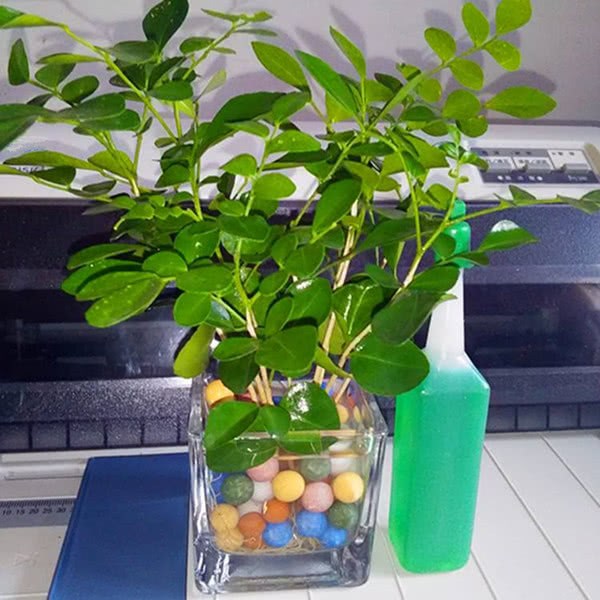
Hydroponics not only lets you admire the beauty of the plant, but also lets you see the condition of its roots. It is clean and hygienic, and you no longer have to worry about watering. So how do you convert a plant from soil culture to hydroponics?
The steps are as follows:
1. Dilute the concentrated solution
Soilless culture nutrient solutions are sold on the market. When using a soilless culture nutrient solution, read the instructions carefully and dilute it with water at the specified ratio. In most cases, diluting the concentrated solution with water 100 times is enough.
2. Take the plant out of the pot and wash the roots
Dig the chosen flowering plant out of the soil or gently tip it out of the flower pot, so that the soil around the roots falls away and all the roots are exposed. Then soak it in clean water for 15-20 minutes, and gently rub and wash the roots with your hands. Change the water and rinse 2-3 times, until the roots are completely free of soil and the water used to wash the roots is clear and transparent with no mud or sand in it, which means they are properly washed.
3. Soak the roots to absorb nutrients
Put the cleanly washed roots in the nutrient solution and soak them for 10 minutes, so the roots fully absorb the nutrients.
4. Choose a substrate
You can use vermiculite alone as the growing substrate, or, according to the aeration needs of different plant roots, mix vermiculite with perlite and fine sand grains in different proportions to form a substrate that is airy, water-retaining, fertilizer-retaining and easy to anchor the plant in.
5. Potting and pouring in the solution
Wash the flower pot clean, place a piece of tile or plug the drainage hole at the bottom with plastic gauze, then put a little perlite and vermiculite into the pot. Next, place the plant in the pot and hold it upright, and fill perlite, vermiculite and other lightweight mineral materials around the roots. Shake the pot gently so that the mineral materials fit tightly around the roots. Then immediately pour in the prepared nutrient solution, until liquid flows out of the hole at the bottom of the pot.
6. Secure the roots
Place fragments of fluorite, axe-split stone and the like on top of the roots to secure them and prevent the plant from falling over. At the same time, spray some clean water on the leaves.
7. Care and management
For soilless-cultured flowering potted plants, the requirements for light, temperature and other conditions are no different from those for soil culture. During the growing season, water the plant once a week with nutrient solution, with the amount depending on the size of the plant; for flowering plants whose leaves grow slowly, reduce the amount as appropriate. In winter or during the dormant period, apply it once every 15-30 days. Indoor foliage plants can survive under low light, so the amount of nutrient solution can be reduced; the nutrient solution can also be sprayed on the leaves to promote growth. At ordinary times, pay attention to watering at the right time.
8. Root pruning
You can prune the roots directly with scissors: shorten roots that are too long and remove aged and dead roots, so as to keep the roots active for a long time. Pruning can also noticeably promote the branching and growth of stems and leaves. In addition, pruning the roots keeps them with a certain amount of space to extend and grow; otherwise, if the roots are too developed while the space is rather cramped and small, this will lead to root rot.
9. Hydroponic care
The suitable growing temperature for hydroponic plants is above 5 degrees and below 30 degrees, with mainly scattered light. Generally, using the special hydroponic nutrient solution sold on the market is enough; prepare the appropriate concentration according to the instructions. In spring and autumn, change the water once every 5-10 days; in summer, change the water about once every 5 days; in winter, change the water once every 10-15 days.