Detailed Explanation of Key Techniques for Winter Management of Citrus Orchards
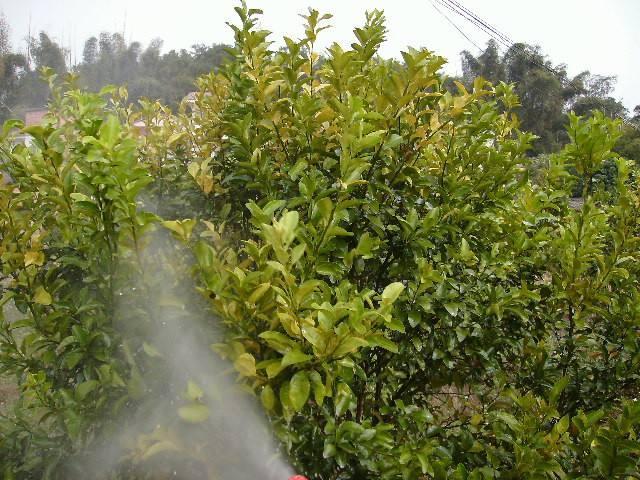
Winter Management Techniques for Citrus Orchards
In winter, citrus trees enter a relatively dormant period, with relatively weak physiological activity, making it a good time for orchard disinfection, sterilization, and pest control. At the same time, after a year of growth and fruiting, the citrus tree body has consumed a large amount of nutrients and become weakened, requiring timely supplementation. To achieve a good harvest the following year, winter management of citrus orchards must be carried out effectively.
1 Early-Stage Management of Citrus Orchards
1.1 Increasing Pre-Harvest Fertilizer Application
In early to mid-October, apply 1 round of multi-element compound fertilizer + farmyard manure to raise the tree's nutrient level, enhance tree resistance, and ensure normal flower bud differentiation.
1.2 Strengthening Pest and Disease Control
From mid-to-late October to mid-November, spray the orchard 1-2 times with 600x Daconil M-45 or mancozeb 600x solution, while also focusing on the control of red and yellow spider mites; this is the key to reducing late-season disease occurrence.
1.3 Rational Use of Plant Growth Regulators
For orchards practicing on-tree fresh-keeping, when the fruit turns from deep green to light green, spray 1 round of 2,4-D at 30-50mg/L, generally in mid-to-late October, to reduce winter fruit drop. In mid-to-late November and mid-to-late December, spray 2,4-D at 30-50mg/L once each time.
1.4 Preventing Fruit Frost Damage
In areas where winter temperatures fall below 0°C, on-tree fresh-keeping storage of fruit is prone to frost damage and is not suitable. Citrus fruit suffers severe frost damage when temperatures drop below -3°C. In areas where this occurs occasionally, based on weather forecasts, methods such as film covering and smoke fumigation can be used to prevent frost. For film covering, before the frost arrives in late November, cover the tree canopy with white translucent plastic film to reduce fruit drop caused by low temperatures. When temperatures rise back to around 12°C (generally from late February to early March), the film should be removed promptly. To reduce fruit drop and fruit rot caused by pest and disease proliferation, spray 1 round of fungicide after removing the film.
2 Late-Stage Management of Citrus Orchards
2.1 Maintaining Soil Moisture
Winter drought easily causes fruit dehydration and drop, so timely and appropriate supplemental irrigation should be carried out. At the same time, strengthen soil moisture retention by covering the area within the drip line of the canopy with rice straw or plastic film, with a straw mulching thickness of 3-5cm [Jishan Huayao].
2.2 Increasing Spring Fertilizer Application
Carry out in mid-February to rapidly restore tree vigor and promote shoot growth and flowering. Fruit should not be harvested within 20 days after fertilization to avoid reducing fruit quality.
2.3 Applying Post-Harvest Fertilizer Properly
After harvest, fertilizer should be applied promptly to replenish the nutrients taken away by the fruit and restore tree vigor. This is generally completed in December, with organic fertilizer as the main type, applying 25-50kg of human and livestock manure per tree, plus 2-3kg of citrus-specific compound fertilizer. In case of soil drought, combine with irrigation. Fertilizer holes should be dug outside the drip line of the canopy, 50cm deep and 20cm wide, and covered with soil promptly after fertilization.
2.4 Plowing the Soil of the Citrus Orchard
In winter, a full-orchard plowing is generally carried out once to improve soil structure, reduce winter water evaporation and freezing damage, and also to clear dead branches and fallen leaves to reduce pest and disease breeding. Plowing should be done early to avoid poor healing after low-temperature root damage. Soil outside the drip line can be plowed relatively deep, i.e., 20-30cm, while soil within the drip line should be shallow-plowed, i.e., 10-15cm, to avoid root damage.
2.5 Rational Pruning
The purpose of pruning is to improve ventilation and light penetration of the tree body and regulate the nutrient balance of the tree. A simple pruning method is generally adopted: first remove 1-2 large branches that affect ventilation and light penetration of the tree body, then cut off diseased and pest-infested branches, weak branches, dead branches, water sprouts, and fruit-stalk branches, and cut back crossing branches, overlapping branches, and drooping branches. Pay attention to cultivating and renewing fruiting branch groups to maintain sustained high yield of the tree body.
3 Pest and Disease Control
Growers should use the idle winter season to carry out 1 thorough control treatment of the citrus orchard, specifically doing well in 4 words: clean, plow, paint, spray. Remove diseased and pest-infested branches, sweep up fallen leaves, dead branches, and residual fruit, and burn them in a centralized manner; plow the soil to kill overwintering larvae or pupae of pests such as flower bud midges and weevils in the soil. Paint the tree trunks white, and spray pesticide after harvest or before spring buds sprout in February. Agents can be selected from 1-1.5°Be lime sulfur mixture or mineral oil emulsion at 60-100x to kill overwintering mites, scale insects, and some pathogens. At the same time, note that the interval between the use of lime sulfur mixture and mineral oil emulsion should be more than 1 month to avoid phytotoxicity.