Should the climbing rose's sucker shoots be pinched off when they grow all over?
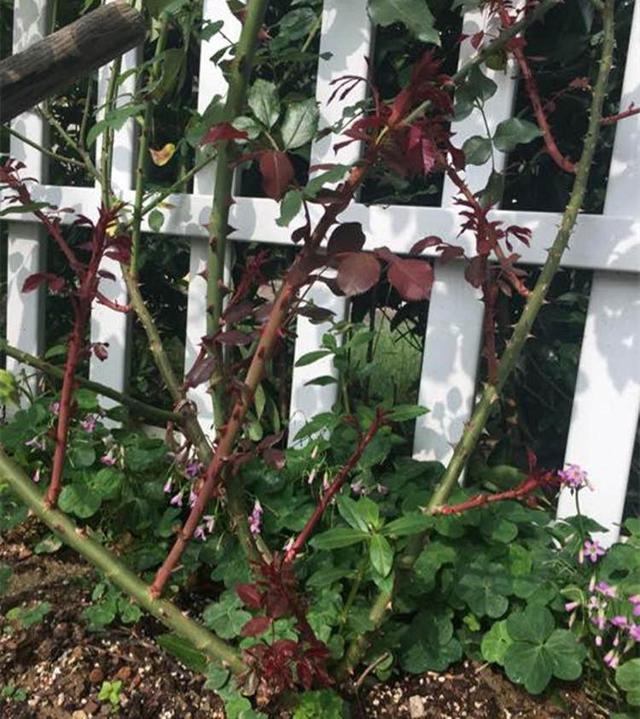
Climbing roses, after the rainy season, will have a wave of sucker shoot growth, and these sucker shoots are the main players in winter climbing rose training. Gardeners look at the abundance of sucker shoots and surely get itchy hands - should they be pinched off or not?
Actually, at this time, when the climber has grown sucker shoots, there is usually no need to cut them back; just let them grow. But for shoots that are noticeably thicker than other branches, in order not to concentrate nutrients too much, they need to be cut back to encourage branching; after branching, the branches become thinner, which is beneficial for winter climber training.
For a climbing rose covered in sucker shoots, the pruning principles at this time are: 1. No need to prune the sucker shoots; let them grow until winter; 2. If the branches are too long and in the way, they can be loosely tied with string; 3. For overly thick sucker shoots, just cut them back to encourage branching.
So, if there are too many sucker shoots, how should the climbing rose be handled? Grasp one general principle: as long as they do not exceed the thick sturdy branches, they can all be left to grow until winter; the others just need to be cut back to a suitable position. Below are the specific pruning methods:
If there are too many sucker branches and they exceed the support, and at this time the rose branches only bloom high up, etc., gardeners can reshape the form by boldly cutting back during the plum rain season. After pruning, fertilize the rose in time, using a rose-specific organic liquid fertilizer, watered once every 7 days, and the branches can grow stronger.
If the rose plant is growing poorly, then after cutting back, loosen the hemp rope used for fixing or untie the branches to let them regain vitality. For climbing roses that have finished their first flush of blooms, cut back everblooming varieties with weak spreading ability to 3/4 of the overall height, and cut back once-blooming varieties with strong spreading ability to 1/2~2/3 of the overall height, cutting above the large leaves on old branches and shoots.
In this way, these sucker shoots of the climbing rose, after growing into newly extending branches, can be trained in winter. For climbers meant to be made into fences, trellises, arches, etc., the same treatment is also applied.