How do you tell whether an orchid needs watering? Learn these 5 checks and you will know right away.
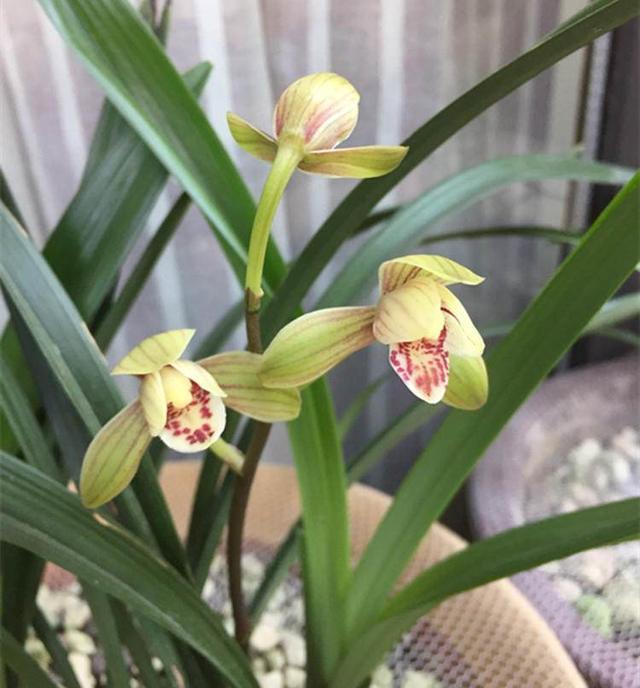
Gardeners who love growing orchids all know one thing: judging whether it is time to water is not an easy task. That is because there is no fixed time standard for watering, and although orchid growers all know the watering principle of "do not water until dry, and when you water, water thoroughly," there are still many details that need attention.
So how should you water an orchid? Use the following "5 checks" and you will know whether the orchid's potting soil is dry and whether it needs watering.
1. Check the time
Water according to the season and the weather. In summer, when the climate is hot and dry, evaporation is high, orchids grow vigorously and need more water, so water frequently, no less than once a day. In winter, when temperatures are low, evaporation is low and orchids are in a dormant or semi-dormant state, so water less.
In spring and autumn, the weather changes a lot, so be flexible: when the weather is cool and humid, water less; on cloudy and rainy days, when humidity is high, also water less; on sunny days, water more; in windy and dry weather, when water evaporates quickly, water more; do not water on rainy days, and there is no need to water much when rain is coming.
2. Check the plant
That is, water according to the type of orchid. For example, Cymbidium sinense needs more water than other Chinese orchids, so it should be watered more. In addition, when watering, combining it with fertilizing the orchid is also a good approach, especially with an organic liquid fertilizer made specifically for orchids, diluted 500 times with water, once a week, watered at the roots.
3. Check the stage
Water according to the different growth stages. Orchids should be watered more during the growing period and less during the dormant period. Water vigorous orchids more, and water weak, poor-growing plants less; water diseased plants less as well. Water more when sprouting, and less after sprouting. When flower buds appear, water a little more, and after flowering, wait until the soil is slightly dry before watering again.
4. Check the pot
Water according to the texture and size of the flower pot. Water more in large pots, less in small pots; water more in clay pots, less in porcelain pots; water more when there are many orchid plants in the pot, less when there are few. You can also judge by the degree of moisture on the pot wall holes and the drainage holes at the bottom of the pot.
5. Check the soil
Water according to whether the orchid soil is dry or moist. The potting soil should be "moist but not wet." By eye, if the soil color is dark black but does not look swollen and soaked, it means the moisture is just right. You can also tap the side of the pot lightly with your finger: if it makes a "splash-splash" sound, it means there is already too much water; if it makes a muddy, low "duk-duk" sound, it means it is not short of water; if it makes a crisp "dong-dong" sound, it means the soil is too dry.
Water more when the potting soil is dry, and water less or not at all when the potting soil is wet. Under normal circumstances, for orchids planted in orchid pots, the ideal soil moisture content for each is 15%-20%.
6. Check the site
In different locations, the watering time differs. For orchid pots grown on the ground, the potting soil evaporates less water, so water less. A balcony is high and dry, with strong light and long periods of wind, so the potting soil evaporates quickly, and you should pay even more attention to watering on time or spraying more water. As for the specific part of the balcony, a west-facing balcony has strong sunlight, so water more; a southeast-facing balcony has a shorter period of light, so water less.
Watering orchids varies with time, conditions and location, so orchid growers need to do it according to the actual situation.