Rose pruning is divided into two periods, and each period requires meticulous operation.
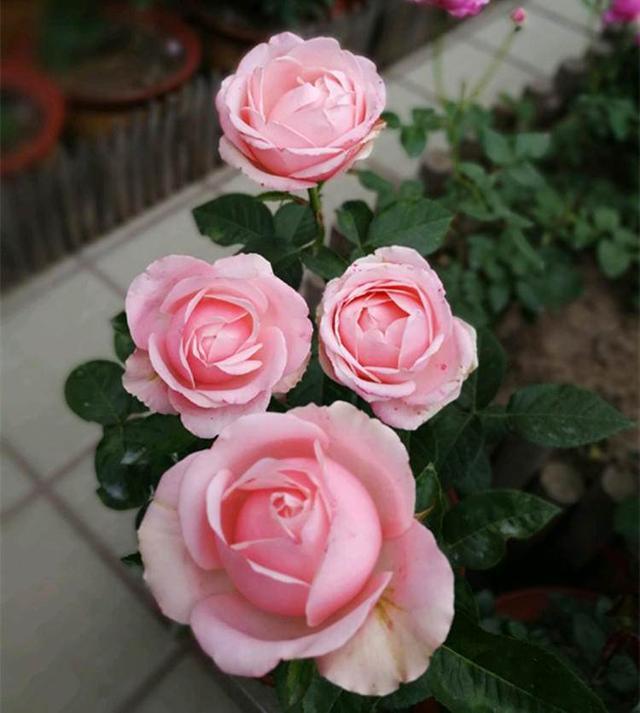
Roses - no need to stress it many times, fellow gardeners all know that pruning is an important task. But even after talking about pruning many times, many gardeners still do not know how to handle it. In fact, when pruning roses, divide the work into 2 periods well, and do each pruning "meticulously," and roses can bloom in all four seasons.
The 2 periods for pruning roses are divided into growing-season pruning and dormant-season pruning. Below is a detailed introduction to the pruning methods and techniques for each period.
1. Growing-season pruning
For pruning roses during the growing season, the methods used include bud removal, bud thinning, pinching, tip cutting and removal of spent flowers, and the total amount of pruning during the growing season should be light.
(1) Bud removal: During the growing season of roses, remove excess buds according to shaping needs to reduce nutrient consumption. Generally, only 2~3 plump, strong buds are kept on one main branch.
(2) Pinching and tip cutting: When the new branches of roses grow to a certain length, if it is necessary to thicken the branch growth or promote axillary buds to sprout into side branches, then pinch or cut the tips of the main branches. Removing the un-lignified tender tip at the top of the branch is pinching; if the part to be pruned has already become lignified, then using pruning shears to cut off a portion of the branch tip is tip cutting.
(3) Bud thinning: For single-stem flowering hybrid tea roses and similar, side buds can be removed, keeping only one main bud in the middle of the flowering branch, concentrating nutrients to cultivate a large flower. For cluster-flowered varieties and floribunda-type varieties with multiple flowers on one branch, excessive small buds with poor development can be removed, keeping strong buds, so that the flowering period is concentrated, the flowers are large, and the flower sizes are uniform, and for miniature roses and similar, do not remove flower buds. For newly planted young rose plants, the flower buds formed for the first time must be removed, first concentrating nutrients to grow a good tree shape.
(4) Removal of spent flowers
After each rose bloom fades, the spent flowers should be cut off immediately. Cut 0.5cm below the base of the second compound leaf beneath the spent flower, so that the axillary buds below will sprout branches and bloom again.
No matter which form of pruning method is used, after pruning is completed, nutrients must be supplemented to the roses in time, using topdressing to help the roses grow and develop. It is generally recommended that gardeners use an organic liquid fertilizer specially for roses, with a fertilizer-to-water ratio of 1:500, once a week, applied directly to the roots.
2. Dormant-season pruning
When pruning roses during the pruning period, nutrient loss is small, and large branches and others can be pruned according to shaping requirements, and diseased and pest-damaged branches, dead branches, crossing branches, overlapping branches, drooping branches, overly dense branches, weak and slender branches, basal sprouting shoots, and sprouting branches below the shaping zone on the trunk, etc., should be cut off.
Then, according to the characteristics of the variety, pruning is carried out to different degrees such as strong, moderate and weak according to shaping needs. For naturally unpruned trees and old or weak trees, renewal and rejuvenation pruning is carried out.
(1) Heavy pruning: For rose plants with weaker growth vigor and potted large-flowered rose varieties, heavy pruning is generally carried out, that is, cutting off 2/3 of the whole plant, keeping only 2~4 main branches.
(2) Moderate pruning: This method is often used for frequent-flowering varieties with moderate growth, uniform tree shape and branches, and easy to send out shoots. About 1/2 of the whole tree is cut off.
(3) Light pruning: For some plants with strong growth vigor, and frequent-flowering rose varieties, cutting off 1/3 of the whole plant is light pruning.
In addition, when the new shoots of potted one-year-old young rose seedlings grow to more than 30cm, cut off about 2/3; for those less than 30cm, cut off about 1/2. Plants that are too small are not pruned for the time being and are allowed to grow naturally. Old and weak plants can be renewed by cutting everything off from the base, and after new branches grow from the root crown, pruning is carried out according to shaping requirements.
In short, if gardeners want roses to be fragrant and colorful in all four seasons, they must, according to the ecological habits of each variety, do a good job in regulating light, heat, water and air, and after pruning, fertilize the roses in time so that they can sprout and grow better.