How to grow orchids? Feed them these 8 kinds of fertilizer and they will grow sturdy and plump
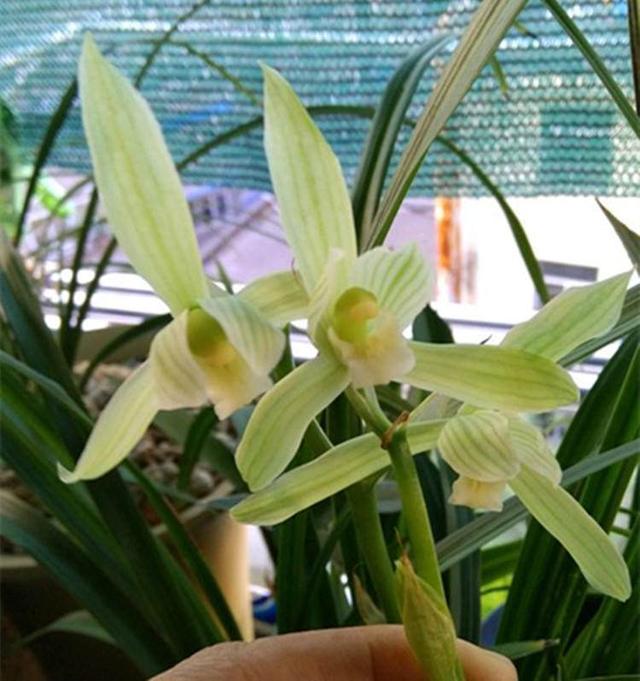
Many flower lovers who grow orchids think orchids can grow well without fertilizer. In fact, orchids that grow well without fertilizer are probably orchids in their place of origin. When orchids are moved from their place of origin into a home environment and grown in pots, growing sturdy and blooming beautifully are all related to these "8 kinds of fertilizer." As long as you feed them these "8 kinds of fertilizer" well, the orchids will grow sturdy and plump.
From spring, when the natural temperature rises back above 16°C, until winter, when the natural temperature drops below 16°C, is the vegetative growth period of orchids. During the vegetative growth period of orchids, usually apply a diluted orchid-specific liquid fertilizer once every 15~20 days. Spray foliar fertilizer once every 7 days. Use orchid-specific organic liquid fertilizer, diluted 500 times for watering the roots and 1000 times for spraying the leaves.
In addition, flower lovers who grow orchids should, according to each growth stage of the orchid, focus somewhat on one of the three major nutrient elements in fertilizer. Now these 8 kinds are introduced; flower lovers who do not understand them should quickly figure them out.
1. Wake-up fertilizer
When the spring temperature begins to rise, apply 300~500 times diluted fermented organic liquid fertilizer to promote the orchid plants to wake up from dormancy early and enter the vegetative growth period.
2. Bud-promoting fertilizer
20 days after applying the wake-up fertilizer, when the natural temperature has stabilized above 16°C, flower lovers can apply the same fertilizer as the wake-up fertilizer to promote early budding, more budding, and strong buds.
3. Flower primordium-promoting fertilizer
When the orchid's leaf buds extend about 2 cm above the substrate surface, there is a slow-growth period of more than 20 days. This is the period when the orchid's new buds grow roots, and also the period when the mother plant forms flower primordia. For varieties that need to bloom, apply 500 times diluted orchid-specific blooming fertilizer, or 1000 times diluted monopotassium phosphate, spraying once every 5 days for 3~4 consecutive times.
4. Growth-assisting fertilizer
Growth-assisting fertilizer promotes the elongation, leaf unfolding, and development of orchid new buds. With proper fertilization, new plants can mature earlier and gain a second tillering new bud shoot in the year. The fertilizer used is roughly the same as the wake-up fertilizer. It is best to alternate inorganic chemical fertilizer with organic fertilizer. Generally spray once a week.
5. Cold-resistance fertilizer
Generally, in the north it starts at the "Cold Dew" solar term, and in the south at the "Frost's Descent" solar term; stop applying nitrogen-containing fertilizer and apply only phosphorus and potassium fertilizer that can improve cold resistance. Monopotassium phosphate can be used for both watering and spraying. Every 10~15 days, put it in a watering can with even outflow and apply once, for 2~3 consecutive times.
6. Dowry fertilizer
Dowry fertilizer refers to applying, one week before the orchid plants are repotted and divided, a fertilizer with the three major elements in relatively balanced proportions, so that they are transplanted with fertilizer, in order to improve the survival rate and the ability to adapt after division and potting.
7. Root-promoting fertilizer
In cultivation practice, one often encounters some wild-collected seedlings, introduced seedlings, diseased and weak seedlings, and repotted and divided seedlings. Healthy roots are few or entirely absent. If no root-promoting measures are taken to promote early rooting, the survival rate will naturally not be high. Commonly used as root-promoting fertilizer is 500 times diluted general-purpose organic liquid fertilizer for plants, applied by watering or spraying whenever watering is needed.
8. Postpartum fertilizer
Postpartum fertilizer is the fertilization used to make up for the large consumption of the orchid plants during blooming. This is because the blooming of orchid plants consumes a great deal. If proper supplementary nourishment is not given, it will not only cause premature aging and weakened stress resistance, even leading to early death, but also affect the budding and blooming of the following year. Commonly used as postpartum fertilizer is 200 times diluted fermented organic liquid fertilizer applied by watering.