How long can fleas survive on a human body?
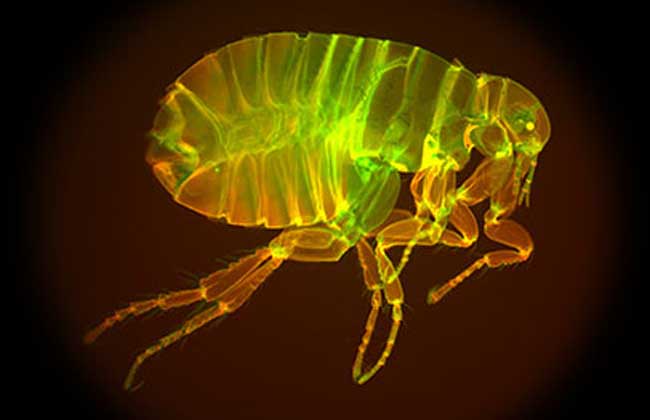
Fleas are small, wingless (their wings have degenerated due to long-term parasitism on hosts) parasitic insects that are good at jumping (both females and males suck blood, unlike mosquitoes where only the female bites). Adults usually live on mammals, and a few on birds. If they encounter an animal, they will immediately cause harm by sucking blood. Let's take a look below at how long fleas can live on humans!
How long can fleas live on humans?
The lifespan of a flea is about 50 days. Fleas have very strong adaptability and survival ability. After a female flea lays eggs on a dog's body, those eggs will fall to the ground, sofa, carpet, or even the bed, and within 1 to 10 days the eggs can hatch into larvae. Flea larvae mainly feed on some organic debris, and under suitable temperature and humidity they will form pupae within one to two weeks. In spring, the flea life cycle takes about 35-40 days, in summer it is 17-21 days, and in late summer it extends to two months or longer. From November to March, because the weather is colder, flea larvae will reside inside the pupae for up to ten months, and only in spring do they metamorphose into adults.
What are the common species of fleas?
1. Rat flea: Rat fleas breed and reproduce in the floating soil and grain and other materials under rat nests. They reproduce most abundantly in spring and summer. Their main host is rats, but they are not specific: one moment they jump onto a rat to suck blood, and the next they jump onto a person to suck blood. Therefore, they are a vector for spreading plague and pose a great threat to human health.
2. Human flea: The human flea is the flea most closely related to humans. It mainly breeds in human dwellings and animal habitats, especially in places with poor sanitation conditions, and reproduces most abundantly in summer. Besides parasitizing humans, it can also parasitize dogs, cats, pigs, wolves, bears, foxes, badgers, and others, especially dogs.
3. Cat flea: The adult cat flea generally has 8 spines in the genal comb, is long-headed, and the forehead and cheek form a relatively sharp acute angle. It reproduces most abundantly in summer. The female lays eggs after sucking blood, and can lay more than 1,000 eggs in her lifetime. It mainly parasitizes cats. In the Fujian region it also parasitizes domestic rabbits and dogs, and it can also bite humans.
4. Dog flea: The dog flea mainly parasitizes dogs and can also bite humans, but it is rarely found on dogs in Northeast China, Inner Mongolia, and other places. After dogs are infested with fleas, they often cause scratching, licking fur, and biting at flea-bitten areas, resulting in localized bald patches or redness and swelling, and in severe cases complicated by allergic dermatitis.
What should you do if there are fleas at home?
1. Thoroughly clean the home environment with a vacuum cleaner, especially the places where pets often sleep. After vacuuming, wrap the garbage from the vacuum cleaner's bag in a plastic bag and throw it out of the house. Usually a vacuum cleaner can remove 50% of flea eggs.
2. Use adulticides such as carpet powder and sprays to kill fleas remaining in the environment. Be careful to also use sprays to clear invisible dead corners such as under furniture, and when choosing products take other conditions in the home into consideration.
3. To prevent flea eggs and larvae from growing into adults, it is necessary to use flea sprays containing ingredients that control larval growth. Many products have both functions: they can kill remaining adults and also prevent larvae from growing.
4. The bedding in pets' nests at home should be cleaned once a week, and places near pet nests should also be sprayed with sprays used for environmental treatment. At the same time, do not forget to treat cars, pet carriers used when going out, or other places pets often go.