What to Do If There Are Fleas at Home? Teach You a Few Effective Ways to Get Rid of Them
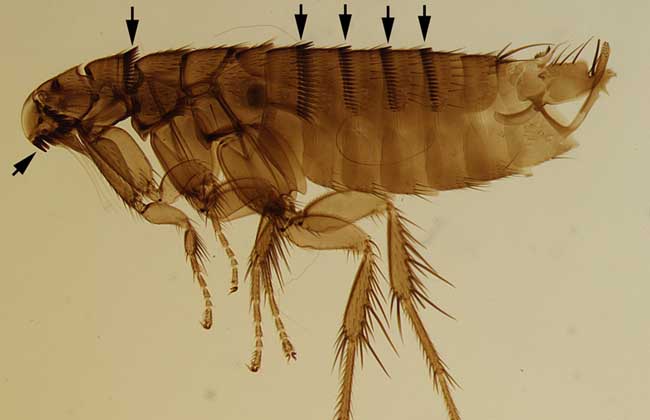
Fleas are holometabolous arthropods, and most species can suck the blood of many kinds of animals. They usually hide in damp, dark places such as rat holes, chicken coops, pig pens, under bed boards, and under kang mats. Besides biting people and sucking blood and causing itching, they can also spread diseases such as plague, endemic typhus, and scrub typhus. If fleas are found at home, they should be eliminated quickly. Below, let us take a look at what to do if there are fleas at home!
What to Do If There Are Fleas at Home?
1. Thoroughly clean the home environment with a vacuum cleaner, especially the places where pets often sleep. After vacuuming, wrap the garbage in the vacuum cleaner's bag in a plastic bag and throw it out of the house. Usually, a vacuum cleaner can remove 50% of flea eggs.
2. Use adulticide agents such as carpet powder and sprays to kill fleas remaining in the environment. Be sure to use sprays to clear invisible dead corners such as under furniture. When choosing products, take other conditions in the home into consideration.
3. To prevent flea eggs and larvae from growing into adults, use flea sprays containing ingredients that control larval growth. Many products have both functions: they can kill remaining adults and also prevent larvae from growing.
4. The bedding in pets' nests at home should be washed once a week, and the areas near pets' nests should also be sprayed with spray used for environmental treatment. At the same time, do not forget to treat the car, the carriers used when pets go out, or other places pets often go.
What Kinds of Fleas Are There?
1. Rat flea: Rat fleas breed and reproduce in the floating soil under rat nests, in grain, and in other materials. They reproduce most abundantly in spring and summer. Their main hosts are rodents, but they are not specific; one moment they jump onto rats to suck blood, and the next they jump onto people to suck blood. Therefore, they are a vector for spreading plague and pose a great threat to human health.
2. Human flea: The human flea is the flea most closely related to humans. It mainly breeds in human dwellings and animal resting places, especially places with poor sanitation, and reproduces most abundantly in summer. Besides parasitizing humans, it can also parasitize dogs, cats, pigs, wolves, bears, foxes, badgers, and others, especially dogs.
3. Cat flea: The adults of the cat flea generally have 8 spines in the genal comb, are long-headed, and the forehead and cheek form a relatively sharp acute angle. They reproduce most abundantly in summer. Females lay eggs after sucking blood, and can lay more than 1,000 eggs in a lifetime. They mainly parasitize cats, and in the Fujian area they also parasitize domestic rabbits and dogs, and can also bite humans.
4. Dog flea: Dog fleas mainly parasitize dogs and can also bite humans, but they are rarely found on dogs in Northeast China, Inner Mongolia, and other places. After dogs are infected with fleas, they often scratch, lick their fur, and bite the flea-bitten areas, resulting in local bald patches or redness and swelling, and in severe cases, allergic dermatitis may also occur.
How to Relieve Itching After Being Bitten by Fleas?
1. After being bitten by fleas, first spray Liushen itch-relieving floral water, then apply fluocinolone acetonide acetate cream.
2. After being bitten by fleas, a small amount of edible alkaline noodle water can be applied to the bite, which can also quickly relieve itching.
3. Take a small amount of fresh purslane stems and leaves, rub them in your hands until water comes out, then apply to the affected area. This has an itch-relieving and swelling-reducing effect.
4. Immediately change out of all the clothes on your body and soak the clothes in water. The water should preferably cover the clothes. Fleas are most afraid of water, so this can drown the fleas and avoid being bitten again.
5. Apply Liweishi essential oil to the bitten area to relieve itching and fade scars. Apply once every other day in a cycle, and the swelling can disappear in three days, and the scar can fade in one week.
6. When fleas bite, the formic acid substance secreted in the flea's mouthparts can cause muscle soreness and itching. Soap contains sodium salts of higher fatty acids and becomes alkaline after hydrolysis, which can quickly relieve pain and itching.
7. Rinse the bitten area with clean water, do not dry it, then dip a little washing powder and apply it to the bitten area to immediately relieve itching and reduce swelling. After the redness and swelling disappear, the washing powder can be rinsed off.
8. Rub sliced garlic repeatedly on the area bitten by fleas for one minute. It has an obvious pain-relieving, itch-relieving, and anti-inflammatory effect. Even if the bitten area has already become a large swollen bump or is inflamed and ulcerated, garlic can still be used to rub it.
9. After being bitten by fleas, apply 1 to 2 drops of chloramphenicol eye drops immediately to relieve pain and itching. Chloramphenicol eye drops have an anti-inflammatory effect, and can also reduce inflammation in mild infections caused by scratching after bites.