Detailed Explanation of Muskmelon Cultivation Techniques and Management Key Points
To cultivate muskmelon in the humid regions of southern China, it is necessary to select suitable varieties and adopt protected cultivation along with its supporting techniques in order to succeed. Below are the muskmelon cultivation techniques compiled by the editor of Xuexila for you, and I hope they are useful to you.
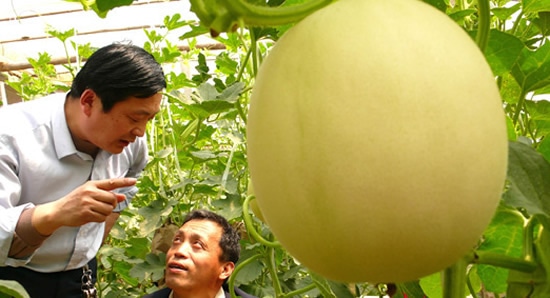
Muskmelon Cultivation Techniques
I. Biological Characteristics
Muskmelon prefers hot, dry weather with plenty of sunshine. During the growing period, the daytime temperature should be 28-30 degrees Celsius, the nighttime temperature 16-20 degrees Celsius, and the soil temperature 20-25 degrees Celsius, with the minimum threshold being above 18 degrees Celsius at 15 cm below ground. If the growing period encounters insufficient sunshine combined with high temperatures, the stems and vines tend to grow excessively, female flowers are not easily differentiated, and fruit setting is difficult or the fruit develops poorly. If the nighttime temperature is too high and the day-night temperature difference is small, the fruit may be large, but the netting on the fruit surface will be imperfect, the sugar content will decrease, and the quality will be somewhat poorer. If the nighttime temperature is too low, fruit enlargement is hindered and the fruit-setting rate is affected, so suitable varieties should be selected according to the different cultivation periods.
Melon is a shallow-rooted crop and prefers soil with good aeration. If the plowed soil is too shallow, the roots will not extend well, affecting the fruit-setting rate. Therefore, the most ideal choice is soil with good ventilation in the surrounding environment, strong water retention, and good aeration. Acidic to neutral soil is preferable, and rotation with rice, corn, and similar crops is suitable.
II. Cultivation Management
(I) Cultivation Methods:
1. Open-field cultivation with silver-black plastic film mulching on the bed surface: This method can reduce the occurrence of viral diseases, maintain good soil physical properties, reduce the loss of water and nutrients, and promote root development, among many other advantages, making muskmelon cultivation more stable.
2. Tunnel shed cultivation: It has the functions of cold prevention, heat preservation, rain protection, disease reduction, and production period adjustment. Both the temperature and humidity on the bed surface and inside the shed must be well regulated.
3. Two-crop cultivation in tunnel sheds: To save costs, reduce labor, and shorten the cultivation time, the two-crop cultivation method is adopted. Using the original cultivation beds and the original facility materials and equipment, only the planting position is changed, and muskmelon is planted once more. It is advisable to choose soil with good drainage, strong fertilizer retention, and a longer rotation period; unsuitable soil should be avoided for continuous cropping. For continuous cropping, varieties with strong disease resistance or stable early maturity are preferable.
4. Simple plastic film greenhouse cultivation: This cultivation method has a long history, but because the cost is somewhat high, the cultivation area is not yet large. Simple plastic film greenhouse cultivation includes two types: vertical cultivation and trailing cultivation. Vertical cultivation requires more labor and more precise cultivation techniques. Those without vertical cultivation experience often experience unstable yields or failure. Trailing cultivation is more extensive and stable, but the number of plants planted will be fewer. Before cultivation, careful consideration should be given.
(II) Fertilizer and Fertilization:
Muskmelon is a short-term crop, so quick-acting fertilizers are preferable. The determination of fertilizer application rate must take into account differences in soil fertility, soil properties, cultivation period, and cultivated variety; the application rate also varies accordingly. Excessive application is not only wasteful but also affects plant growth and causes physiological disorders. Insufficient fertilizer weakens the plants and lowers yield. Fertilization methods include deep plowing with broadcast application and band application in furrows. For soil with deep soil layers, strong fertilizer retention, and few irrigation times, it is best to deep plow and broadcast the full amount of fertilizer over the entire soil layer as base fertilizer, with liquid fertilizer foliar application as a supplement for topdressing. For sandy soil with shallow plowed soil or poor fertilizer retention, where nutrients are easily lost and water demand is also high, the fertilization method is to apply 70% as base fertilizer in furrows and 30% as topdressing in small amounts multiple times, or to install drip irrigation hoses combined with nutrient solution fertilization, which is most suitable. The appropriate fertilization period is divided into several stages. The fertilizer nutrients required by muskmelon also differ at different stages.
Planting density: The row and plant spacing should be adjusted according to the cultivation method, cultivation period, vine training method, soil properties, and variety characteristics. In principle, the spacing between two plants should be about 50 cm.
(III) Methods of pinching and pruning: To make muskmelon set fruit in the most ideal position and make the fruiting period uniform, pinching and pruning are essential measures in cultivation. The number of fruits retained is the key to stable quality. Whether the timing of control is appropriate and whether the technique is skillful directly affect the yield and quality, so this work cannot be neglected in cultivation. Pinching and pruning should be carried out on sunny days and should be coordinated with pesticide spraying. Spraying should be avoided as much as possible during the flowering period; otherwise, applying pesticide in the evening is preferable.
(IV) Fruit retention techniques: Increasing yield per unit area is everyone's common wish, but when a single muskmelon plant sets too many fruits, their commercial value instead decreases greatly; as the saying goes, many fruits but no good ones. Quality and quantity cannot both be obtained. With quality first and yield secondary as the principle, fruit retention work is therefore even more important. Five to ten days after the plant sets fruit, when the young fruit is as large as a chicken egg, select those with a longer and well-formed shape before retaining them. By the way, remove the petals at the flower scar to reduce the entry of pathogens. The decision on the number of fruits to retain must be made according to the characteristics of the variety and the growth condition of the plant.
Only with an excellent appearance can quality be stable. Therefore, in the concept of fruit retention for muskmelon, it is advisable to adopt the principle of elite selection; the number of fruits should be small rather than greedily many. The fruit retention period should not be too late, so as not to affect growth. In early spring cultivation, if the fruit retained on the intended fruiting vine encounters prolonged low temperatures, fruit enlargement will be poor. When the plant growth becomes stronger, a second fruit set can be retained. If the first fruit retention number is small, each vine can retain one more fruit, but early-maturing varieties are preferable. For late-maturing varieties, the quality and sugar content are somewhat poorer, so retaining additional fruits is not ideal. In autumn cultivation, retaining a single vine is more appropriate than double vines, because autumn fruits are large and the number of fruits set is also small; in principle, one fruit per plant. To reduce the occurrence of a second fruit set, remove the female flowers on non-fruiting vines immediately during pinching and pruning so that they do not set fruit again. In principle, the number of fruits retained in autumn cultivation is fewer than in spring cultivation.
(V) Water management: Muskmelon is neither tolerant of drought nor fond of excessive moisture. The amount of irrigation should be determined by the development stage of the muskmelon, soil properties, soil moisture, and weather. From the early growth stage to before flowering, the soil should maintain appropriate moisture so that the plants grow strong and slowly. When there is too much water, the stems and leaves flourish, affecting flowering and fruit setting, and making the plants prone to disease. If it is too dry, growth is hindered and development is poor. During the flowering and fruiting period, irrigation should be reduced to avoid excessive growth affecting the fruit-setting rate. from 7 to 20 days after fruit set is the period of fastest fruit enlargement, when water is urgently needed, so the irrigation amount should be greater. Especially in soil with poor water retention, irrigation should be more sufficient to promote fruit enlargement.
When the fruit is near maturity, restricting water and maintaining appropriate dryness is most ideal. At this time, if the soil moisture is excessive, the sugar content decreases, the maturity period is delayed, and the fruit is prone to cracking and diseases. In non-netted varieties, sparse netting easily appears on the fruit surface, while in white-skinned varieties, uneven green and white skin color or fruit surface spotting is easily caused, affecting the appearance. Muskmelon varieties enter the fruit hardening stage from about 4 to 20 days, and netting begins to form on the fruit surface. If there is too much moisture in the early stage of netting formation, coarser cracks easily occur, making the netting unattractive. Therefore, it is advisable to reduce water about 7 days before netting formation, and then gradually increase water as the netting gradually completes, to promote fruit enlargement and perfect netting. If the soil is too dry, the netting on the fruit surface will be very fine and incomplete, and the appearance will also be unattractive. When irrigating, keep the roots as dry as possible. During rainfall, drain the accumulated water in the furrows as soon as possible, and never allow water to accumulate.
(VI) Methods to promote fruit setting: When the weather is good, thoroughly carry out vine training and pruning before fruit setting so that appropriate space is maintained among the vines, with sufficient light and good ventilation. Pinch the fruiting vines first, and select excellent female flowers to set fruit. Under these conditions, fruit setting is quite stable in most cases. If the weather is unfavorable or in indoor cultivation, where there are no pollinating insects, artificial pollination should be carried out. For bisexual flower varieties, on the day of flowering, gently pollinate the stigma with a watercolor brush to promote fruit setting. Spring cultivation often encounters cold spells, with lowered temperatures, poor flowering, weak pollen vigor, and a low fruit-setting rate. Therefore, fruit-setting promoters are used to improve fruit setting. Under the condition that muskmelon should value quality above all, natural fruit setting (by insect vectors or artificial pollination) is the most ideal method of fruit setting.