Lotus root cultivation techniques sharing: teaching you how to grow lotus root well
In rural areas, many rice fields and ponds are abandoned for a long time because they cannot be used effectively. If they can be properly modified into lotus ponds for lotus root cultivation, considerable benefits can be obtained!
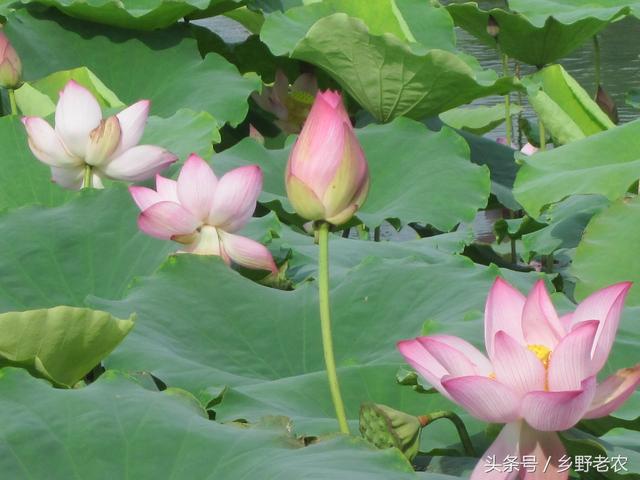 Cultivation techniquesSharing: lotus root cultivation techniques!" inline="0">
I. Lotus pond modification
1. Leveling To ensure consistent water level in the lotus pond and uniform growth of lotus root, the bottom of the lotus pond needs to be leveled.
2. Leak prevention If the lotus pond leaks seriously or local water resources are scarce, an anti-seepage membrane should be laid at the bottom of the lotus pond to prevent leakage. It is best to use a special anti-seepage membrane for lotus ponds. After laying is completed, backfill 30 cm of high-quality soil. Because the cost of laying anti-seepage membrane is relatively high, if the lotus pond has good water retention performance, do not lay anti-seepage membrane as far as possible.
II. Lotus seed selection
1. Water depth According to water depth, lotus root is divided into shallow-water lotus root and deep-water lotus root. For water depth below 50 cm, shallow-water lotus root can be selected (such as 3735 lotus root, Zhenzhu lotus root, Juwuba lotus root, Huaqi lotus root, etc.). For water depth of 50-150 cm, deep-water lotus root can be selected (such as Xuelian lotus root, Piaohua lotus root, Fenghe No. 1 lotus root, hybrid large white lotus root, etc.). For water depth of 150-220 cm, ultra-deep-water-tolerant lotus root needs to be selected (such as Weishan Lake white lotus root, etc.).
2. Taste According to taste, lotus root can be divided into glutinous lotus root (high starch content) and crisp lotus root (low starch content). The south likes glutinous lotus root, so lotus seed varieties with a more glutinous taste such as 3735 lotus root and Juwuba lotus root should be planted. The north likes crisp lotus root, so lotus seed varieties with a more crisp taste such as Xuelian lotus root and white lotus root should be planted.
III. Lotus root cultivation techniques
1. Density Each mu requires 400-500 jin of lotus seeds. If a water gun is used for lotus seeds, the planting amount should be appropriately increased. Planting density can be planned according to the size of lotus seeds. If special lotus seeds of about 1.5-2 jin are used, the plant spacing and row spacing can be 2.5 m and 1.1 m respectively.
2. Fertilization Before planting, apply 2-3 cubic meters of decomposed chicken manure per mu. When standing leaves appear, apply 80-100 jin of potassium sulfate compound fertilizer per mu. During full flowering, apply 80-100 jin of potassium sulfate compound fertilizer per mu. During the lotus seedpod expansion period, apply 100-120 jin of potassium sulfate compound fertilizer per mu. Note that urea, potassium chloride compound fertilizer and high-nitrogen compound fertilizer must not be applied, otherwise the lotus root yield will be seriously affected.
3. Management Maintain an appropriate water level and strictly prevent water shortage or flooding. After the standing leaves of lotus root appear, 1-3 grass carp can be placed per mu according to the amount of duckweed and aquatic plants.
IV. Benefits of lotus root cultivation
1. CostRent 400 yuan/mu, lotus seeds 800 yuan/mu, fertilizer 600 yuan/mu, labor 300 yuan/mu, other 200 yuan/mu, totaling 2300 yuan/mu.
2. YieldLotus root can begin to be harvested after Mid-Autumn Festival and can continue until around May 1 of the following year. Under shallow-water planting and proper management, 8000-10000 jin of lotus root can be harvested per mu, of which the main lotus root yield is 5000-6000 jin. The cost of water gun excavation is 0.3 yuan/jin, requiring 1500-1800 yuan per mu. The cost of water worker excavation is 0.5 yuan/jin, requiring 2500-3000 yuan per mu.
3. Benefits Lotus root prices differ greatly between north and south and between east and west. The wholesale price range varies from 0.8-2.2 yuan/jin. If the wholesale price can reach 1.5 yuan/jin, each mu of lotus root can be sold for 7500-9000 yuan. After deducting 2300 yuan of cultivation cost and 3000 yuan of excavation cost, 2300-3700 yuan of net profit per mu can remain.
To learn about agriculture, rural areas and farmers information and learn lotus root cultivation techniques, welcome to follow the "Laonong 123" WeChat public account: lnong123