How to plant corn? A farmer teaches you 11 tips
1 Planting time
Spring corn (January 25 to February 10) gives the highest yield;
Next is autumn planting (August 25 to September 10);
Then winter planting (October 20 to January 10);
Last is summer planting (April 25 to May 10).
In short, the choice of the best sowing time for corn must be determined according to the purpose of the corn and the land use situation, and the arrangement of the preceding crop. Corn for feed is suitable for spring planting and autumn planting.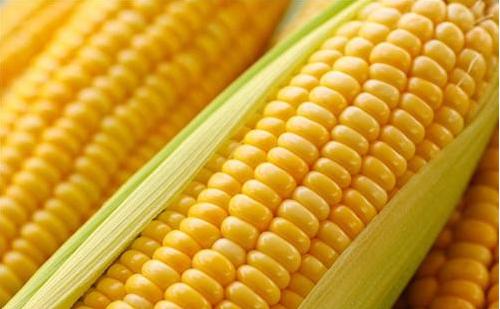
2 Soil selection
Farmers will choose for corn a loam or sandy loam that is convenient for irrigation and drainage, easy to manage, has a pH between 6.5 and 7, and has medium or higher fertility. Corn is a crop that likes fertilizer and water, prefers warmth, needs plenty of oxygen, and is afraid of waterlogging; soil that is too acidic, too clayey, and poor and thin will all make corn grow poorly.
3 Choosing base fertilizer
The base fertilizer is mainly farmyard manure, and the principle for applying chemical fertilizer is heavy phosphorus in the base fertilizer and heavy nitrogen in the topdressing.
4 Seed selection
Farmers will choose a variety that is about 10-15 days shorter than the variety originally planted. Moreover, a good variety suitable for the local area should be high-yielding and stable-yielding, of good quality, resistant to disease and lodging, and also able to suit market demand with good sales.
5. Seed treatment
Before sowing seeds, farmers should sun the seeds for 3~4 hours, generally soak the seeds in warm water at 50~55°C for 10~15 minutes, then after cooling soak them for another 6~8 hours, then rinse with clean water 1~2 times and they can be sown.
6 Sowing specifications
On the premise of not changing the row spacing of the preceding crop, merge the previous two ridges into one ridge, sow two rows on each ridge, sow alternately in each row, drop 23 seeds per hole, sow at a depth of 35 cm, and water enough for seedling emergence.
7 Replanting corn seeds
Before replanting, farmers should artificially pre-germinate the seeds, and after pre-germination use a hole punch to replant. Note that sowing must be done on moist soil, with a small amount of soil covering it, with within 3 cm being best, to prevent "sprout drying".
8 Replanting interval
For corn replanting, not all places without seedlings need replanting. For example: if only one seedling is missing in a row, there is no need to replant; if 2 seedlings are missing in a row, replanting one in the middle is enough. That is, replant 1 for 2 missing, replant 2 for 3 missing, and so on.
9 Supplementary fertilization
During the seedling stage, ear stage, and heading and grain-filling stage, do a good job of watering, supplementary fertilization, and earthing up management. When problems appear with corn seedlings, promptly consult experts on the "Yunzhongyang" platform; it is the world's largest agricultural technology Q&A website. It brings together hundreds of thousands of experts, and every question raised will get a response within 2 minutes, helping you find a reasonable and effective solution.
10 Pest and disease control
Farmers prevent and control pests and diseases with prevention first and integrated control, and in management should detect early and prevent and control early. Corn diseases mainly include large and small leaf spot disease, rust disease, and sheath blight. Pests mainly include corn borer, armyworm, corn aphid, cotton bollworm, and black cutworm.
11 Harvest
According to different cultivation purposes, the harvest period of corn differs. For fresh-eating sweet and waxy corn, the whole growth period is 80~85 days for spring and autumn planting, 70~80 days for summer planting, and 90~100 days for winter planting. Generally it is harvested 16~22 days after pollination, 16 days for summer planting and 22 days for winter planting, and after picking the ears they should be supplied to the market in time.