How is intelligent remote planting achieved? Ruff powers agricultural production
The Internet of Things is changing the production and lifestyle of every field with a prairie-fire momentum, such as manufacturing, the home sector and traditional agriculture.
When it comes to agriculture, most people think of suburbs or countryside far from the city, a group of farmers who live by agricultural production, walking through the fields every day, sowing and fertilizing, tending carefully. But now, the whole process from planting to harvest can be completed without leaving home, achieving intelligent remote planting and care in agricultural production. All of this is a change brought by Internet of Things technology.
Technology combined with agriculture enables remote planting without leaving home
Miss Li, who works in a creative industry park in Xuhui District, lives in a residential compound in Yangpu. These past few days she has been scrolling through her social media feed less and less, but she always opens her phone from time to time to check the growth of seasonal vegetables such as tomatoes and cucumbers planted on her own rooftop. Occasionally she taps the irrigation button, and the sprinkler nozzle far away on the rooftop of the Yangpu compound immediately turns on to fully automatically irrigate the small vegetable garden.
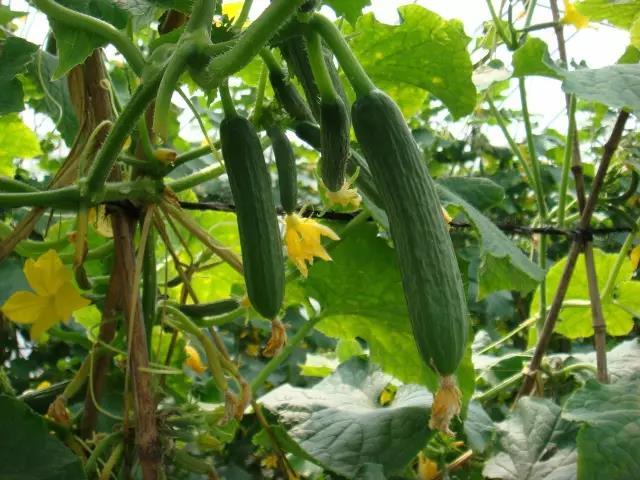
In addition, Miss Li can also pre-set the optimal production index data for each kind of vegetable in advance, including soil temperature and humidity, PH value, as well as monitor and check the ambient air temperature and humidity, light intensity and so on at any time. Miss Li said that in the past, inspired by the game of stealing vegetables, friends would go to the suburbs to contract a vegetable garden and plant it themselves, but because of the long distance and unscientific care, by harvest time the vegetables and fruits were not as good as imagined. Now agricultural production can already take place on rooftops in the city, while also providing remote intelligent management. This allows white-collar workers who are usually busy with work to just spend ten minutes a day checking and managing on their phones, and at harvest time they can eat completely pollution-free green vegetables and fruits. The whole process is both fun and convenient.
People, crops and tools are all connected to the network, achieving intelligent vegetable garden planting
While many people are envious, they must be wondering how to get such a small vegetable garden. In fact, what Miss Li uses is an Internet of Things application product developed by Ruff for smart agriculture. Through Internet of Things device networking technology, various sensors record the vegetable planting data in real time and transmit it to the user's device (either mobile phone or PC), including soil and ambient air temperature and humidity, etc. Users can grasp the vegetable growing environment in real time from their phones.
At the same time, for some rather forgetful users, parameters can be set by themselves to achieve automatic remote irrigation, so that the planted vegetables will not dry up and die because they were occasionally not watered. In this way, throughout the entire intelligent planting process, remote operation can fully achieve "unmanned" management of the vegetable garden. Moreover, this can effectively use idle space in the city, such as rooftops and balconies, which can all be turned into a vegetable garden in no time.
For some beginners who know nothing about crop production, Ruff uses an expert database to set up a series of vegetable and fruit planting and growth parameters on its own, so as to ensure that crops can grow in the optimal environment. For example, the optimal soil humidity for planting eggplant, the optimal irrigation cycle and water volume, the optimal growth and harvest time and so on can all be pre-set in Ruff's application system.
A major agricultural country develops slowly, and traditional agriculture urgently needs to transform into smart agriculture
The smart vegetable garden is merely Ruff's first trial in the agricultural field. Upgrading the entire agriculture sector into smart agriculture is the beautiful future that Ruff pursues over the long term.
Since ancient times, our country has been a major agricultural country, with nearly 10 billion mu of agricultural land, yet in recent years around 30% of agricultural products still need to be regulated by the international market. This is a shocking number.
What exactly led to such a result? Manual irrigation consumes huge labor costs; weather changes affect agricultural output value, and "relying on the heavens for harvest" is still the main fate of crops; the migrant work economy leads to farmers migrating to cities and a shortage of labor, and so on. A series of drawbacks left over from traditional agriculture have hindered the development of China's agriculture.
The only way to solve the drawbacks of traditional agriculture is to transform into intelligent agriculture.Through Internet of Things networking technology, crops, agricultural production tools and people are all connected, and the production environment data of farmland crops and the data of the crops themselves are recorded and analyzed, then fed back to people in a timely manner, thereby guiding people to make rapid remote decisions. The system can also automatically make decisions and handle them in a timely manner, such as irrigation, pest removal and so on. In addition, for some crops that are relatively difficult to grow and plant, expert data can be entered in advance to guide people in more scientific management and planting, achieving the optimal growth state.
This can not only save farmers the time cost and judgment cost of on-site observation, but also truly achieve remote agriculture and intelligent scientific planting. Even if you live in the city, you can work on farmland thousands of miles away through a mobile phone or computer. It will neither affect your urban life and work, nor let the farmland lose management and monitoring.
This will be a huge change in the agricultural field, and will bring unprecedented production efficiency and output value to our country's agriculture, generating the most value at the lowest cost.