Grafting Crab Claw Orchid onto Cactus Makes Repotting Hard? This Trick Keeps the Soil From Compacting So You Never Need to Repot
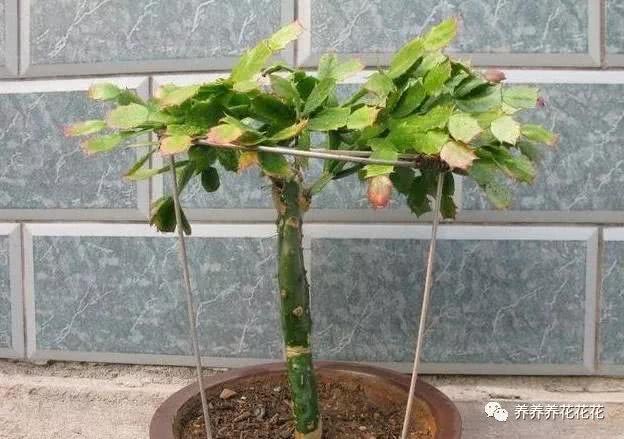
A crab claw orchid grafted onto a cactus grows tall and large, but does it still need repotting every two or three years? Why?
First, we need to understand why we repot it at all. The purpose of repotting is that after two or three years of growing, its soil will compact and lose all its nutrients. Especially when grown at home, garden soil used for planting will compact and lose nutrients in at most two years, and by then water won't soak through and the roots can't penetrate the soil. This will cause it to stop growing, or after watering, water will pool and cause root rot. That is why we need to repot it.
Not every plant needs repotting every two or three years. If the plant is large enough, we can use soil with good air permeability for it; it doesn't necessarily have to be nutritious, but the air permeability must be good. If, when mixing the soil, we add more than half granular soil, its water permeability will be very good, and if it lacks nutrients, we can supplement them by fertilizing. Regular fertilizing can provide a very good nutrient supplement. With more granular soil in the potting mix, its water permeability is strong, so it is less likely to compact, and the roots can grow freely inside.
Of course, if the crab claw orchid you grafted is very large and the pot you used is also quite big, making repotting hard to manage, we have another method: spread a layer of fully fermented organic fertilizer, such as sheep manure or cow manure, on the surface of the potting soil. Before spreading the fertilizer, first loosen the surface soil with a rake, then spread the fertilizer evenly on top. Each time you water, it will break down part of the organic fertilizer's nutrients and seep them into the soil. Gradually, it will loosen the entire pot of soil. Also, regular fertilizing afterward must be kept up. This way we can avoid repotting it, and this can also gradually turn the soil into loose, airy soil.
If conditions allow, it is best to repot it. Remove part of the old soil, switch to a larger pot, and add loose, airy soil. Because if your entire crab claw orchid is growing very well and very lush, its roots will fill the entire pot and there will basically be no soil left. We then need to repot it to trim the roots a bit, plant it in new soil, and let it grow new roots to absorb nutrients and promote growth. This is good for its growth and helps it bloom more.
Xiao Qi loves growing flowers and updates flower-growing videos and knowledge every day. If you also love growing flowers, follow Xiao Qi and help share and support, Xiao Qi thanks everyone here!
If you love growing flowers, followWeChat public account: Yangyangyanghuahua (hcqzj521)More flower-growing knowledge is waiting for you