Want to control the flowering period yourself? Master these few steps and you'll be fine
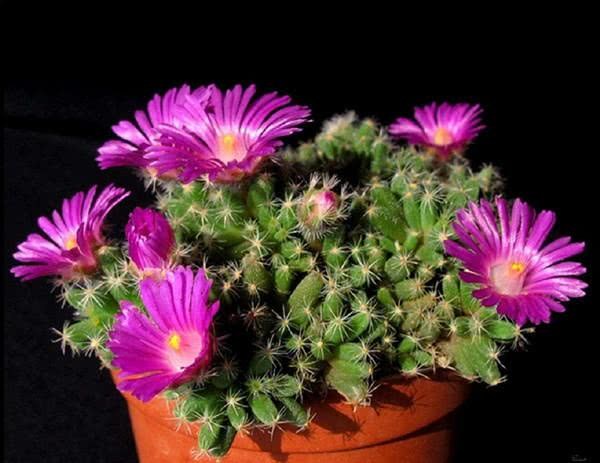
Whether a flower can bloom, and when it blooms, depends entirely on the plant's growth state. If the plant's growth state is too weak, flower bud formation will be relatively difficult, but it is not that if the flower grows too vigorously, the flower buds will form easily either. So flower bud formation and the plant's growth state are very important. In order to let flowers bloom during the time period you want, as long as you learn these few steps, the flowering time can actually be controlled. Let's take a look at what these points are.
For most flowers, the vividness of their color when blooming is inseparable from light. If there is not enough light, it will easily cause the flowers to fade and will also affect the sprouting of flower buds. So flowers should be placed on a balcony with an open window or sufficient light, ensuring several hours of light each day. Naturally, some light-fearing flowers are not excluded. If the flower you are growing is naturally afraid of light, then you need to pay extra attention to where you place it. Do not let its leaves get scorched. If it cannot even take care of its own leaves, how could it still have the ability to bloom? So the plant's growth state must be paid attention to at all times.
Many flower lovers wait until all the flowers on an entire plant have completely withered before pruning. But do you know that as long as you clearly understand how long the flowering period of the flower lasts, you can prune away some spent flowers during the flowering period? Once you understand the flowering habits of the flower and continuously apply some flower fertilizer to maintain the flower's daily fertilizer needs, at the places where you cut off the spent flowers you will still be able to see new flower buds sprouting one after another. In this way, the flowering duration of the flower can be extended, and the number of flowers will also keep increasing. In addition, note that not all spent flowers and withered leaves of flowers can be cut off with scissors. Flowers whose stems have a strong water-storage capacity cannot be treated this way. This type of flower can only be tidied by pulling, removing the leaf stalk together with the stem, for example: cyclamen.
When pruning flowers, pay attention to whether pests are appearing on the flower buds. Do not let the flower buds be harmed by pests just as they are sprouting.
The flowering time of flowers can be controlled from the time of propagation. The season of propagation is very important. Many flowers grow in nature according to their own habits, but if we reverse their habits when caring for them, what signs will appear? Have you never thought about this question? This is a key point in controlling it. Flowers generally bloom during the transition between seasons, such as when high temperatures turn to low temperatures, or low temperatures turn to high temperatures. At this time, most of the flower's nutrients will be supplied to the flower buds.
If flowers are propagated at this time, their rooting speed will greatly decrease, and the survival rate will also decrease. If you want the flowering period to come more slowly, you can choose to propagate flowers at this time. If you want the flowering period to come sooner and last longer, then it is recommended to propagate flowers in early spring instead.
The flowering time of flowers is affected by the external environment. With the above introduction to light, pruning, propagation and other aspects, do you now know how to control the flowering time of flowers? You can use these points above to adjust the plant's growth state and change the flowering time of the flower. If you are interested, you can give it a try.