The highland's unique "cabbage" can grow up to 2 meters tall and is hailed as the first of the three auspicious treasures
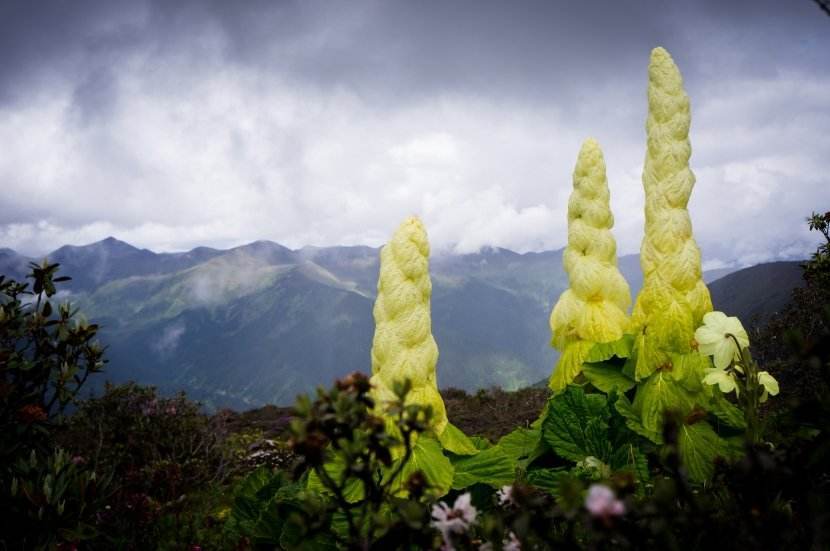
Our country is rich in natural resources, and there are many rare plants that many people may have never seen. The rarer the plant, the more it grows in unknown places, and so it remains unknown to the world. Today we are talking about a plant that looks like a cabbage. It can grow up to 2 meters tall, taller than an adult, and most people have never seen it. This is because this kind of "cabbage" only grows on high-altitude plateaus and cannot be seen at low altitudes. It often grows on the Qinghai-Tibet Plateau and is called the first of the "three auspicious treasures" by the locals.
This plant is mainly named for its leaves, which look like cabbage, while its stalk grows upward continuously like celtuce, with the leaves drooping down, forming a pagoda shape, hence the name "Tahuang" (Rheum nobile). Together with snow lotus and Rhodiola, it is known as one of the plateau's "three auspicious treasures", and it even ranks first. The plateau environment is extremely harsh, as everyone knows, so relatively few plant species can grow on the plateau. Tahuang is one of the few plants that can grow in large numbers on the plateau, even more numerous than snow lotus and Rhodiola.
However, it ranks first not because of its large numbers, but because of its precious medicinal value. In the "Tibetan Materia Medica", it is called "Qumazi", and the book states that its whole plant can treat "yellow water disease", that is, it can treat ascites. In another book, the "Yunnan Provincial Gazetteer", it is recorded that its root can treat "epidemic diseases", making it a very important medicinal material in ancient times.
Tahuang is bitter in taste and cold in nature, with effects of purging fire, relieving stagnation, dispersing blood stasis, and reducing swelling. Nowadays people often crush it and apply it externally to treat bruises and skin swellings and toxins. The plateau environment is harsh, with long winters, and many plants that grow in ice and snow have the effect of dispelling cold and dispersing blood stasis. Tahuang is one that cannot be ignored. Locals pull it up by the roots, give it simple processing, and sell it to medicinal material buyers, where the price can reach over one hundred yuan per jin.
As more and more people travel to Tibetan areas, many have also come to know Tahuang, understand its uses, and accept and love it. Friends, have you ever seen Tahuang?