How to grow melons in open fields? Planting methods and key technical points
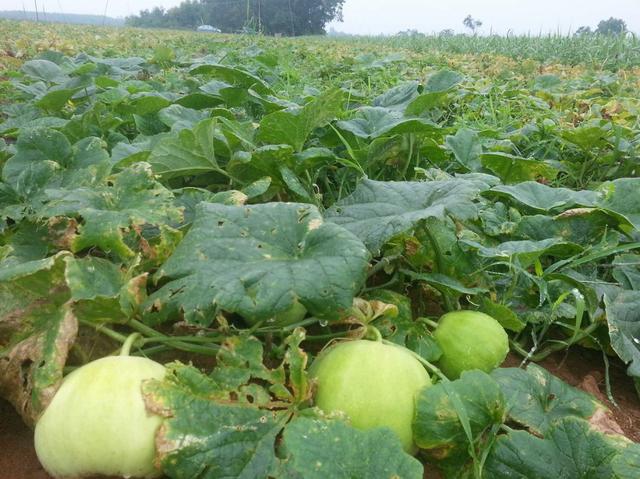 Melons take about 85-120 days from sowing to the start of harvest, with a total growth period of 110-145 days. From sowing to the opening of the first female flower takes about 60-70 days. Open-field cultivation has low input costs and is easy to manage, making it one of the best choices for farmers to increase income and get rich in a short time.
(1) Sowing Melons are suitable for direct sowing, but early-maturing cultivation requires raising seedlings and transplanting. For warm-water seed soaking, soak the seeds in 55°C water for 1 minute, then cool the water to 25°C, and after 6 hours remove the seeds, let them dry slightly, and then germinate them (keep the germination temperature at around 28°C). When the seeds sprout and show white, sow them promptly.
(2) Raising seedlings You can use 65-cell black seedling trays. For seedling raising (average temperature above 15°C), the seedling age is about 35 days. When the seedlings reach the 3-5 leaf stage, they can be planted in the field.
(3) Row and plant spacing The row spacing is 1.7--2 m, and the plant spacing is 30-40 cm. When transplanting, place one large seedling with 3-4 true leaves per hole. For direct sowing, thin once at the 2-3 true leaf stage and set the final plants at the 4-5 true leaf stage. The melon seedlings can be placed in the middle of the bed or on one side of the bed, and the vines should be trained to grow.
(4) Pinching and vine training Melon fruits mainly grow on secondary vines and tertiary vines, so pinching and vine training are necessary to promote fruiting. The six-vine system is generally used: when the vine has 5-6 leaves, leave 4 leaves and pinch the growing tip, keep 2 secondary vines, and thereafter keep 3 tertiary vines on each secondary vine.
(5) Laying straw and turning the fruit When the fruit touches the ground, it is easily damaged by the larvae of the yellow gourd beetle, causing a decline in quality or reduced yield, so straw is laid under the vines when training them. When the melons have grown to half size, turning them at the right time also helps avoid pests and makes the melon color and flavor uniform.
(6) Topdressing and irrigation When topdressing, attention should be paid to the use of phosphorus and potassium fertilizers. After pinching, apply 500 kg of dried human manure and 50-100 kg of cake fertilizer per mu in a ring 10 cm from the roots, cover with soil, and then apply 100-200 kg of plant ash to promote the development of secondary and tertiary vines and the early development of the fruit. After each melon harvest, apply 200-300 kg of diluted manure and 5 kg of superphosphate per mu to ensure fruit growth and development. Melons also have relatively strict water requirements. During the seedling stage, focus on controlling water and let the seedlings stay slightly dry; during the early flowering and fruit-setting stages, combine promotion and control to prevent excessive vegetative growth and fruit abortion; while in the middle and late stages, management should strengthen irrigation to meet the needs of high temperatures and vigorous growth of both fruit and vines.
During the melon ripening stage, stop watering to improve quality.