How to grow peanuts? Master these planting techniques
Peanut, originally named groundnut, is a nut with abundant production and wide consumption in China. Also known as "longevity fruit", "mud bean", etc., it is a traditional oil crop in China and, together with soybean and rapeseed, constitutes the three major edible oil sources in China.
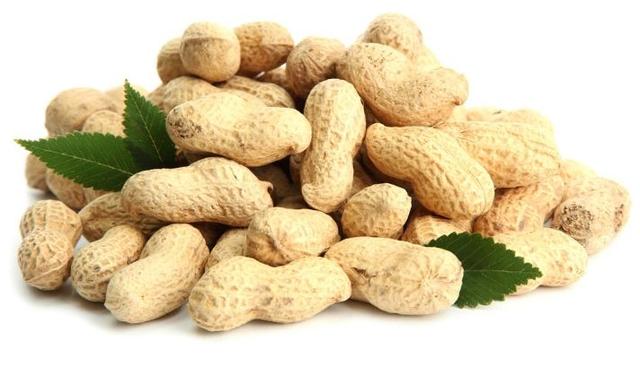
Peanuts are mainly distributed in Shanxi, Liaoning, Shandong, Hebei, Henan, Jiangsu, Jiangxi, Fujian, Guangdong, Guangxi, Guizhou, Sichuan and other regions. The suitable sowing period for the spring-autumn double-crop peanut area in the south is from February to mid-March; the suitable sowing period for the spring-summer peanut transition area in the Yangtze River basin is from March to late April; the suitable sowing period for the northern large peanut area and peanut production areas is mostly from late April to early May.
We should select special-purpose varieties with market advantages, such as high-yield and high-quality oil-type, food-processing-type and export-type varieties, according to different soil, climate, market and other conditions in each region.
For northern spring-sown peanuts, choose medium-late-maturing large-fruit varieties with high yield potential and a growth period of 130-140 days; for wheat-intercropped peanuts, choose medium-early-maturing large-fruit varieties with a growth period of 120-130 days; for summer direct-sown peanuts, choose early-maturing medium-fruit or small-fruit varieties with a growth period of 110-115 days; for the Northeast region, choose medium-early-maturing large-fruit varieties with a growth period of 120-130 days, among which areas with high latitude, a short frost-free period and low accumulated temperature should choose early-maturing small-fruit varieties with a growth period of within 120 days; for southern spring peanuts, choose varieties with a growth period of about 120 days.
When sowing peanuts, sowing can be done once the soil temperature at a depth of 10 cm remains stable above 15 degrees for 5 consecutive days. Remember never to sow when the temperature is below 11 degrees, to prevent seed rot and seedling death. Even if the peanuts can emerge, the peanut seedlings will not be robust, affecting yield. Summer peanut planting areas can choose intercropping and sow early to increase yield.
To increase peanut yield, efforts must be made in planting and cultivation.
Before sowing, seeds need pre-sowing treatment: sun-dry the seeds in shells on a sunny morning, spread them about 10 cm thick, turn them once every 1-2 hours, and sun-dry for 2-3 days. The best time for shelling is 10-15 days before sowing. After shelling, select first-grade and second-grade large seeds with large, uniform kernels, plump grains, good color and no mechanical damage as seeds, and eliminate third-grade small seeds.
Because peanuts are a crop that flowers above ground and sets fruit underground, with a developed root system, they require deep soil that is loose on top and firm below. Therefore, appropriate deep plowing and deep digging should be carried out before winter or in early spring. For clayey soil, an appropriate amount of fine sand can be added to improve the permeability of the fruiting soil layer. For land with excessively thick sand layers, deep plow and press 10-15 cm thick clay under the plow to create a soil layer that retains water and fertilizer.
Of course, during the pod-filling and full-fruit stage, according to growth conditions, fertilizers such as potassium dihydrogen phosphate (suitable concentration 0.3%) and plant growth regulators can be applied by foliar spraying in a targeted manner to promote grain formation.
When the peanut leaves turn yellow and some stems and leaves wither and dry, they can be harvested. After harvest, dry them in the sun to reduce moisture, promote after-ripening and improve seed maturity. Peanuts kept for seed must be harvested and dried before frost.