Complete Watermelon Cultivation Guide: A Full Explanation of Growing and Management Methods
What are the key points of watermelon fertilisation, how should watermelons be fertilised reasonably, which watermelon fertilisation techniques do you know, watermelon fertilisation is very important for watermelon growth, so let us take a look below at the watermelon fertilisation techniques carefully recommended by the editors of XuexiLa, and we hope they will be helpful to you.
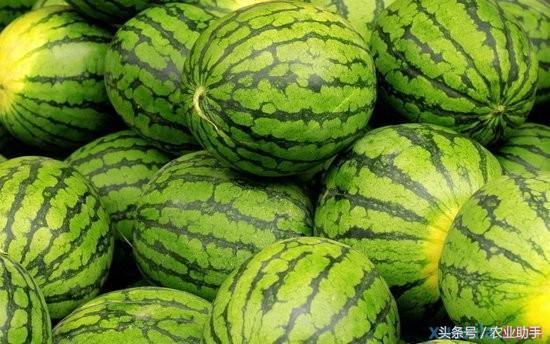 Cultivation TechniquesComplete Guide" inline="0">
Winter Greenhouse Watermelon Fertilisation Guide
Winter greenhouse watermelons are generally raised as seedlings in a greenhouse around 15-20 January, and when the watermelon seedlings reach the two-leaf-one-heart stage they are grafted onto bottle gourd to improve the plants' disease resistance and low-temperature tolerance. The grafting method used is the approach grafting method. When the watermelon has grown to 4~5 true leaves, low-temperature hardening is carried out and the plants are prepared for transplanting.
Before transplanting, apply sufficient base fertiliser first: 2000 kg of decomposed chicken manure per mu, which can be combined with 80 kg of 45% (15-15-15) Jiashili Gen Dong Li compound fertiliser, then deep-plough and prepare the soil. When the watermelon has grown to 5~6 true leaves, open furrows and transplant at a row spacing of 1.5 m and a plant spacing of 0.7 m, cover with plastic film and put up small arched tunnels over them. At transplanting, the graft union must be left above the soil surface when filling in, to prevent adventitious roots from forming.
After transplanting, management mainly consists of integrated control of temperature, humidity, and top-dressing and irrigation. After transplanting, to speed up recovery, ventilation is generally not used and high temperatures are maintained, at 28°C~32°C during the day and above 12°C at night.
From recovery to the flowering stage, the greenhouse temperature should not be lower than 25°C and the soil temperature above 15°C, to increase the fruit-setting rate. After the vines spread, remove the small arched tunnels and carry out the first top-dressing and watering, applying 20~25 kg per mu of 45% (15-15-15) Jiashili Gen Dong Li compound fertiliser.
Half a month after flowering, fruit growth accelerates, so heat preservation should be done well, and fruits within the 8th node should be removed promptly, keeping the second or third normally developed fruit. When the fruit grows to about 15 cm in diameter, combine with watering and carry out the second top-dressing, this time applying 15 kg per mu of 45% (15-15-15) Jiashili Gen Dong Li compound fertiliser.
Greenhouse soil has high humidity and the stems and leaves are prone to excessive vegetative growth, so with regard to watering, note that less water should be given in the early stage and more water after fruit setting; after entering the ripening stage, water must be controlled to favour fruit colouring and increase the fruit's sugar content and speed up fruit ripening.
Plant Training and Hand Pollination Watermelons have strong branching, so plant training is essential to achieve high yields; its steps include pruning, vine pressing, fruit selection, fruit turning and pinching off the growing tips. For fruit selection, generally choose the second or third female flower on the main vine for fruit setting; if no fruit can be set on the main vine, fruit on a side vine may be kept. About 20 days after fruit setting, when the fruit shape is basically fixed, turn the fruit every 3~5 days on sunny afternoons, so that the fruit receives light evenly and the flesh ripens fully.
Greenhouse-grown watermelons require supplementary hand pollination, generally carried out at 10 a.m.; choose large male flowers, expose the stamens, and gently rub them on the stigma of the female flower so that the pollen falls evenly onto the stigma. If low temperatures or poor weather occur, pick the male flowers the previous afternoon, place them in an airtight container and keep it at room temperature of 25°C, then pollinate after the flowers open in the morning. After pollination, mark the flowering date so the fruit can be picked in good time.
The growth and development of watermelons requires the uptake of many nutrient elements. Among these, besides carbon, hydrogen and oxygen, which are taken from the air and water, various mineral elements must also be taken up through other means. Of these elements, the most important are nitrogen, phosphorus, potassium and calcium.
Nitrogen is the main element making up proteins. With an appropriate supply of nitrogen fertiliser, watermelon stems and leaves grow robustly and luxuriantly; if the amount used is too much, it will cause excessive vegetative growth of stems and leaves, tender tissues, delayed flowering and ripening, and weakened cold resistance and disease resistance; when nitrogen fertiliser is insufficient, watermelon stems and leaves grow slowly, the stems and leaves are weak and small, and yield decreases.
Phosphorus is an indispensable element for forming cell nuclear proteins, lecithin and so on. Sufficient phosphorus nutrition can accelerate cell division, favour the growth of roots, stems and leaves, and promote flower bud differentiation, promote flowering and fruit setting, advance ripening, improve fruit quality and increase the disease resistance of the plants.
Potassium can increase the photosynthetic intensity of watermelons, promote the formation and translocation of starch and sugar within the plant, and has the effect of enhancing the plant's cold tolerance, drought tolerance and disease resistance. An appropriate supply of potassium fertiliser also has the effect of promoting the plant's uptake and use of nitrogen and phosphorus, and can make the watermelon's shape uniform, the flesh substantial and the sugar content higher.
Calcium has a certain influence on the metabolism of carbohydrates and nitrogenous substances in the plant, and can neutralise the excess harmful acids produced during the plant's metabolic processes, forming sparingly soluble salts so that they do not take part in physiological processes, reducing the occurrence of certain physiological diseases. It also has the effect of promoting the uptake of nitrate nitrogen.
Main Physiological Diseases of Watermelon and Their Control
1. Stunted seedlings (small old seedlings)
Symptoms: Mainly manifested at the seedling stage and after transplanting, with growth remaining stagnant for a long time, slow leaf unfolding and greyish-green leaf colour. Roots turn yellow and even brown, with very few new roots. Stunted seedlings recover very slowly, and once this occurs it greatly reduces yield.
Causes: First, air and soil temperatures are on the low side. Second, the soil is heavy and clayey, with high water content, high humidity and little aeration. Third, seedling quality is poor and the seedling age is too long. Too many roots are damaged at transplanting, or the soil preparation and transplanting operations are rough, leaving the roots suspended in air, which affects root development. Fourth, applying undecomposed farmyard manure causes root burn, or applying too much chemical fertiliser makes the soil solution concentration too high and damages the roots. Fifth, underground pests damage the roots. Sixth, the soil is dry.
Control methods: (1) Improve the seedling-raising environment and cultivate strong seedlings. (2) According to the weather forecast, choose a sunny day at the end of a cold spell and the start of a warm one for transplanting. (3) Strengthen drainage and apply more decomposed farmyard manure to promote root growth. (4) Strengthen soil management, paying attention to intertillage and loosening the soil in the early stage. (5) Control pests such as ants.
2. Excessive vine growth
Symptoms: Watermelon seedlings grow excessively, showing thin stems, long internodes, green leaves, relatively thin leaf texture, poor disease resistance and stress resistance, a low survival rate after transplanting and slow recovery. During the vine-spreading and flowering-fruiting stages, they show thick stems, large leaves, dark green leaf colour, and the tender stem tip (the growing tip) raised high, making fruit setting difficult.
Causes: (1) High temperature, high humidity and insufficient light. (2) Excessive nitrogen nutrition, leading to an imbalance between vegetative growth and reproductive growth.
Control methods: (1) Control the amount of inorganic fertiliser in the base fertiliser, and pay attention to the combination of phosphorus and potassium fertilisers in the early stage. (2) Ventilate in good time to lower the temperature, expel moisture and increase light. (3) For plants that have already developed excessive vine growth, measures such as appropriate pruning, pinching off the tips and partial root cutting can be taken to control vegetative growth, and measures such as dipping the young fruit in Zuoguoling can be used to promote fruit setting, so that the growth centre shifts quickly to the fruit.
3. Leaf whitening
Symptoms: At the watermelon seedling stage, the edges of the cotyledons and young true leaves lose their green colour and become white, causing a temporary halt in seedling growth; in severe cases the true leaves dry up, leading to a long recovery period or even stunted seedlings, and in more severe cases the cotyledons, true leaves and growing point are all killed by cold.
Causes: Mainly caused by improper ventilation during the watermelon emergence stage, which makes the bed temperature drop sharply.
Control methods: (1) Keep the bed temperature above 20°C during the day and not below 15°C at night. (2) Do not ventilate too early in the morning during the seedling stage, and increase the amount of ventilation gradually, so as not to cause sudden changes in the seedbed temperature that damage the seedlings.
4. Root rot from waterlogging
Symptoms: Rust spots form on the root bark, followed by rotting; diseased seedlings are easily pulled up, the taproot and fibrous roots turn brown and rot, and the leaf edges of the above-ground part become scorched and withered.
Control methods: (1) For the low-temperature type of root rot from waterlogging, use protected seedling raising, with the seedbed temperature controlled at 22-28°C during the day and 13-18°C at night, and not lower than 12°C at the lowest. (2) For the high-temperature type of root rot from waterlogging, pay attention to lowering the soil temperature and reducing soil moisture. (3) Do not apply fresh chicken manure or human and animal excreta; they should be decomposed in advance.
5. Acute wilting
Symptoms: In the early stage of the disease, the above-ground part wilts at noon and can still recover towards evening, then dies after 3-4 days.
Causes: (1) It is related to the type of rootstock; it occurs more with bottle gourd rootstock and rarely with pumpkin rootstock. (2) The root system has poor water-absorbing capacity. (3) Excessive pruning inhibits root growth. (4) Weak light.
Control methods: Choose a suitable rootstock and, by strengthening management, enhance the water-absorbing capacity of the root system.